Buying Diesel from Putin: How Trump’s Election-Year Energy Move Empowers Russia and Prolongs the War
President Donald Trump struck a deal with Russian President Vladimir Putin on October 9 to bring Russian diesel back into American and global markets. The US fuel sanctions rollback behind it, a Treasury general license easing restrictions on Russian diesel exports through April 2027, reverses a sweeping Russia sanctions law Trump himself signed barely a month earlier.
Trump framed it as a fix for voters feeling the pain at the pump. Russia would supply more than 4 million tons of diesel to global markets, he said, with another 3 million tons to follow depending on Russian refinery output. An initial shipment of over 300,000 tons was already moving.
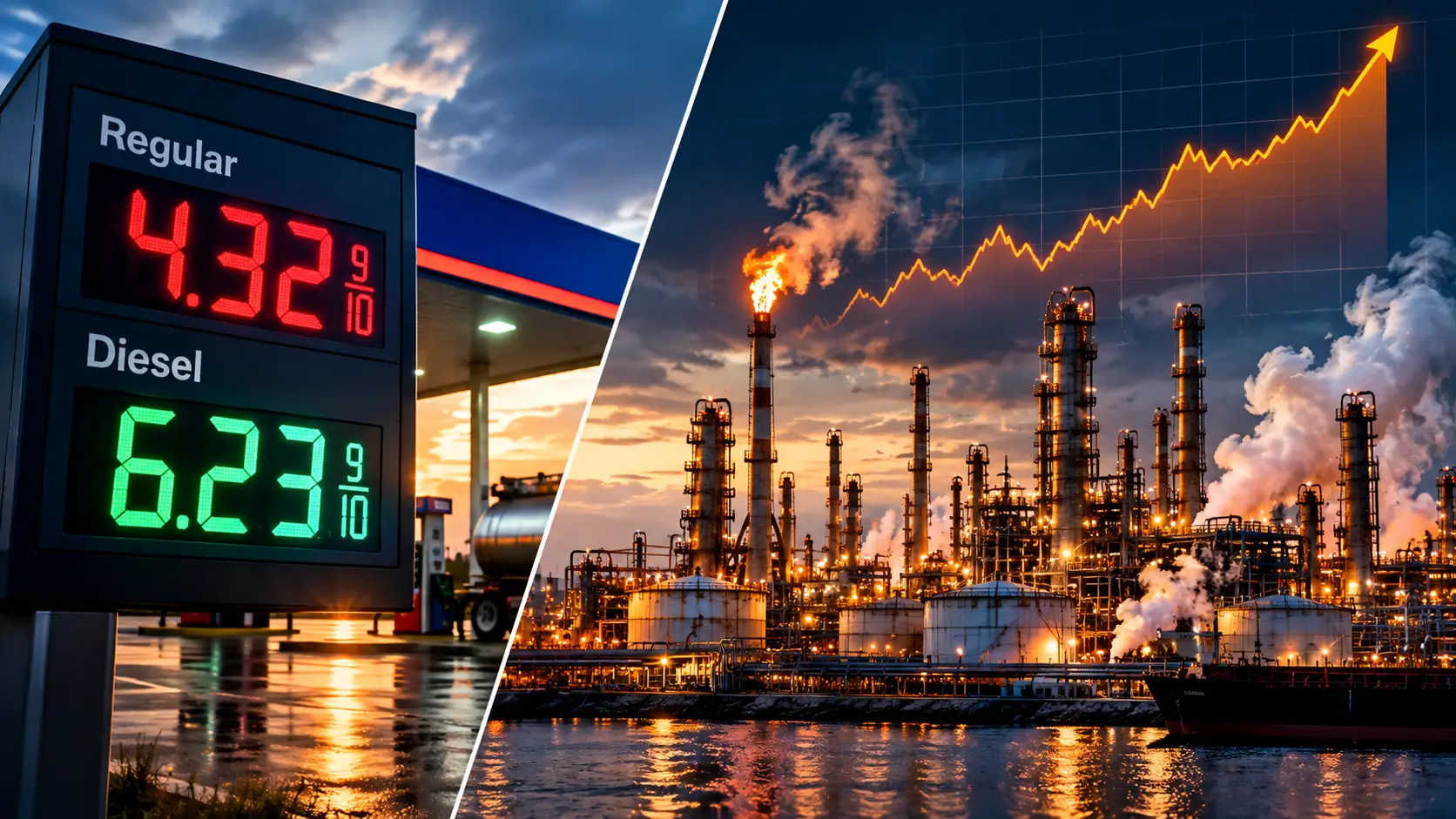
The timing isn’t incidental. US diesel prices have hit repeated records this year, squeezed by Ukrainian strikes on Russian refineries, Russia’s own July export ban, and the ongoing US-Israel war with Iran. The midterm elections are five weeks away.
The Political Illusion of Cheap Fuel
Trump called lower fuel prices his “Greatest Priority.” On Truth Social, he said the deal was for Americans, “especially our Great Farmers, Ranchers, and Truckers.”
The mechanics tell a smaller story than the announcement.
- 300,000 tons is a rounding error. Global diesel and distillate consumption runs well into the tens of millions of barrels a day. A single shipment barely registers.
- The license is temporary. It runs through April 2027. It is not a fix for US refining capacity or supply chains, which remain exactly as exposed as they were the day before the announcement.
- Russia has its own reasons to say yes. Moscow is sitting on summer-grade diesel it needs to clear before switching to winter and arctic grades, inventory it would otherwise have to discount or stockpile regardless of what Washington does.
Whatever relief shows up at the American pump will likely be modest and short-lived. The dependency this creates, on a wartime adversary’s fuel supply, is not.
According to data from the International Energy Agency (IEA) and industry analysts, the crisis and blockade in the Strait of Hormuz are causing a significantly greater shortage of diesel fuel and raw materials on the global market than the Ukrainian drone strikes on Russian oil refineries
Financing the Conflict
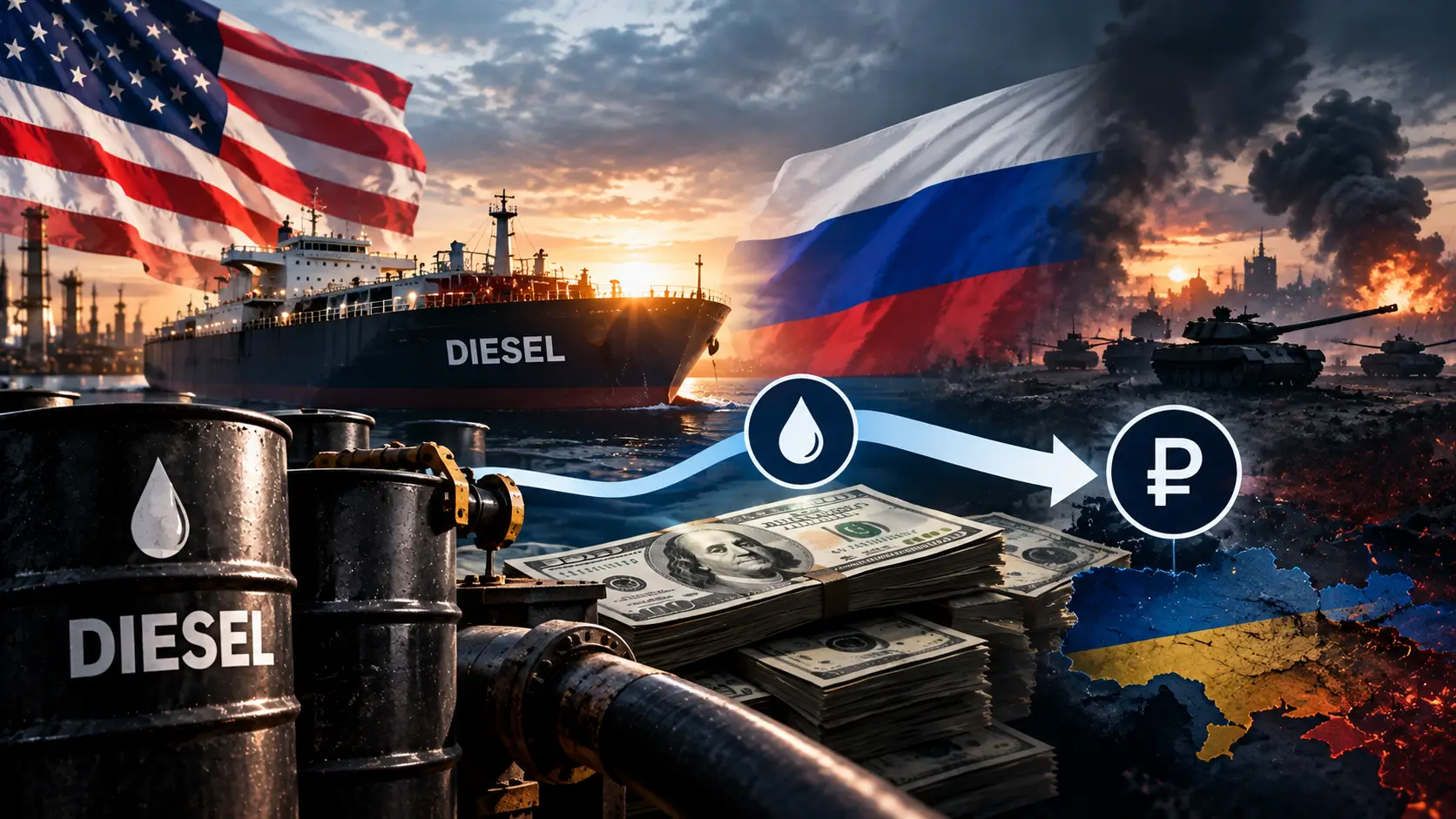
Every ton of Russian diesel this license unlocks sends hard currency toward a government running a war economy.
Ukrainian President Volodymyr Zelensky called the move “not fair and not honest” in an interview with Axios. He said he would have supported easing sanctions on Russian energy only if it came paired with a halt to Russian attacks on Ukraine’s power grid this winter. He got neither.
Senator Richard Blumenthal, who co-led the sanctions law this waiver undercuts, said the decision “makes us complicit in Putin’s war against Ukraine.”
The logic behind that charge is simple:
- Russia’s war effort runs substantially on energy export revenue.
- A license reopening even one channel, diesel, hands the Kremlin dollars it would not otherwise collect.
- Once that money reaches Russia’s treasury, it funds drones, weapons contracts, and troop pay alongside everything else the state spends on.
There’s an added layer. Axios reported that Trump pursued the deal after Zelensky ignored repeated US requests to stop Ukrainian strikes on Russian refineries, strikes that had knocked out an estimated 45% of Russia’s refining capacity and were a major driver of the shortage this deal now papers over. In effect, Washington has cleared the way for global buyers to pay Russian exporters for a shortage Ukraine’s own strikes helped create, while asking nothing of Moscow in return.
Breaking the United Front
This is not the administration’s first sanctions wobble this year. In May 2026, the US issued a similar waiver on Russian oil sanctions tied to the Iran war’s price spike. EU Economics Commissioner Valdis Dombrovskis called that move self-defeating at the time, arguing it would strengthen Russia’s ability to wage war and that Europe needed to tighten pressure, not loosen it.
The October diesel deal fits the same pattern and deepens it.
- A law undercut within weeks. Trump signed the Lindsey O. Graham Sanctioning Russia Act, named for the Republican senator who died unexpectedly in July while championing it, just last month. The bill passed the Senate by an overwhelming bipartisan margin and authorized tariffs as high as 100% on major purchasers of Russian energy. The diesel waiver sidesteps its core purpose before the law has had time to bite.
- A precedent for allies. Every waiver tells Brussels, London, and Tokyo that Washington’s sanctions regime bends under domestic political pressure, undercutting years of work building a unified price cap and export-control coalition against Russian energy.
- A gift to Moscow’s negotiating position. Putin offloads inventory, collects hard currency, and watches the sanctions coalition fray, without offering a ceasefire, a troop withdrawal, or any concession tied to the war itself.
Analysts say: Russia physically does not have this diesel fuel for the market due to the destruction of its refineries, and Ukraine has officially stated that it will continue to burn down Russian refineries regardless of any agreements between Washington and Moscow.
The Case for the US Fuel Sanctions Rollback
In fairness, the administration’s rationale isn’t invented. Officials describe the waiver as temporary and narrowly targeted at diesel rather than crude oil or the broader sanctions regime, aimed at a real problem: record US diesel prices heading into winter. Treasury Secretary Scott Bessent has simultaneously pressed European allies to release their own strategic diesel reserves, arguing American farmers, truckers, and businesses shouldn’t carry the burden of a global shortage alone. Trump has suggested the restrictions could lapse permanently if prices stabilize, framing this as calibrated and reversible rather than a permanent retreat from sanctions.
Whether that rationale justifies opening a new revenue channel to a wartime adversary is the question critics, from Kyiv to Brussels to the US Senate, are now asking.
Quick Insight Verdict
True energy security doesn’t come from short-term deals with the government you’re trying to pressure. It comes from refining capacity, strategic reserves, and allied coordination built before the next shortage hits.
The US fuel sanctions rollback buys a few weeks of better headlines ahead of the midterms. It does not buy Ukraine a safer winter, Europe a more unified sanctions front, or America a diesel supply that doesn’t run through Moscow. Those are the costs this deal defers. It doesn’t solve them.
This agreement won’t solve the problem, but it will give Trump leverage over Ukraine—so that it doesn’t launch strikes against Russian oil refineries.
Many political analysts argue these steps are nothing more than a pre-election stunt by Trump to show voters he can micromanage critical issues in the diesel market. Moreover, critics note that Trump is trying to pass the buck for crises his own domestic and foreign policies helped spark or worsen—whether it’s the escalating tension in the Strait of Hormuz or ongoing trade and shipping friction with Canada.