Recessions often create fear in financial markets, but they also follow recognizable patterns.
Understanding how stocks behave during economic downturns can help investors make more informed decisions rather than reacting emotionally.
How Stocks Typically React
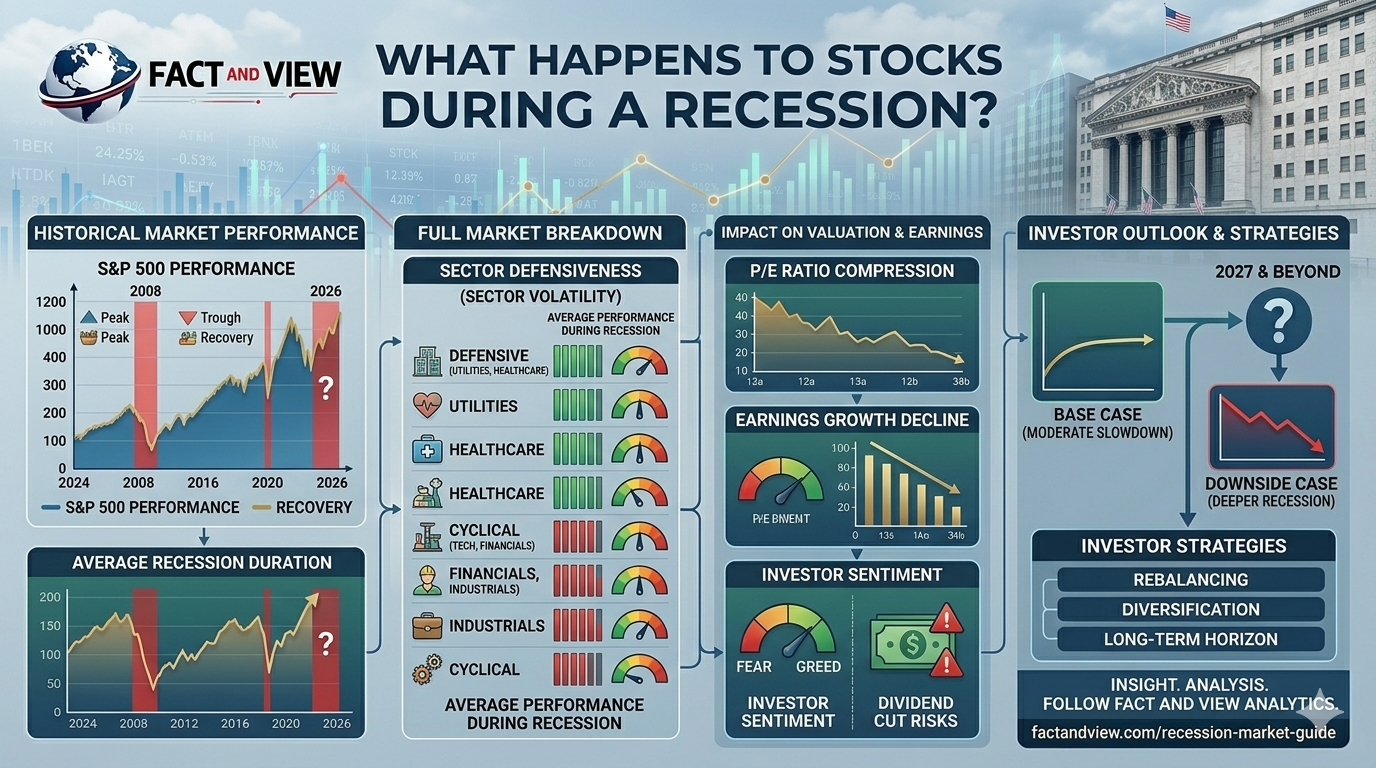
Stocks usually decline before a recession becomes official.
Markets are forward-looking, meaning they price in expectations rather than current conditions.
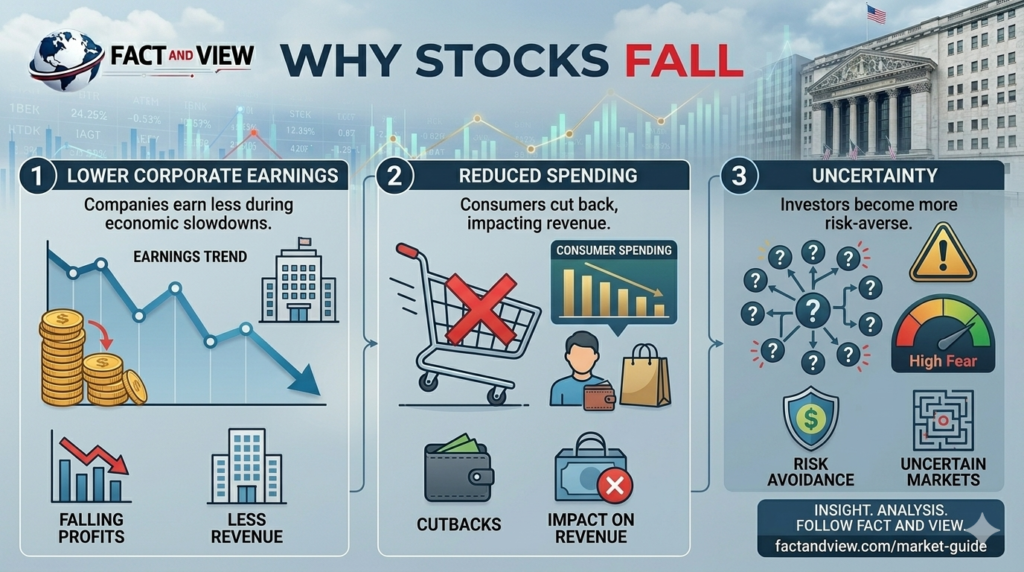
Why Stocks Fall
1. Lower Corporate Earnings
Companies earn less during economic slowdowns.
2. Reduced Spending
Consumers cut back, impacting revenue.
3. Uncertainty
Investors become more risk-averse.
Historical Perspective
During major downturns like the 2008 financial crisis, markets declined sharply before eventually recovering.
Do Stocks Always Go Down?
Not always.
Some sectors perform better, including:
- essential goods
- healthcare
- utilities
What This Means for Investors
- volatility increases
- short-term losses are possible
- long-term opportunities may appear
What Happens After a Recession?
Historically, markets recover before the economy fully stabilizes.
This makes long-term investing strategies more effective than short-term reactions.
FAQ
Should you sell stocks during a recession?
Not necessarily — it depends on your strategy.
Do stocks recover after a recession?
Historically, yes.
While recessions create uncertainty, they are also part of normal economic cycles. Understanding market behavior can help investors navigate volatility more effectively.