Is a Recession Coming to the US in 2026?
Concerns about a potential US recession in 2026 are increasing as economic growth slows and uncertainty remains high.
Rising interest rates, persistent inflation pressures, and global instability have created conditions that often precede economic downturns. But does this mean a recession is inevitable?
To answer that, we need to look at the actual signals — not just headlines — and understand what they really indicate about the direction of the US economy.
What Is a Recession?
A recession is typically defined as a period of declining economic activity lasting several months. It often includes:
- falling GDP
- rising unemployment
- reduced consumer spending
Recessions are a normal part of the economic cycle, but their severity can vary significantly.
Current Economic Signals in 2026
The US economy shows mixed indicators.
Economic growth has slowed, and certain sectors — especially housing — have weakened under pressure from high borrowing costs. At the same time, unemployment remains relatively low, and consumer activity has not collapsed.
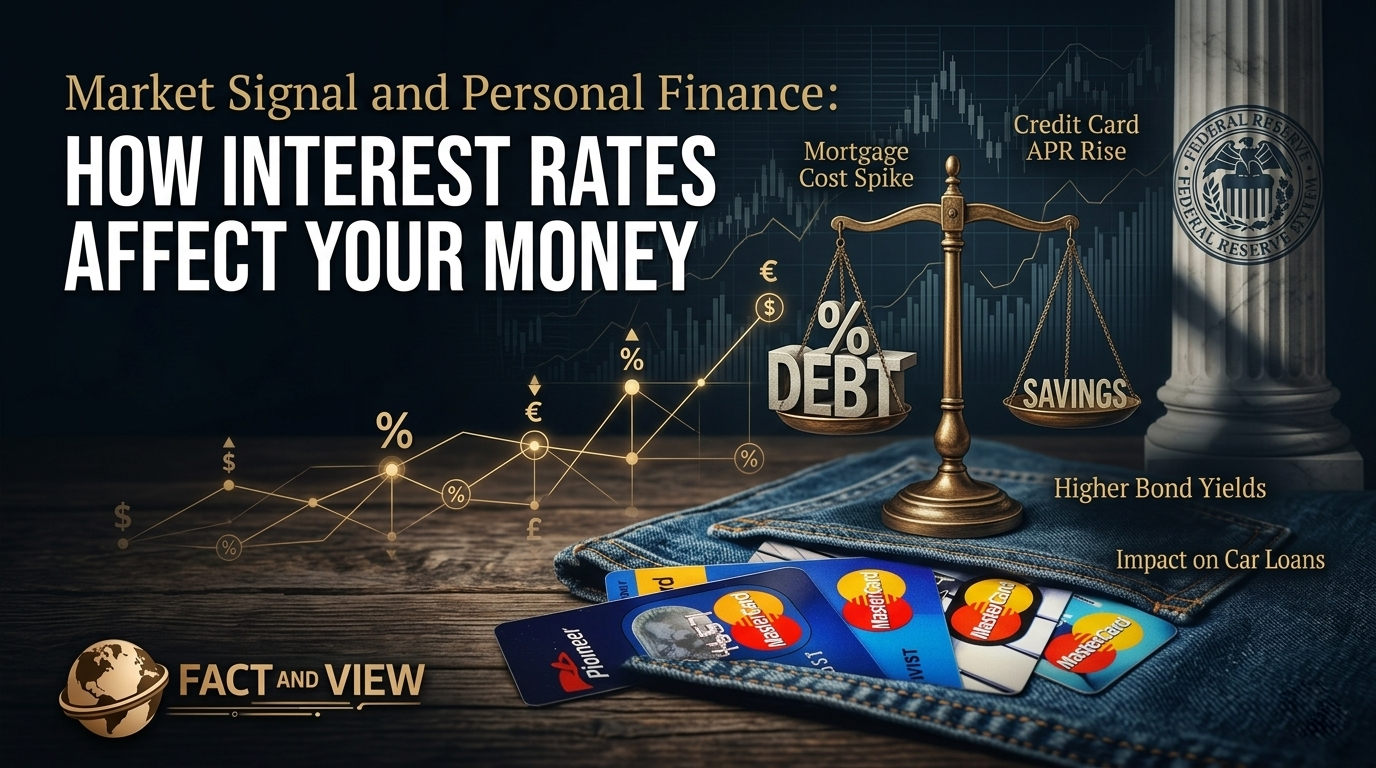
The Federal Reserve continues to play a key role by maintaining higher interest rates to control inflation, even as this increases recession risk.
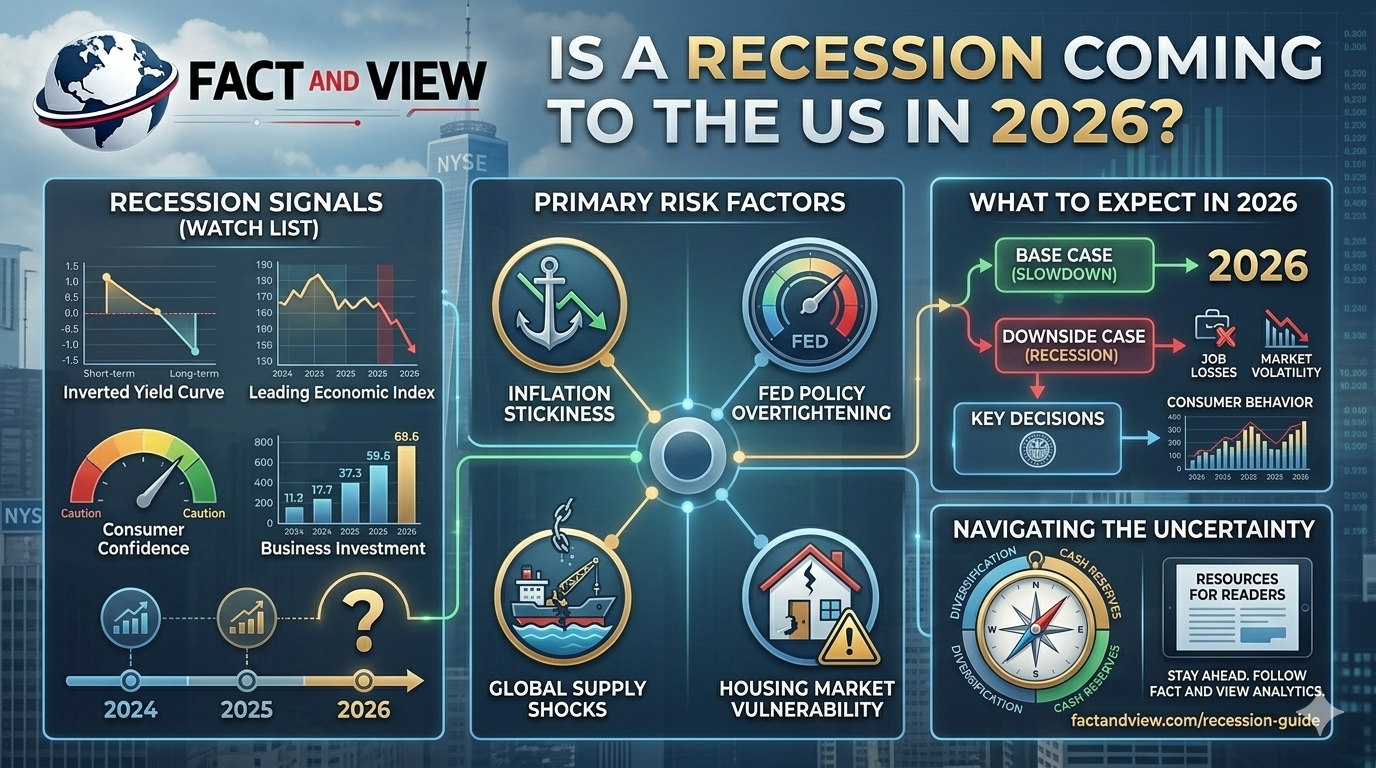
Key Warning Signs
1. High Interest Rates
Higher rates reduce borrowing and investment, slowing economic activity.
2. Slowing Consumer Spending
Consumers are becoming more cautious due to higher living costs.
3. Weakening Business Investment
Companies may delay expansion during uncertainty.
4. Global Risks
Geopolitical tensions and trade disruptions can accelerate downturns.
Is a Recession Inevitable?
Not necessarily.
While current conditions increase the probability of a recession, they do not guarantee one. The economy could still achieve a “soft landing,” where inflation declines without a significant contraction.
However, the longer high interest rates remain in place, the greater the likelihood of a slowdown turning into a recession.
What This Means for Americans
- borrowing remains expensive
- job growth may slow
- financial pressure may increase
Preparation and financial discipline become more important during uncertain periods.
What This Means for Investors
Markets often react before the economy officially enters a recession.
This means volatility may increase, but it can also create long-term opportunities for disciplined investors.
What Happens Next?
Possible scenarios include:
- soft landing
- mild recession
- deeper economic contraction
At present, a mild recession remains the most realistic outcome.
FAQ
Is a recession coming in 2026?
It is possible, but not guaranteed.
What causes a recession?
High interest rates, reduced spending, and external shocks.
How long do recessions last?
Typically several months to a couple of years.
A US recession in 2026 is a realistic possibility, but not a certainty. The outcome will depend on inflation trends, interest rate decisions, and global conditions.