Even as inflation has slowed compared to previous years, many Americans are still asking the same question: why does everything feel so expensive?
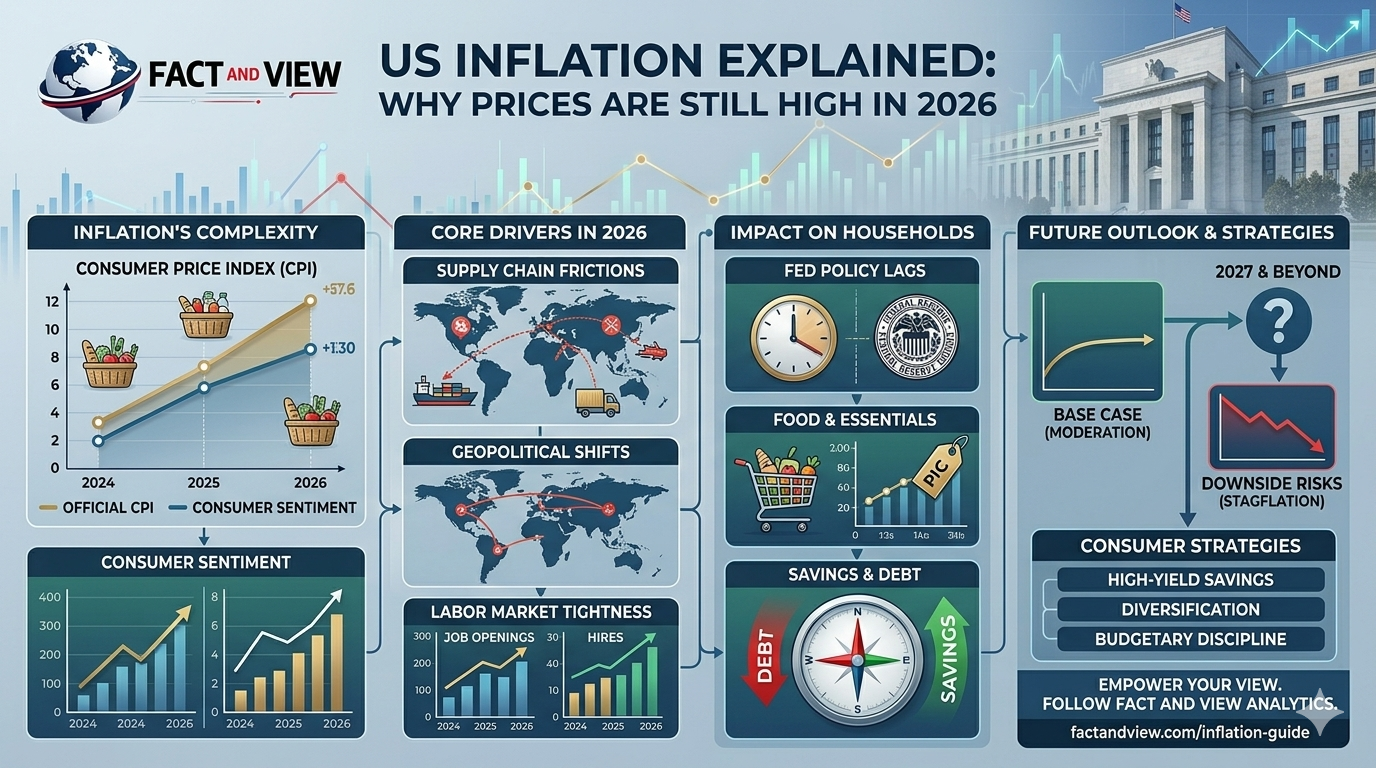
In 2026, inflation is no longer rising as rapidly, but prices remain elevated across essential categories like housing, food, and services.
Understanding why requires looking beyond headlines and examining the deeper economic forces at work.
What Is Inflation?
Inflation refers to the rate at which prices for goods and services increase over time, reducing purchasing power.
In simple terms:
- higher inflation = your money buys less
Why Prices Are Still High
1. Lag Effect
Even when inflation slows, prices do not fall — they just rise more slowly.
2. Housing Costs
Housing remains one of the largest contributors to inflation.
3. Wage Growth
Higher wages can lead to higher prices as businesses pass on costs.
4. Supply Chain Changes
Global disruptions have permanently increased some costs.
The Role of the Federal Reserve
The Federal Reserve raises interest rates to reduce inflation by slowing demand.
However, this process takes time and can also slow economic growth.
What This Means for Americans
- higher cost of living
- pressure on savings
- more expensive borrowing
Budgeting and financial planning become increasingly important.
What Happens Next?
Inflation is expected to gradually decline, but a return to pre-2020 price levels is unlikely.
Instead, the economy is adjusting to a new price baseline.
FAQ
Why are prices still high if inflation is down?
Because inflation measures the rate of increase, not the price level.
Will prices go back to normal?
Unlikely — they may stabilize, but not fully reverse.
Inflation in 2026 is less about rapid increases and more about sustained high prices. Understanding this shift is key to making better financial decisions.