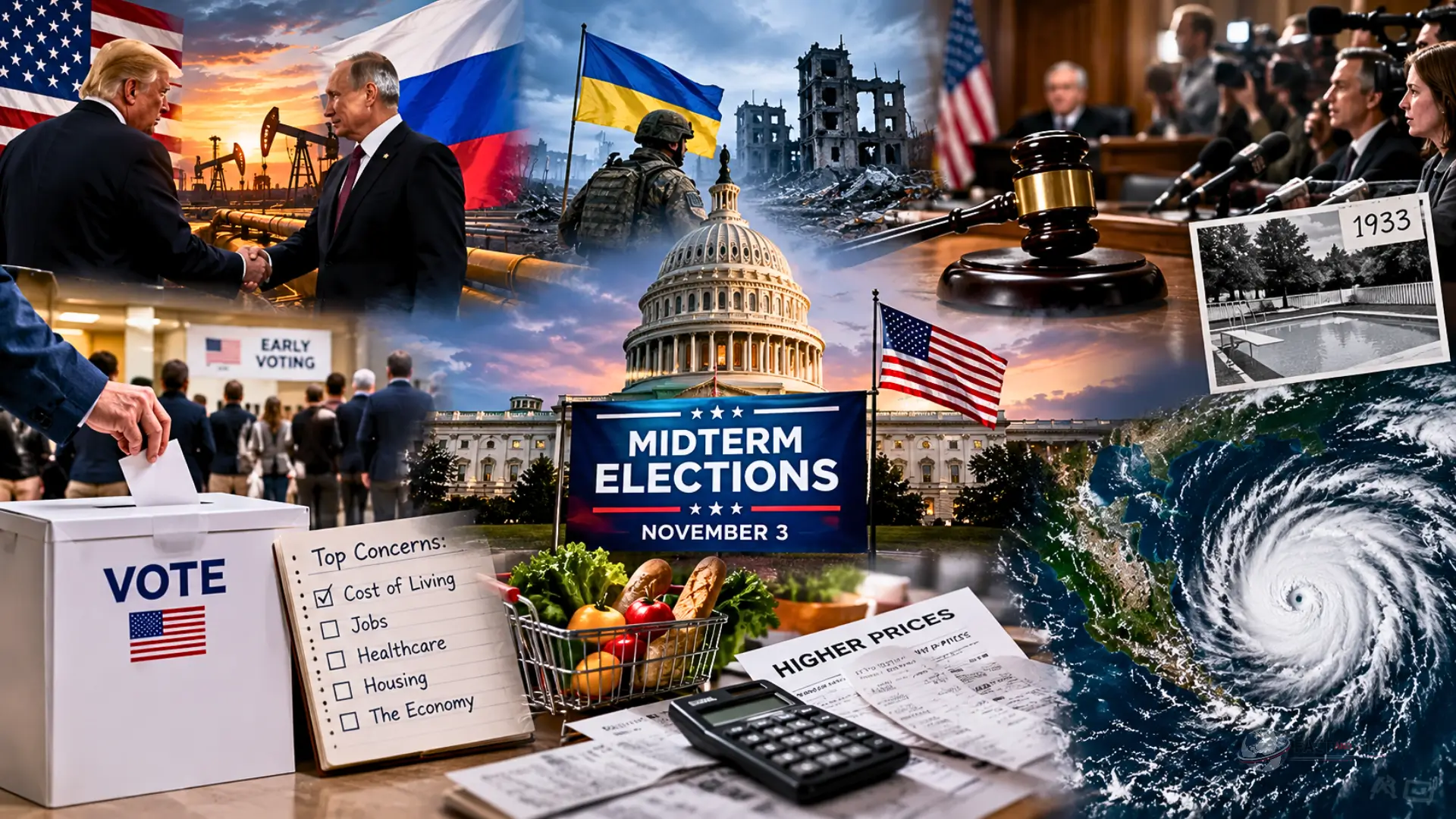
Washington enters the final stretch before the November 3 midterms under unusual strain. A president’s energy deal with Moscow has reopened old wounds with Kyiv. A standoff with the press has reached a federal courtroom, and reportedly a conversation about a 1933 swimming pool. Millions of Americans are already voting, with the cost of living topping their list of concerns. And in the Pacific, a hurricane is gathering strength off Mexico’s coast. None of these stories are isolated. Together, they capture a country negotiating economic anxiety, institutional friction, and an election that could reshape Congress, all at once.
Trump’s Diesel Compromise and the Crack in Relations With Kyiv
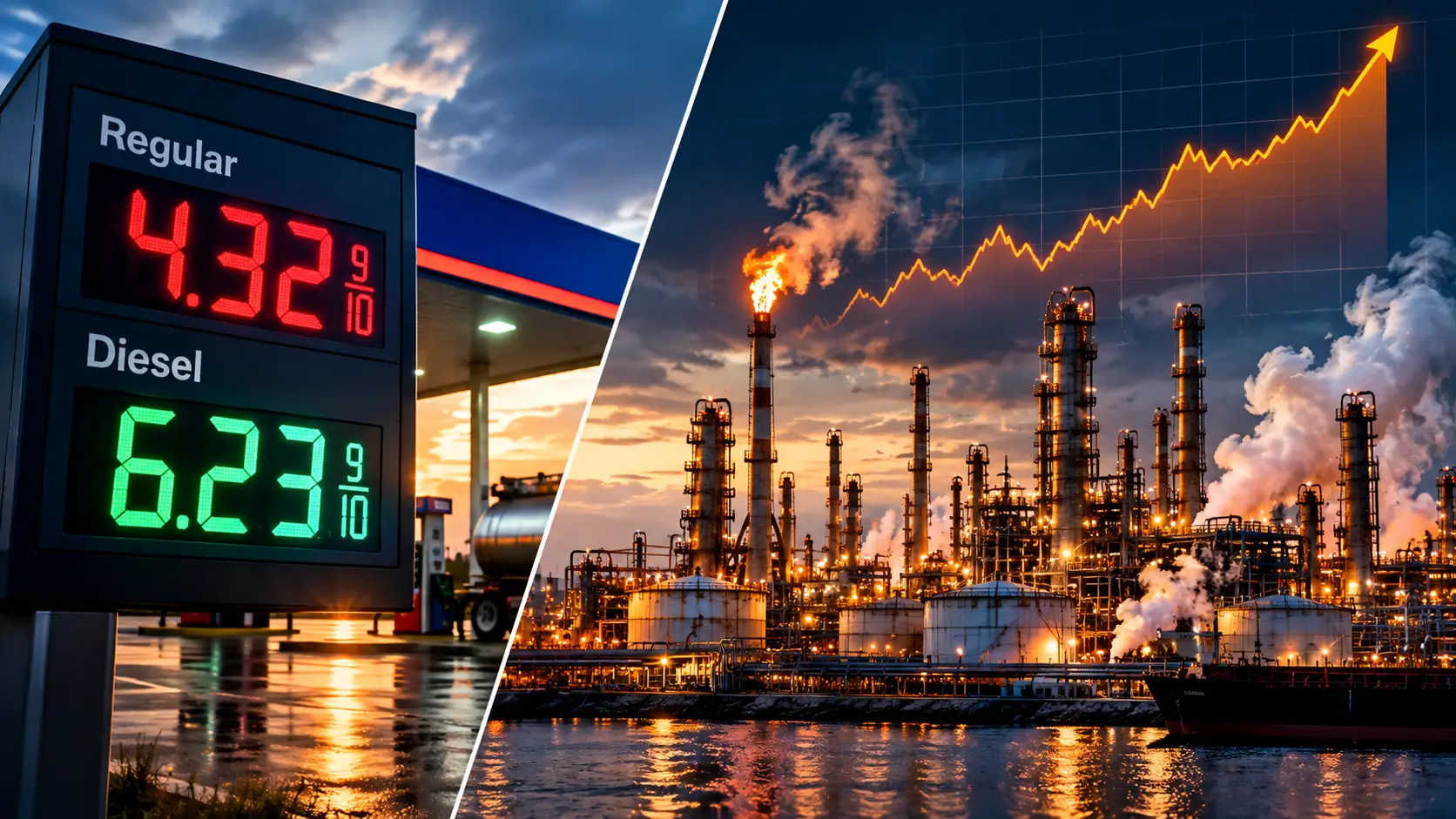
On October 9, President Donald Trump announced a deal with Russian President Vladimir Putin to bring Russian diesel back into global markets, and the U.S. Treasury issued a general license easing sanctions on those exports. Trump framed it as relief for American consumers, posting that lower fuel prices were his top priority, particularly for farmers, ranchers, and truckers.
The timing was pointed. The move came the same week Trump was due to begin enforcing a sweeping new Russia sanctions law, and just hours after Zelensky personally urged visiting U.S. lawmakers in Kyiv to ensure that law was fully implemented, not loosened.
Criticism crossed party lines, though not uniformly. Republican Representative Don Bacon called the decision “a grave error.” Senate Democratic Leader Chuck Schumer described it as a deal driven by Trump’s “flailing political fortunes.” A group of 22 House members from both parties pressed Trump to revoke the waiver. Not every Republican objected; Representative Thomas Massie argued the U.S. should go further and lift sanctions on petroleum products broadly.
Zelensky’s own reaction was blunt. He told Axios the deal was “not fair and not honest,” and separately called it “weak” and “unworthy,” an arrangement he said amounted to an investment in a war that still needs to end. Trump, for his part, has dismissed the criticism and suggested Ukraine bears responsibility for fuel shortages because of its strikes on Russian refineries.
The White House Versus the Press: Court Orders and a Rumored Pool
The administration’s standoff with major news organizations escalated this month as well. After Trump revoked White House credentials for CNN, MS NOW, and Politico in mid-September, a federal judge, a Trump appointee, ordered the credentials restored within 14 days, finding the outlets had been denied due process. The White House’s compliance was uneven at first; reporters from the three outlets were briefly turned away again even after the order, prompting an emergency court filing before access was restored.
The dispute hasn’t fully settled. CNN was separately excluded from a White House press pool assignment for a presidential trip in the weeks that followed, and the administration has appealed the underlying ruling.
Against that backdrop, a smaller, stranger story has circulated in Washington: according to the New York Times, Trump has repeatedly asked aides about restoring the White House’s original indoor pool, built for Franklin D. Roosevelt in 1933 and currently covered by the press briefing room, and relocating reporters to a nearby federal building. Trump posted mocked-up images on Truth Social in late September, one captioned “Fake News” showing the current briefing room, another reimagining the space in gold as the “FDR Pool.” The White House has not confirmed whether the idea will move forward.
The Fight for Congress: Millions Vote Early
Early voting for the midterms is now underway in dozens of states, with more opening by the week. As of mid-October, more than 6 million Americans had already cast ballots, according to Associated Press tracking, a number that has continued climbing daily as additional states come online. Georgia alone passed 1 million votes within a week of its polls opening.
Control of both the Senate and the House is on the ballot, and the stakes extend well beyond this election cycle. But the defining issue, according to a recent Reuters/Ipsos poll, isn’t a specific scandal or foreign policy dispute. Half of registered voters named the cost of living as the single most important factor in their vote, ahead of healthcare, gas prices, food, and housing. Gas itself has become a visible symbol of that frustration, with AAA pricing the national average well above a dollar more per gallon than a year earlier.
The FIELDS Program: Reducing Dependence on Foreign Fertilizer
Amid the political noise, the administration also advanced a quieter, longer-term initiative. The U.S. Department of Agriculture’s FIELDS Program, short for Fertilizer Investment & Expansion for Long-Term Domestic Supply, is directing $500 million toward expanding American fertilizer production, with individual project grants ranging from $15 million to $150 million.
Agriculture Secretary Brooke Rollins has described the goal plainly: more domestic manufacturing capacity, more jobs, and less dependence on foreign suppliers, namely Russia, Canada, Belarus, and China, which together account for the large majority of the world’s fertilizer production. China has also restricted exports of fertilizer inputs like sulfuric acid in recent months, adding urgency to the push. The program funds new plants, upgrades to existing ones, and improved storage and distribution, prioritizing projects that can reach production quickly.
A Hurricane Adds to the Pressure
On top of the political turbulence, nature is adding its own test. The National Hurricane Center confirmed this week that a tropical depression off Mexico’s Pacific coast strengthened into Tropical Storm Vance, with forecasters projecting rapid intensification into a major Category 3 hurricane by the weekend. Current forecasts track the storm roughly parallel to Mexico’s southwestern coast, with authorities in Guerrero, Michoacán, and Colima monitoring closely, though the system is not currently projected to make direct landfall. Dangerous surf and rip currents are expected to reach the coast regardless of the storm’s exact path, and hurricane forecasts at this range can still shift.
The Bottom Line
None of this week’s stories stand alone. A fuel deal meant to ease pocketbook pressure before an election has instead strained an alliance. A fight over press access has spilled from the courtroom into a dispute over office space. And the election both of those stories feed into is being decided, more than anything else, by how expensive life has become for ordinary Americans. Add a hurricane bearing down on Mexico’s coast, and the result is a week that captures, in miniature, how domestic politics, foreign policy, and forces no administration controls are now colliding in American public life at the same time.