
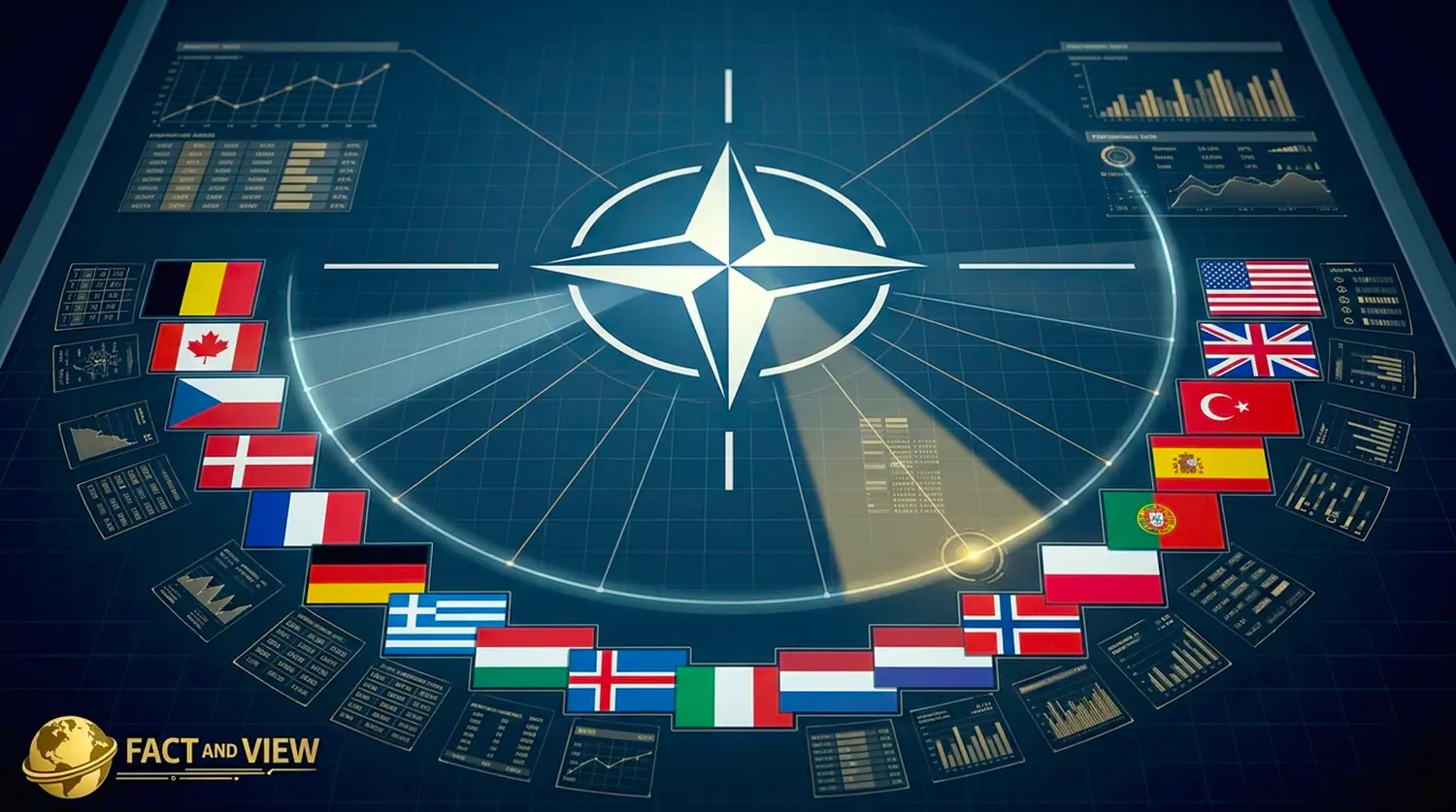
For most of the post-Cold War era, America’s alliances operated on a simple premise: Washington provided the backbone of global security, while allies contributed political support, bases, troops and money.
That bargain is changing.
Under President Donald Trump, the Pentagon is increasingly treating alliances less like permanent memberships and more like business relationships. The question is no longer simply, “Are you an ally?” It is becoming: “What are you bringing to the table right now?”
The 2026 National Defense Strategy makes the shift unusually explicit. It calls for allies to take greater responsibility for their own regions, pushes a new global defense-spending standard of 5% of GDP, and says U.S. support abroad should become more limited where threats are considered less consequential to American interests.
The result is something that looks increasingly like a loyalty test.
Not a formal NATO requirement. Not a written rule saying allies must obey Washington.
Something subtler—and potentially more consequential: a system in which military access, political goodwill, exercises, weapons cooperation and even the perceived reliability of U.S. protection can become part of a running account of who is “doing their part.”
The Iran crisis has exposed that logic more clearly than almost any event in years.
The big picture
Think of the old alliance system as a long-term insurance policy.
The United States paid a large premium. Allies received protection, deterrence, intelligence, logistics and a powerful military umbrella. In return, Washington expected solidarity—but often tolerated significant disagreements over individual wars and operations.
The new model looks more like a contract under constant review.
The Pentagon’s strategy “2026 National Defense Strategy” says allies should not behave as “dependencies,” but as partners capable of handling more of the security burden themselves. Europe, in particular, is expected to take the lead against threats that are more serious for Europeans than they are for the United States, with Washington providing “critical but more limited support.”
This shift is already reshaping European defense spending and the economic consequences of the war in Ukraine. Read our analysis of how the Ukraine war is reshaping the global economy.
That is a profound change in the definition of alliance.
It does not necessarily mean America is abandoning NATO. In fact, NATO leaders reaffirmed their commitment to Article 5 at the July 2026 Ankara summit, repeating the core principle that an attack on one is an attack on all.
But the insurance company analogy has changed.
Washington now wants the customer—the ally—to pay more of the premium.
The price of admission
The clearest example is money.
At the 2025 NATO summit in The Hague, allies committed to spending 5% of GDP “NATO’s 5% defense spending commitment” annually on defense and defense-related security expenditures by 2035. At least 3.5% is intended for core military requirements, with up to 1.5% covering infrastructure, resilience, cybersecurity and related areas.
That was not simply another spending target.
It became a benchmark.
By the 2026 Ankara summit, NATO said European allies and Canada had increased core defense investment by more than $139 billion compared with the previous year. NATO officials described the progress as evidence that the alliance was beginning to turn bigger budgets into actual military capability.
From Washington’s perspective, this is the point.
America does not want to keep writing checks for a security system in which other members control their own budgets while the United States supplies a disproportionate share of the military muscle.
The Pentagon’s strategy effectively says: If you want the benefits of the network, build the capacity to carry your share of the network.
That is transactional. But it is also strategically logical.
South Korea: When support becomes a scorecard
The more dramatic test is playing out outside NATO.
South Korea is one of America’s most important military partners in Asia. Yet the alliance has recently become a case study in how Washington’s new transactional approach can spill across regions.
In August 2026, Trump ordered the Pentagon to significantly scale back the annual Ulchi Freedom Shield exercises with South Korea, citing their cost, Seoul’s reluctance to support U.S. efforts relating to Iran, and his preference for pursuing a different relationship with North Korean leader Kim Jong Un. Trump’s decision to scale back U.S.-South Korean military exercises
That linkage matters.
South Korea’s defense relationship with the United States exists primarily because of the North Korean threat. Iran is a completely different strategic theater. Yet Washington’s message was unmistakable: decisions in one theater can affect how the United States manages an alliance in another.
That is the loyalty test in its purest form.
Seoul may ask, “Are you protecting us from North Korea?”
Washington increasingly asks, “Where are you when we need you elsewhere?”
The distinction sounds small.
It is not.
Military alliances depend on predictability. If every dispute becomes part of an informal ledger of favors, allies begin planning around the possibility that today’s disagreement could affect tomorrow’s security cooperation.
And that can change behavior long before any treaty formally changes.
Spain: The base is no longer just a base
The same logic appeared in Europe during the Iran crisis.
Spain became a particularly sharp point of friction after Madrid refused to allow U.S. military aircraft to use Spanish bases for missions connected to American operations against Iran. Washington then connected the dispute to the broader question of NATO burden-sharing and Spain’s resistance to the 5% defense target.
This is where the alliance begins to resemble a negotiation table.
A military base is not simply concrete, runways and fuel.
It is leverage.
For Washington, access to European bases can make an operation faster, cheaper and easier. For the host country, granting that access can carry political, legal and strategic costs.
Under the traditional alliance mindset, disagreements over such questions were largely treated as disagreements among partners.
Under the emerging model, the question becomes more commercial:
What does Washington get, and what does the ally get in return?
That changes the bargaining environment.
Once every contribution is treated as an item on a balance sheet, a country that says “no” to Washington on one issue risks being viewed not simply as independent, but as a partner with declining strategic value.
Germany: The model ally Washington wants
Germany represents the opposite case.
Europe’s largest economy has long been criticized for relying too heavily on American military power while keeping defense spending comparatively restrained. That calculation has now shifted dramatically.
The new NATO framework is pushing European powers toward much larger defense budgets, greater industrial production and greater responsibility for Europe’s conventional defense. NATO says European allies and Canada are already moving rapidly in that direction.
For Washington, Germany is important not simply because it spends money.
It is important because Germany can potentially become part of the replacement for U.S. capacity in Europe.
That is the strategic endgame of the Pentagon’s approach: not abandoning allies, but making them capable of carrying the load when America moves elsewhere.
The 2026 strategy repeatedly emphasizes this burden-shifting logic. Europe is expected to do more in Europe so American resources can be concentrated on the homeland and the Indo-Pacific.
In business terms, Washington wants to stop being the company that owns every warehouse, funds every expansion and guarantees every delivery.
It wants franchisees who can operate independently.
Between the lines
The most important part of this strategy may not be the spending target.
It is the underlying philosophy.
The Pentagon’s new strategy explicitly argues that American interests must be prioritized and that not every threat carries the same weight for the United States. It calls for a sharper distinction between vital American interests and conflicts that allies should handle more independently.
That sounds obvious.
But alliances have historically worked partly because credibility was broader than any single calculation of immediate self-interest.
The United States did not always defend allies because the specific conflict was America’s most important problem.
It defended them because the alliance itself was strategic infrastructure.
The new model asks a different question: How much strategic infrastructure does America still need to personally finance?
That is why Iran has become such an important stress test.
The Iran war did not automatically trigger NATO’s collective-defense clause. Article 5 “how NATO Article 5 actually works” was never designed as a requirement for every member to participate in every U.S. military operation around the world.
Allies can legitimately distinguish between defending NATO territory and joining an American campaign in the Middle East.
That distinction, however, is colliding with Washington’s new expectations.
During the Iran conflict, Trump criticized allies that refused logistical or military assistance, and the dispute raised questions about whether NATO solidarity was becoming conditional on supporting U.S. operations beyond the treaty’s core geography.
That is a much bigger issue than Iran.
Because once allies begin to believe that treaty protection depends on political alignment outside the treaty itself, the alliance becomes less like a mutual-defense pact and more like a membership club with performance reviews.
The hidden risk
A transactional alliance can produce better deals.
It can force allies to spend more.
It can reduce free-riding.
It can push Europe to build stronger militaries, increase weapons production and take more responsibility for regional security. In that sense, the Pentagon’s strategy has already produced measurable changes, with NATO allies sharply increasing defense investment.
But there is a downside.
Trust is harder to rebuild than budgets are to increase.
Imagine running a company where your biggest supplier suddenly tells you that every disagreement could affect future deliveries.
You may respond by signing more contracts with the supplier.
Or you may start searching for alternatives.
That is the geopolitical danger.
European governments may accelerate defense spending not only because they trust Washington less, but because they trust Washington less and therefore want insurance against Washington.
South Korea may strengthen military autonomy.
Europe may pursue more independent capabilities.
Japan and other Indo-Pacific allies may think harder about how much risk they should assume under a U.S. strategy that can rapidly shift priorities.
These responses could make allies stronger.
But they could also make the alliance network less integrated.
What Washington is really buying
The new strategy is not simply about extracting loyalty.
It is about buying strategic freedom.
The Pentagon explicitly wants to prioritize homeland defense, deter China in the Indo-Pacific, increase allied burden-sharing and rebuild the U.S. defense industrial base.
Those priorities are connected.
If Europe can handle more of Europe’s defense, Washington can redirect resources toward Asia.
If South Korea and Japan can shoulder more regional responsibilities, the United States gains flexibility.
If allies purchase more American weapons, the U.S. defense industry gets a larger market while partners expand their own capabilities. The White House has openly framed increased allied defense spending as beneficial to American industry and employment.
The alliance question is therefore also becoming a question about America’s own fiscal priorities and how Washington allocates its defense resources. America’s changing defense spending priorities
In other words, the transaction is not simply:
“Pay more.”
It is:
“Invest more, buy more, contribute more—and give America more strategic room to maneuver.”
That is the real architecture emerging behind the rhetoric.
The new alliance equation
The old formula was simple:
America provides security. Allies provide support.
The emerging formula is more complicated:
Allies provide money, military capacity, access and political alignment. America provides leadership, technology, strategic reach and a security backstop—but with more conditions attached.
That may produce a leaner and more capable alliance system.
It could also create a system in which every partner constantly asks what happens when its interests diverge from Washington’s.
That is the loyalty test.
Not whether an ally agrees with America every time.
But whether Washington believes disagreement should carry a cost.
What comes next
The biggest question for NATO is no longer whether Europe will spend more.
It is whether greater European responsibility can coexist with continued confidence in the American security guarantee.
The Ankara summit showed that the alliance remains formally intact. NATO reaffirmed Article 5, allies pledged more investment and Europe and Canada committed to taking greater responsibility for the alliance’s defense.
But formal commitments are only one part of alliance power.
The other part is expectation.
If allies expect the United States to remain engaged when their interests are threatened, Washington needs to believe that those allies will contribute when American interests are at stake.
That is the bargain now being renegotiated.
The Pentagon’s strategy is therefore bigger than a demand for more defense spending. It represents a broader attempt to convert America’s alliance network from a system of dependency into a system of shared capacity—and to make every partnership prove its value.
The Iran crisis has simply made the test impossible to ignore.
And the question hanging over NATO is no longer just who will pay more?
It is much more consequential:
When the next crisis arrives, will America and its allies still believe they are playing for the same team — or will they first reach for the calculator?
Disclaimer: This article is intended for informational and analytical purposes only. It reflects an independent interpretation of publicly available information and does not represent the official views of NATO, the U.S. government, the Pentagon, or any other organization. Geopolitical developments are evolving and may change after publication.