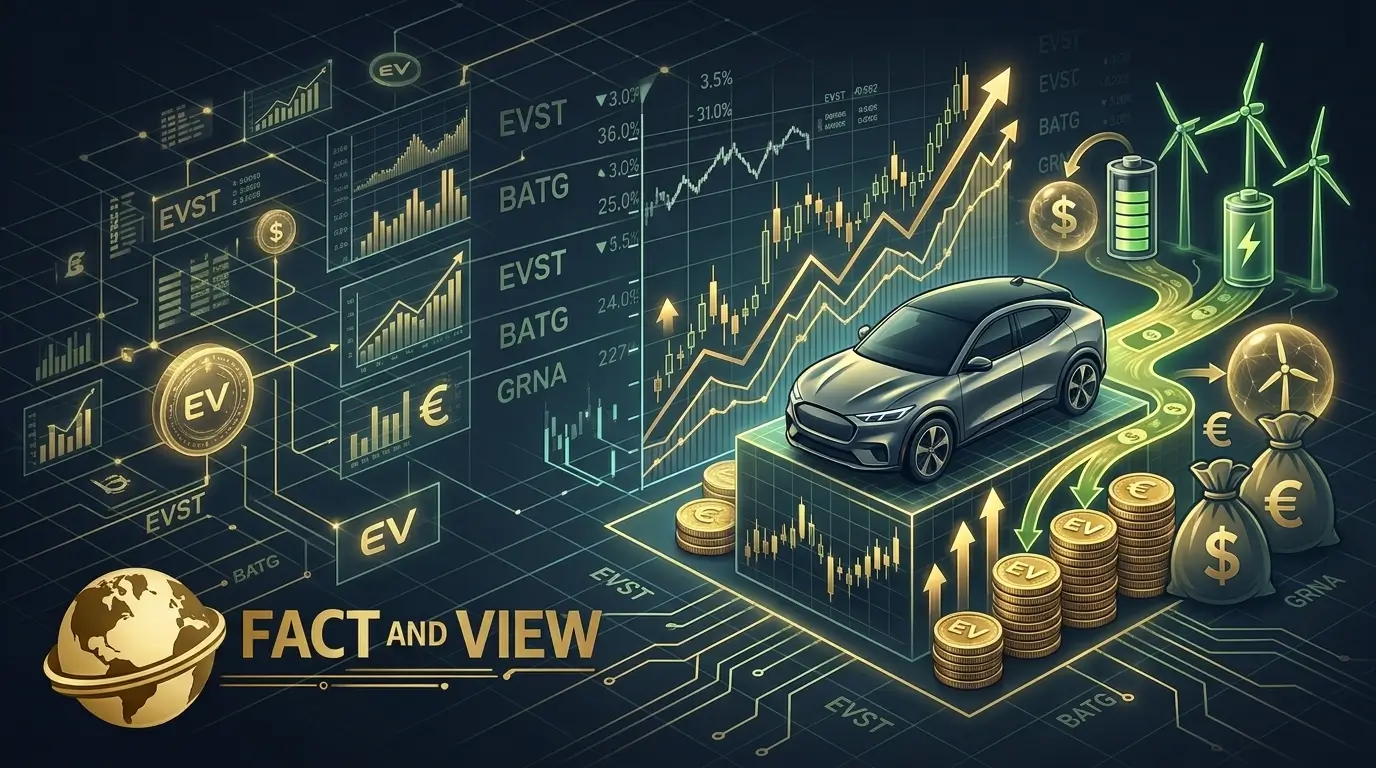
Few policy levers move auto stocks as violently as a subsidy changing hands, or disappearing entirely. A single tax credit can turn a loss-making electric vehicle into a competitively priced one, and its removal can do the reverse just as fast. For investors trying to value automakers, battery makers, and EV pure-plays over the long run, understanding how green energy subsidies actually work, not just whether they exist, is one of the more durable skills in the sector.
This isn’t a story about any single policy or election cycle. Subsidies for clean transportation have expanded and contracted in the US for two decades, and they’ll likely keep doing so. What follows is a framework for understanding that cycle, illustrated by one of the clearest recent examples: the elimination of the federal EV purchase tax credit and what it revealed about which auto stocks were actually built to survive without help.
What Counts as a Green Energy Subsidy?
“Green energy subsidies” is a broad label covering at least two very different mechanisms, and conflating them is one of the most common mistakes investors make.
Demand-side subsidies lower the price a consumer pays, most visibly through EV tax credits, like the federal credit that once offered up to $7,500 for a new electric vehicle and $4,000 for a used one. These subsidies work directly on sales volume: cut the effective price, and more people buy.
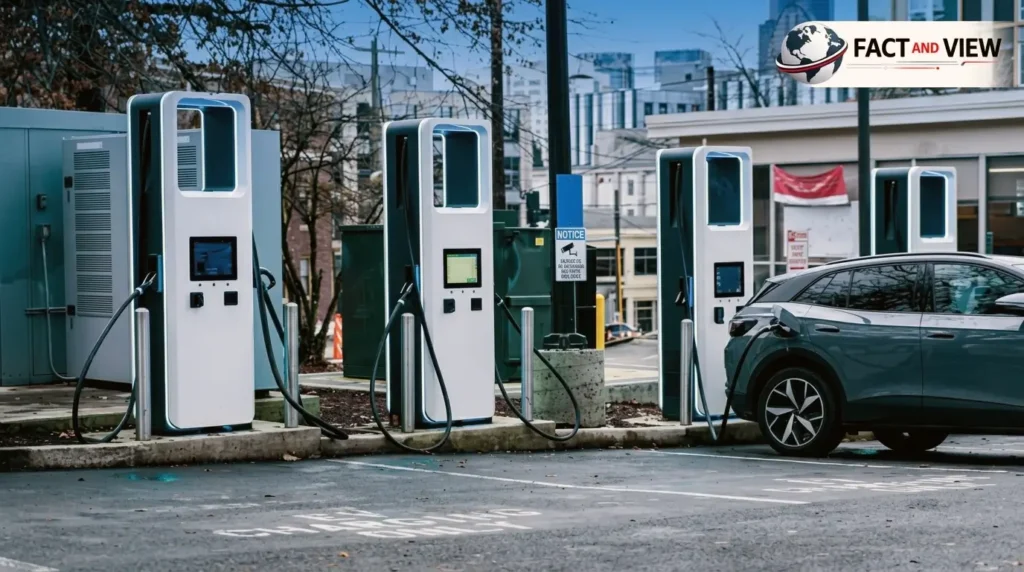
Supply-side subsidies lower the cost of building things, through manufacturing tax credits, low-interest loans, or grants for battery plants, solar component factories, and critical mineral processing. These subsidies work on cost structure and capacity rather than consumer demand directly.
The distinction matters enormously for auto stocks, because these two categories don’t always move together. A government can eliminate consumer EV tax credits while leaving battery manufacturing credits largely intact, which is close to exactly what happened in the most recent US policy shift, and the market reaction split accordingly.
Anatomy of a Subsidy Cliff: A Recent Case Study
In 2025, a major US tax law eliminated the federal EV purchase credit ahead of its original schedule, setting a hard expiration date. What followed is a useful, almost textbook illustration of how subsidy cliffs actually play out in the auto sector, in three distinct phases.
Phase one: the pull-forward. In the months before the deadline, EV sales surged as buyers rushed to lock in the credit before it disappeared. Quarterly EV market share hit a record high in the final full quarter before expiration, a spike that reflected borrowed demand from the future rather than sustainable growth.
Phase two: the cliff. In the first full quarter after the credit expired, new EV sales fell by roughly a quarter year-over-year, with dealer inventory ballooning well beyond typical levels as automakers were left holding cars priced for a subsidized market that no longer existed.
Phase three: the sort. Sales gradually stabilized over the following two quarters, but not evenly. Some automakers absorbed the shock and kept selling; others saw sales evaporate by 60 to 90 percent year-over-year almost overnight.
This three-phase pattern, artificial surge, sharp drop, uneven recovery, isn’t unique to this particular credit. It’s a recurring shape that tends to appear whenever a meaningful demand-side subsidy has a known, fixed expiration date, which is exactly why investors should treat it as a template rather than a one-time event.
Winners and Losers: How Subsidy Removal Sorts Auto Stocks
The most instructive part of a subsidy cliff isn’t the aggregate sales drop, it’s the dispersion underneath it. Removing a subsidy doesn’t punish every company equally; it exposes which business models depended on it most.
In the case just described, the company that fared best was also the one with the largest scale and the narrowest, most cost-optimized product lineup, allowing it to compete on price even without the credit. Companies still working toward profitability on their core vehicle lines, and legacy automakers running smaller-volume EV programs alongside profitable gas-powered lineups, saw the sharpest declines. In some cases, sales for individual EV models fell by more than half within two quarters of the credit’s expiration.
The lesson generalizes well beyond this specific event: when evaluating auto stocks for subsidy exposure, the key question isn’t “does this company sell EVs,” it’s “does this company’s unit economics work without the subsidy.” A company selling electric vehicles near cost parity with gas alternatives is structurally less exposed than one relying on the subsidy to bridge a meaningful price gap.
The Overlooked Half: Manufacturing Subsidies Often Survive Longer
Here’s the part that gets lost in most headlines about EV subsidies disappearing: consumer-facing credits and manufacturing credits don’t necessarily share the same fate, and that gap matters for how investors should read the picture.
In the same legislation that eliminated the consumer EV purchase credit, the advanced manufacturing production credit, a per-unit incentive for domestically produced batteries, solar components, and critical minerals, was largely preserved, with new restrictions added around foreign-sourced materials rather than a broad phase-out. The political logic tracks: manufacturing credits are tied to domestic jobs and factory investment, which draws support across party lines in a way that consumer purchase subsidies don’t always enjoy.
For investors, this means a battery manufacturer or a vertically integrated automaker with domestic battery production can remain meaningfully subsidized even as the demand-side credit that helped sell its vehicles disappears. Evaluating auto and clean-energy stocks purely on “are EV subsidies gone” misses this bifurcation entirely. The more precise question is which type of subsidy a given company’s business model actually depends on.
Why These Subsidies Are Political, Not Just Economic
It’s worth being direct about something many market analyses gloss over: green energy subsidies are, and have always been, contested political tools, not neutral economic instruments. They expand under administrations prioritizing emissions reduction and industrial policy, and they contract under administrations prioritizing near-term consumer costs or fossil fuel competitiveness. Both framings have genuine, serious advocates, and the resulting policy swings tend to track election cycles more closely than they track underlying technology costs.
That means the “right” long-term subsidy assumption for a financial model isn’t zero, and it isn’t the current credit staying forever. It’s a probability-weighted range that accounts for the strong likelihood of future changes in either direction. Companies whose competitiveness depends entirely on a specific, non-guaranteed policy outcome carry meaningfully more risk than those positioned to be competitive across multiple policy scenarios.
A Framework for Evaluating Auto Stocks Through a Subsidy Lens
Rather than trying to predict the next policy change, a more durable approach is to evaluate auto and EV-related stocks against a few consistent questions:
- Subsidy dependency: How much of the company’s current sales volume, or pricing competitiveness, relies on an active demand-side credit that has a known or plausible expiration?
- Cost curve position: Is the company closing in on cost parity with non-subsidized alternatives, or still structurally reliant on subsidy-supported pricing?
- Manufacturing footprint: Does the company benefit from supply-side credits, like domestic battery or component manufacturing incentives, that tend to be more politically durable than consumer credits?
- Powertrain diversification: Can the company profitably sell non-EV products if EV demand softens, or is its entire model concentrated in the subsidy-sensitive segment?
- Balance sheet runway: Does the company have enough cash and access to capital to survive a multi-quarter demand air pocket like the one that follows a typical subsidy cliff?
None of this is a stock recommendation; it’s a checklist for reading subsidy-related headlines with more precision than “credits are gone, EV stocks are doomed” or the equally oversimplified opposite.
Common Misconceptions
Myth: Losing EV tax credits means the electric vehicle transition is over. Reality: Sales typically stabilize after an initial shock, and global EV adoption continues to grow even in markets where individual countries pull back specific incentives, particularly as battery costs continue to decline independent of subsidies.
Myth: All EV-related stocks move together when subsidies change. Reality: As shown above, the dispersion between individual companies after a subsidy change is often larger than the sector-wide average, making index-level thinking a poor substitute for company-specific analysis.
Myth: Manufacturing subsidies and consumer subsidies always move in the same direction. Reality: They frequently diverge, since they serve different political constituencies and economic goals, and treating them as a single category can lead to mispricing supply-chain-focused stocks.
The Bottom Line
Green energy subsidies aren’t a one-time policy event to price in and forget; they’re a recurring feature of the auto sector that expands and contracts with the political cycle. The clearest lesson from recent history isn’t that EV tax credits disappeared, it’s how unevenly that disappearance was absorbed across different companies, and how a related but distinct category of subsidy, manufacturing incentives, told a meaningfully different story at the same time. Investors who build their auto stock analysis around subsidy dependency, cost structure, and policy durability, rather than around the presence or absence of any single credit, are better positioned for whatever the next cycle brings.
Related Reading
- US Regional Banking Crisis: What Investors Should Know — another example of how a single sector can show sharp dispersion between well-positioned and vulnerable companies under the same macro pressure.
- What Is Stagflation? Why Economists Fear It Again — background on the broader economic conditions shaping consumer demand for big-ticket purchases like vehicles.
Sources
- Center for Climate and Energy Solutions — “The 30D & 45X Tax Credits Explained: What’s at Stake for the U.S. Clean Energy Manufacturing and EV Supply Chains”
- RMI — “What’s Next for Advanced Energy Manufacturing in the United States?”
- Miller & Chevalier — “OBBBA Brings 45X Changes, Though Not Wholesale Repeal”
- Grant Thornton — “Energy incentives under OBBBA: What you need to know”
- Environmental and Energy Study Institute — “Where Key Clean Energy Tax Credits Stand”
- Cox Automotive / Electrek — “New EV sales drop 28% in Q1 2026, but used EVs surge 12% to near-record levels”
- Kelley Blue Book — “The EV Sales Drop May Be Leveling Out” (kbb.com)
- HowToGeek — “US EV sales dropped in early 2026 for nearly everyone except Tesla”
- Inside Climate News — “Without Tax Credits, EV Sales Are Searching for a Spark”
- Yahoo Finance — “Tesla’s EV Rebound Leaves Rivian and Lucid Facing a Tougher Investor Test”
- U.S. Securities and Exchange Commission — Penske Automotive Group and Group 1 Automotive 10-Q/10-K filings on OBBBA impact
- Edmunds — “Electric Vehicle Tax Credits are gone: What You Need to Know”
Disclaimer: This article is for informational and educational purposes only and does not constitute personalized investment advice. Sector conditions, sales data, and subsidy policy change over time; readers should verify current figures and consult a licensed financial advisor before making investment decisions.