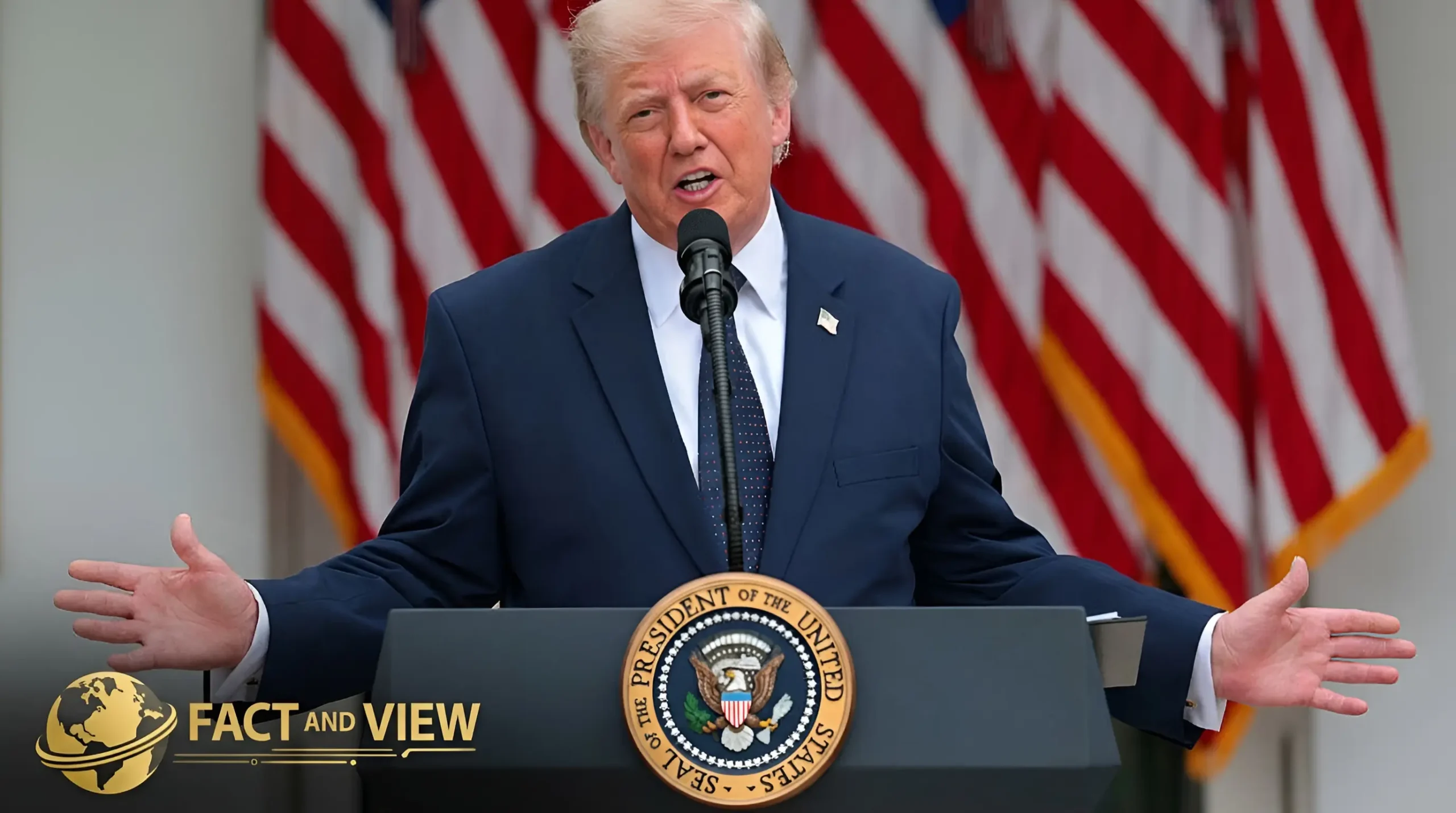
War has a way of circling back to the man who started it. Five months after President Trump ordered the strikes that killed Iran’s Supreme Leader, Israeli intelligence has warned Washington that Tehran is once again plotting to kill him. The warning lands at a precarious moment: a fragile ceasefire between the United States and Iran is unraveling in real time, American warplanes have struck close to 90 targets along Iran’s coastline in the past week alone, and Trump himself has spent the week telling reporters, matter-of-factly, that he expects to be a target for the rest of his life.
This is the story of how a five-month-old war, a decapitated regime, and a president who has survived multiple assassination attempts have collided into one of the most serious security threats of Trump’s second term.
What Israeli Intelligence Actually Revealed
The Wall Street Journal first reported that Israel had shared intelligence with Washington describing a fresh, specific plan by Iran to assassinate Trump. CNN later reported that two sources described it slightly differently: less a fully formed plot and more a hardening current of talk among Tehran’s hardliners about wanting Trump dead. Neither the White House nor Israel’s embassy has publicly detailed what the intelligence contained, and two sources told CNN that American intelligence agencies had not independently verified it themselves.
That caveat matters. Some U.S. officials, speaking to CNN on condition of anonymity, suggested the timing of Israel’s warning could be less about a concrete plot and more about influencing Trump’s calculus as he weighs whether to escalate American military action against Iran again. Israeli Prime Minister Benjamin Netanyahu has openly doubted the wisdom of Trump’s diplomatic track with Tehran, and the two leaders have clashed in recent weeks over Israel’s continued strikes in Lebanon. Inside the U.S. intelligence community, CNN reported, there is a degree of built-in skepticism toward Israeli reporting generally, even when it’s taken seriously.
“I’ve Been Number One on Their List for a Long Time”
Trump has not been shy about the threat. Speaking to reporters in Ankara, Turkey, during this week’s NATO summit, he said Iran wants to eliminate him personally, and added that he’d seen intelligence that morning placing him on every list Iran maintains. Days later, according to ABC News, Trump escalated his public warning further, declaring that a thousand missiles were ready to launch if Iran succeeded in killing him. It’s a striking bit of public deterrence signaling for a sitting president to deliver from the White House podium, and it echoes past comments from Trump, who told the New York Post he had already left standing orders that any successful attempt on his life should trigger overwhelming retaliation against Tehran.
Notably, Trump has also pushed back on the idea that the newest warning changes much. Asked directly about the Israeli intelligence, he dismissed it as nothing new, adding that he has been Iran’s top target for years and has simply learned to live with it.
The War That Refuses to End
To understand why Tehran’s hardliners are talking this way, it helps to rewind to February 28, 2026, when the United States and Israel launched a coordinated surprise assault on Iran, codenamed Operation Epic Fury by Washington and Operation Roaring Lion by Israel. In a single wave of strikes, Israeli forces killed Supreme Leader Ayatollah Ali Khamenei, along with several members of his family and senior officials meeting at his compound, while separately eliminating Ali Larijani, Iran’s chief nuclear negotiator. U.S. Central Command has said it has struck more than 11,000 targets inside Iran since the war began.
Iran’s clerical establishment moved quickly to fill the leadership vacuum. On March 9, the Assembly of Experts, the body responsible for choosing Iran’s supreme leader, named Khamenei’s son, Mojtaba Khamenei, as his successor, following what Iran International described as intense pressure from Islamic Revolutionary Guard Corps commanders on assembly members to fall in line. It marked an unprecedented dynastic handoff in a system built explicitly to avoid one.
The war has lurched between ceasefires and renewed fighting ever since. A two-week truce began on April 8 but frayed almost immediately. A more formal deal, the Islamabad Memorandum, was signed by Trump and Iranian President Masoud Pezeshkian on June 17, only for both sides to trade strikes again in late June and once more this week, after Iran fired on commercial ships near the Strait of Hormuz. Trump publicly declared the ceasefire “over” on Wednesday, even as U.S. and Iranian officials signaled talks would continue behind the scenes.
The Soleimani Shadow
Iran’s leadership has never hidden its motive. Since Trump ordered the 2020 drone strike that killed Islamic Revolutionary Guard Corps commander Qassem Soleimani during his first term, Tehran has publicly vowed retaliation. Foundation for Defense of Democracies analyst Benham Ben Taleblu, who tracks the Iranian regime closely, said Tehran has consistently backed its anti-American rhetoric with real action. He argued that the animosity is unlikely to fade even after Trump eventually leaves office, given the scale of damage the current war has inflicted on the regime.
That anger was on vivid display at Khamenei’s funeral in Mashhad on July 9, where mourners chanted “Death to America” and carried signs reading “We Will Kill Trump,” according to Reuters and multiple outlets on the ground.
A President Who Has Faced This Before
This isn’t the first time Trump’s security team has grappled with an Iranian threat to his life. His 2024 presidential campaign disclosed that it had been briefed on specific Iranian assassination plans intended to destabilize the United States, and federal prosecutors that year charged Islamic Revolutionary Guard Corps-linked operatives in a related murder-for-hire scheme. Trump has also survived non-Iranian threats, including the July 2024 shooting at a Pennsylvania rally in which a bullet grazed his ear.
Former National Security Council spokesman John Ullyot, who served during Trump’s first-term decision to kill Soleimani, framed the risk as an unavoidable cost of decisive national security choices, noting that consequential calls on security tend to expose the leaders who make them to real personal danger.
Why Trump Flew Home on the Old Plane
The clearest sign that officials are treating the latest warning seriously came in the form of a security decision, not a statement. Rather than fly home from the NATO summit aboard the newly refurbished Air Force One, a Boeing 747-8 donated by Qatar and only recently put into service, Trump’s security detail had him depart Turkey on the older, more thoroughly vetted presidential aircraft instead. He later switched planes again in England for the final leg back to Washington. The choice was notable given Turkey’s proximity to Iran and came as the administration has faced monthslong scrutiny over the cost and pace of retrofitting the Qatari jet.
Sabrina Singh, a former Pentagon deputy press secretary, said the new intelligence-sharing from Israel reflects a healthy security relationship functioning as intended, and that a threat of this kind simply has to be treated as genuine. Atlantic Council senior fellow Tom Warrick went further, warning that a state actor like Iran represents a fundamentally different threat than a lone individual, given Tehran’s capacity to deploy drones, ballistic missiles, or aircraft against a target as high-profile as Air Force One.
What Experts Agree On, and Where They Split
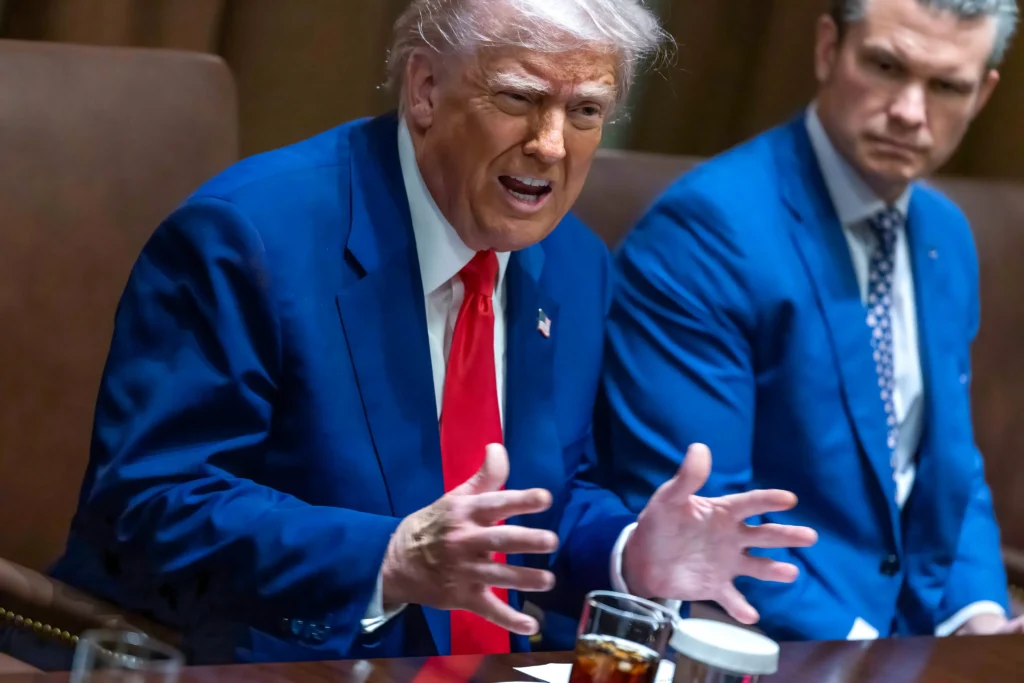
There’s broad consensus among former officials that Iran’s threats against Trump are consistent, long-running, and rooted in genuine institutional grievance rather than idle bluster. Nathan Sales, a former State Department counterterrorism coordinator, argued the episode reinforces the logic behind reimposing sanctions on Tehran, framing them as a way of denying the regime the resources it would need to carry out terror plots.
Where analysts diverge is on how to weigh this specific piece of intelligence. Some see it as exactly what it appears to be: a credible warning from a close ally with strong regional intelligence access. Others, inside the U.S. government itself, view it more cautiously, as one data point shaped partly by Israel’s own strategic interest in keeping Washington’s military pressure on Iran turned up. Both readings can be true at once, which is part of why the story has proven so hard to neatly resolve.
What Comes Next
For now, the fighting and the diplomacy are proceeding on parallel tracks. U.S. and Iranian officials say talks are set to resume after Tehran privately acknowledged that recent strikes on commercial vessels were a mistake, according to ABC News. At the same time, Washington has demanded Iran publicly confirm the Strait of Hormuz remains open, and CENTCOM has continued targeting Iranian military infrastructure whenever new attacks on shipping occur. Analysts at Al Jazeera note that both sides have real incentives to return to the table: the war remains unpopular with American voters ahead of the November midterms, while Iran’s battered economy needs sanctions relief and access to frozen assets.
None of that resolves the more personal question hanging over the president himself. Whether this latest warning reflects an active, specific plot or a broader current of hostility within a regime devastated by war, Trump’s own security posture, and his own public remarks, suggest he’s treating it as real. As Ben Taleblu put it, the hostility predates this war and is likely to outlast it, regardless of how the current fighting ends.
For more on the diplomacy unfolding alongside this story, see our coverage of this week’s NATO summit and the broader Russia-Ukraine negotiations Trump is also navigating, where the same Ankara summit that prompted Trump’s Air Force One switch was also the backdrop for renewed talks on ending the war in Ukraine.
Sources
- The Hill — “Fears erupt over Iran’s desire to kill Trump”
- CNN — “Israel shared intelligence with US of Iranian plot to assassinate Trump, sources say”
- The Wall Street Journal — original report on Israeli intelligence regarding the plot
- The Jerusalem Post — “Israel reportedly shares intelligence on Iranian plan to assassinate Donald Trump with US”
- Jewish Telegraphic Agency — “Israel reportedly tells US about new Iranian plot to assassinate Trump”
- The Times of Israel — “Israel reportedly warned US that Iran devised a new plot to assassinate Trump”
- France 24 — “Iran had ‘specific’ plan to kill Trump, US media report citing Israeli intel”
- ABC News — “Iran live updates: Trump agrees to continue talks with Iran, but says ceasefire is ‘OVER'”
- CNBC — “U.S., Iran trade fresh strikes as Trump says he’s ‘not sure’ he wants deal”
- Al Jazeera — “Trump hints at further Iran negotiations after exchange of fire over Hormuz”
- Al Jazeera — “Who is Mojtaba Khamenei, Iran’s new supreme leader amid war?”
- Wikipedia — “2026 Iran war,” “Timeline of the 2026 Iran war,” “2026 Iranian supreme leader election,” and “2025–2026 Iran–United States negotiations”
- Britannica — “2026 Iran war”
- Congress.gov / Congressional Research Service — “Iran Conflict and the Strait of Hormuz: Impacts on Oil, Gas, and Other Commodities”