

Amazon Stock Price Target: JP Morgan Sees AMZN Hitting $365
Amazon stock (NASDAQ: AMZN) opened Thursday’s session at $272, still fighting to break decisively above the $300 mark. Shares have now stalled near $290 four separate times in 2026, only to slide back toward $270 each time. That repeated pattern has left traders cautious, wary that every rally could reverse just as quickly as it started.
Also Read: AMD Stock Struggles to Hold Gains Despite Wall Street “Buy” Calls
JP Morgan’s Fresh Take on Amazon Stock (AMZN)
Douglas Anmuth, JP Morgan’s Head of US Internet Equity Research, issued an updated outlook on Amazon this week. He reaffirmed his “buy” rating and encouraged institutional investors to consider building positions at current levels. His thesis centers heavily on Amazon Web Services (AWS), which he described as the company’s most reliable long-term growth driver.
Also Read: Courts and Data Send Washington New Signals
AWS posted $42.2 billion in revenue for the second quarter of 2026 — a 37% jump year-over-year — pushing its annualized run rate to a record $169 billion. Anmuth argues that AWS’s momentum is the strongest signal for where Amazon’s stock could head next, and that buying AMZN under $300 may offer an attractive entry point for investors with a longer time horizon.
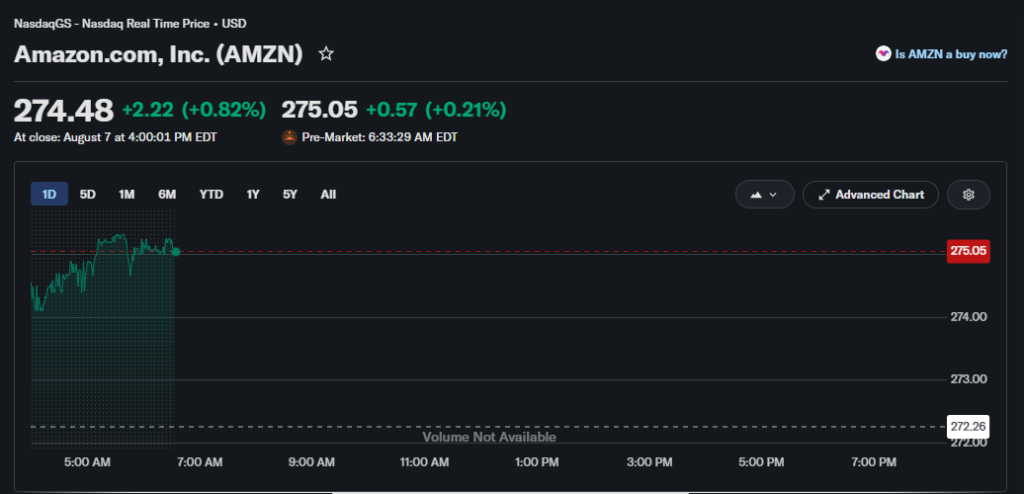
Based on this outlook, JP Morgan set a new price target of $365 for Amazon stock. That implies roughly $93 per share in upside for anyone entering at today’s $272 price — an approximate 34% return on investment. In dollar terms, a $1,000 position could theoretically grow to around $1,340 if the target is reached.
Disclaimer: This article is for informational purposes only and does not constitute financial advice. Always do your own research and consult a licensed financial advisor before investing.