
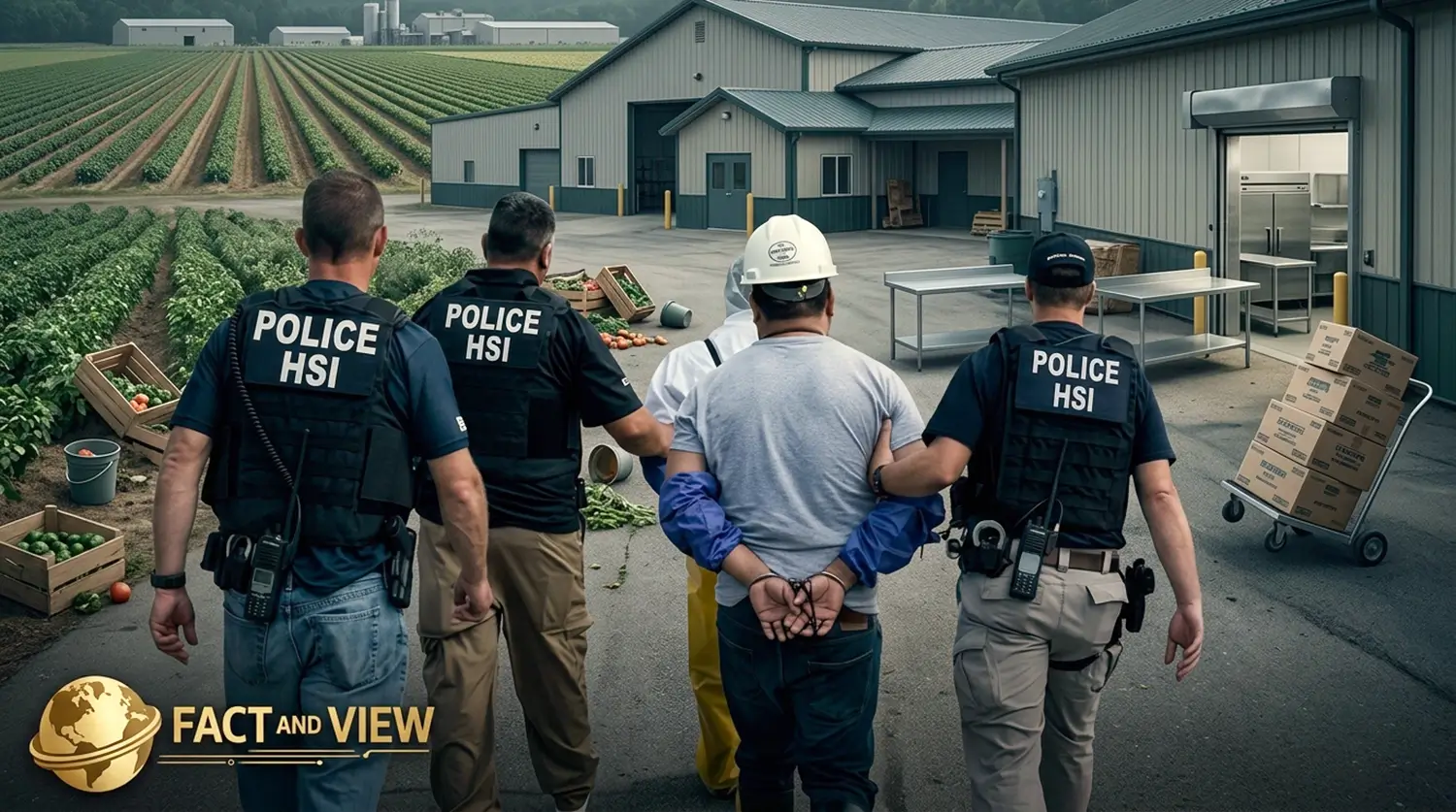
A blueberry farmer in New Jersey needed 600 workers this season. He could only fill a third of the positions, and watched 2.5 million pounds of fruit fall to the ground uncollected, a loss he put at roughly $5 million. In Georgia, delayed visa processing left onion fields sitting weeks past harvest, wiping out close to 40% of the crop. In New York City, restaurants lost nearly 5,000 workers in a matter of months.
These aren’t isolated stories. They’re the visible edge of a question that policymakers keep asserting an answer to without much scrutiny: does an immigration crackdown actually help American workers, if the farms and restaurants that lose immigrant labor can’t replace it? The honest answer, based on the available data, is more complicated, and less flattering to that assumption, than the policy debate usually allows.
The Case for Enforcement: What Proponents Argue
It’s worth stating the argument for stricter enforcement fairly before examining what happens on the ground. Economists at the Center for Immigration Studies, a think tank that advocates for lower immigration levels, point to a substantial body of research, including a widely cited 2016 National Academies of Sciences review, showing that increased immigrant labor supply tends to suppress wages for competing workers, particularly Americans without a college education. Their argument follows basic supply-and-demand logic: fewer workers competing for the same jobs should, in theory, push wages up and pull discouraged native workers back into the labor force.
This is a legitimate economic argument, not a fringe one, and it’s the intellectual foundation much of current immigration enforcement policy rests on. The question is whether it’s actually playing out that way in the industries most affected.
How Reliant Are Farms and Restaurants on Immigrant Labor?
The numbers explain why agriculture and food service are where an immigration crackdown collides hardest with economic reality.
- Roughly 70% of the US farm workforce is foreign-born, according to the National Immigration Forum, with the US Department of Agriculture estimating that undocumented workers alone make up around 40% of hired crop labor.
- About one in five restaurant workers, 20 to 22%, is an immigrant, according to National Restaurant Association data cited by Gallup, a figure that climbs well above one million when accounting for undocumented workers specifically, per the Center for Migration Studies.
- Nearly a quarter of food production workers and roughly a third of hotel and lodging staff are also foreign-born, according to the Migration Policy Institute and National Immigration Forum.
These aren’t marginal shares in a handful of businesses. They’re structural features of two industries that together employ millions of Americans in surrounding, complementary roles.
What Happens When the Labor Supply Suddenly Shrinks
When enforcement activity intensifies in a region, farms and restaurants don’t experience a gradual, manageable adjustment. They experience a shock, because agricultural work in particular is acutely time-sensitive.
A sixth-generation California farmer described roughly 70% of her workforce failing to show up as fear of raids spread, telling Reuters plainly: “If 70% of your workforce doesn’t show up, 70% of your crop doesn’t get picked and can go bad in one day.” Similar patterns have played out across the country: California facing billions in losses on unharvested strawberries, grapes, and lettuce; Florida’s citrus industry projecting a 25% yield drop after raids removed thousands of workers; Michigan and Washington apple growers warning of output cuts as thinning and picking crews thinned out themselves.
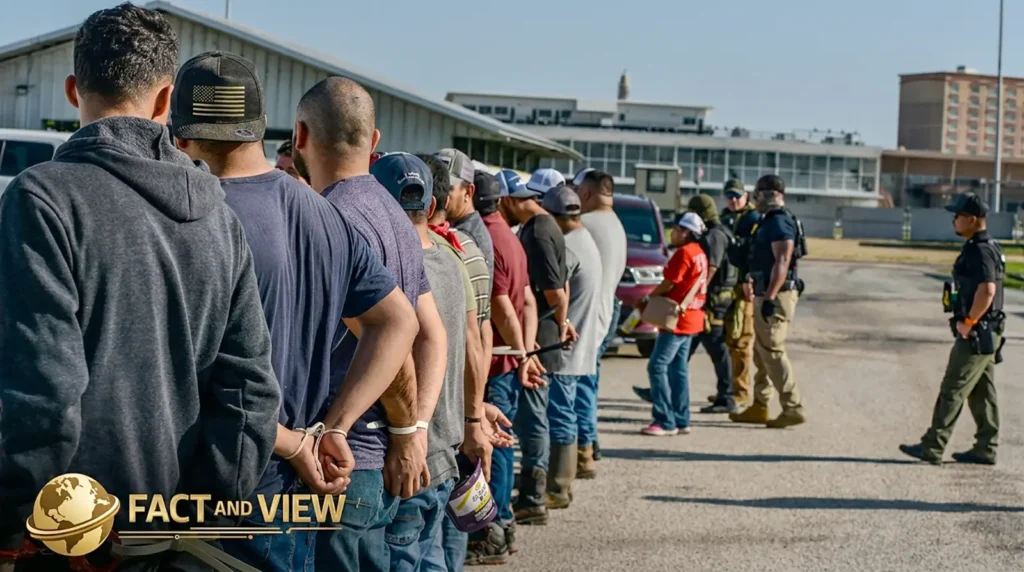
The mechanism at work isn’t limited to workers who are detained or deported. Researchers studying regions with sudden spikes in enforcement activity found a measurable drop in employment among likely undocumented workers who were never actually arrested, workers staying home out of fear rather than being physically removed from the labor market. A Pew Research survey found 43% of foreign-born respondents feared deportation for themselves or someone close to them, a “chilling effect” that shrinks the effective labor supply well beyond whatever enforcement statistics report.
Does Enforcement Actually Help American Workers? What the Data Shows
This is the central question, and it’s where the theoretical case for enforcement runs into the empirical record.
A Wall Street Journal analysis found that industries where less-educated immigrants are overrepresented have actually seen slower wage growth than the broader private sector since enforcement escalated, not faster. Critically, the analysis found no evidence that employers responded by raising wages to attract American-born workers to fill the gap. Instead, the slower growth reflected reduced overall economic demand, businesses scaling back, not competing harder for native labor.
A separate academic comparison of regions with sudden enforcement spikes against similar regions without them reached a comparable conclusion: employment among likely undocumented workers fell substantially in affected sectors like agriculture, construction, and manufacturing, but researchers found no corresponding gains in employment or wages for US-born workers in those same labor markets over the same period.
To be fair to the other side of this debate, the Center for Immigration Studies has published its own analysis arguing the opposite, that reduced immigrant labor competition represents “an opportunity for U.S. workers” and that early evidence of native workers returning to affected job categories “may be beginning to emerge.” Reasonable economists disagree here, partly because isolating the specific effect of enforcement from broader economic conditions, tariffs, interest rates, and a slowing labor market overall is genuinely difficult. What’s harder to dispute is that the clean, direct transfer, immigrant job losses becoming native job gains at higher wages, hasn’t shown up clearly in the sectors most exposed to an immigration crackdown so far.
The Ripple Effect: Beyond the Farm and the Kitchen
The economic damage doesn’t stop at the businesses directly losing workers. When immigrant households pull back out of fear, consumer spending falls with them, and that pullback affects businesses with no direct immigration exposure at all.
Minneapolis officials estimated their local economy lost roughly $203 million from falling restaurant, hotel, and retail revenue tied to enforcement-driven pullback. States with expanded enforcement activity saw aggregate card spending drop by 1.7 percentage points relative to states without it, and a Wharton study found foot traffic in heavily affected areas falling 2.7% weekly, with spending down 6.2%. A restaurant industry advocate summed up the paradox bluntly: “The promise to ‘protect American jobs’ has become a policy that destroys them. When immigrant workers leave, restaurants don’t hire Americans, they shut their doors.”
Why “Just Hire Americans” Is Harder Than It Sounds
Part of the disconnect comes down to a mismatch that policy debates often gloss over. Seasonal farm labor, harvesting delicate produce for long hours in extreme heat, and entry-level kitchen roles like dishwashing, which pays a median of roughly $31,650 a year with notoriously high turnover, are jobs that American Enterprise Institute research describes as work “US citizens will generally not do,” even when wages rise. AEI’s own modeling suggests that removing all unauthorized workers from California agriculture specifically would push farm wages up by 42%, but concludes that the more likely near-term outcome isn’t a wave of American hires; it’s reduced domestic production, more imported produce, and higher prices, with farms only gradually shifting toward mechanization over a period of years, not months.
That’s an important distinction: economic theory suggests labor markets can eventually adjust to a smaller immigrant workforce, but “eventually” is doing a lot of work in that sentence, and the adjustment period is exactly when farms go bankrupt and restaurants close their doors.
How Farms and Restaurants Are Adapting
Businesses aren’t standing still. The H-2A temporary agricultural visa program has expanded sharply, from roughly 75,000 approved workers in 2010 to about 400,000 in 2025, with projections nearing 550,000 by 2030. But farm groups consistently describe the program as too slow, too expensive, and too limited in scope to fully offset losses, particularly given reported 60-day certification delays and stricter vetting rules that leave crews arriving weeks after crops are ready.
Restaurants, meanwhile, are absorbing higher recruiting and turnover costs, replacing a single hourly worker now runs about $2,700, up from $2,300 a year earlier, according to Black Box Intelligence, while some operators lean further into automation for food prep and order-taking wherever it’s technically feasible.
What This Means for Your Grocery Bill and Restaurant Tab
For everyday Americans, this isn’t an abstract labor market debate. Restaurant menu prices for food away from home rose roughly 3% in less than a year as staffing shortages compounded other cost pressures, according to National Immigration Forum data, and agricultural economists broadly expect continued enforcement to translate into higher prices and reduced selection for fresh produce specifically, the segment of the grocery store most dependent on the labor now in shortest supply.
There’s a real, defensible economic argument behind immigration enforcement: reduce labor supply, and in theory, wages for competing native workers should rise. But the sectors where that logic was supposed to prove itself first, agriculture and food service, are instead showing crop losses, business closures, ripple effects into unrelated local economies, and no clear, broad-based wage or employment gains for American-born workers to show for it. Whether that gap closes over a longer horizon as businesses mechanize and adapt remains a genuinely open question. What the current data makes clear is that the short-term cost of an immigration crackdown is real, immediate, and falling on farms, restaurants, and the consumers who buy from them, well before any promised benefit to American workers has shown up in the numbers.
Related Reading
- What Is Stagflation? Why Economists Fear It Again — relevant background on how supply-side shocks, including labor shortages, feed into the broader inflation picture discussed here.
- Quick Insights — Weekly News Digest — for ongoing coverage of ICE enforcement developments and their broader political and economic ripple effects.
Sources
- American Enterprise Institute — “Immigration Enforcement and the US Agricultural Sector in 2025”
- VisaVerge — “US Farm Labor Shortages 2026: H-2A Visas & ICE Impact”
- Southern Ag Today — “Agricultural Labor Outlook in 2026”
- The Food Institute — “Crops Rotting in Fields With Undocumented Farmworkers Gone”
- Las Vegas Sun — “Immigration crackdown backfires, leaves farms struggling and prices rising”
- Wisconsin Public Radio — “Deportations are set to explode — a huge worry for farmers already facing a labor shortage” (wpr.org)
- Documented NYC — “NYC Restaurants Lose Nearly 5,000 Workers Amid Trump Immigration Crackdown” (documentedny.com)
- Restaurant Dive — “Restaurants frame immigration as a fight for consumer affordability” (restaurantdive.com)
- Yahoo Finance — “Restaurants struggle to hire dishwashers as immigration crackdown and teen labor decline hit workforce” (finance.yahoo.com)
- Restaurant Business Online — “The restaurant industry has an immigration problem” (restaurantbusinessonline.com)
- National Immigration Forum — “U.S. Workforce Challenges: How Immigration Enforcement Is Impacting the American Economy” (forumtogether.org)
- Axios — “ICE immigration crackdown hurts some US-born workers: study” (axios.com)
- Latino Public Policy / Naked Capitalism — “When ICE Ramped Up Enforcement, US-Born Workers Didn’t See Any Economic Gains” (latinopublicpolicy.org)
- Center for Immigration Studies — “Has Immigration Enforcement Benefitted American Workers?” and “The Employment Effects of Immigration Enforcement: An Initial Assessment” (cis.org)
Disclaimer: This article presents research and data from multiple sources with differing perspectives on immigration policy. It is intended for informational purposes and does not represent an endorsement of any particular policy position.