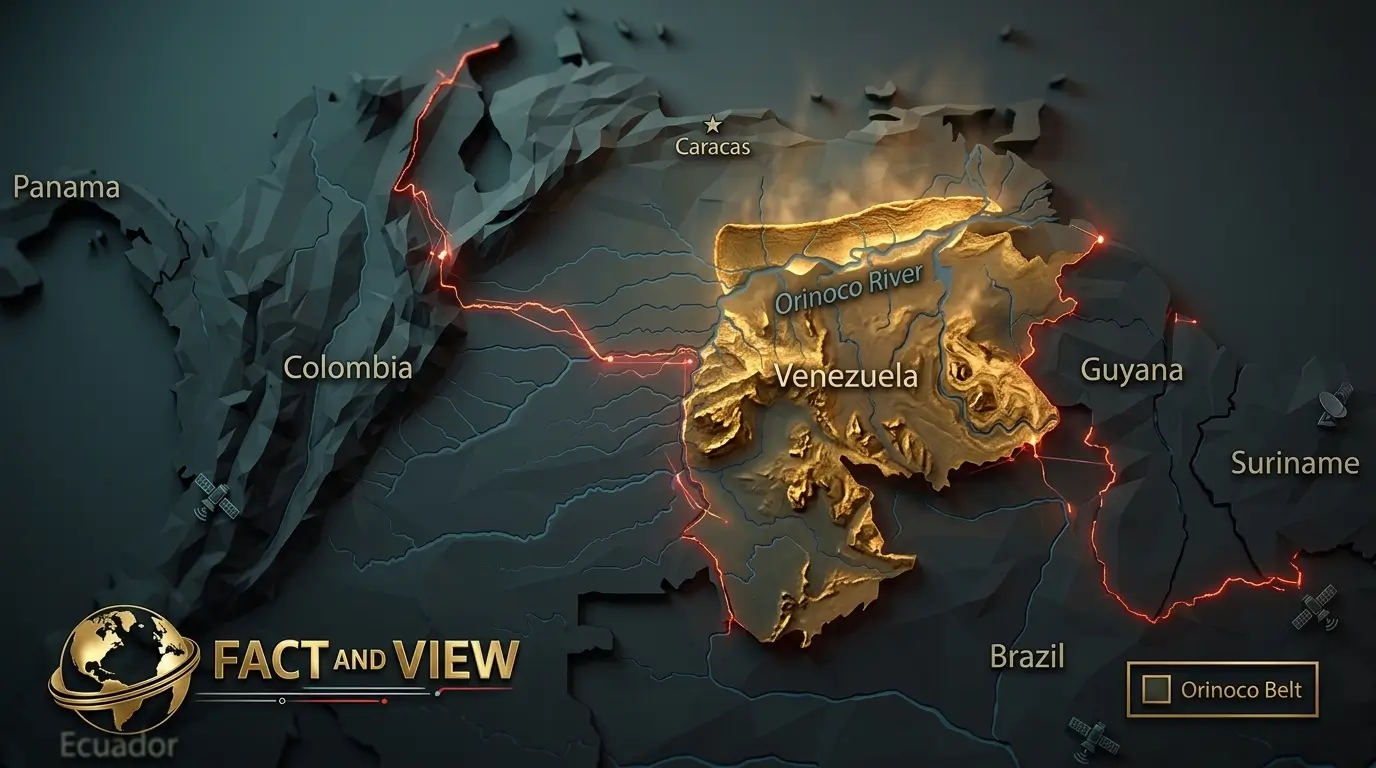
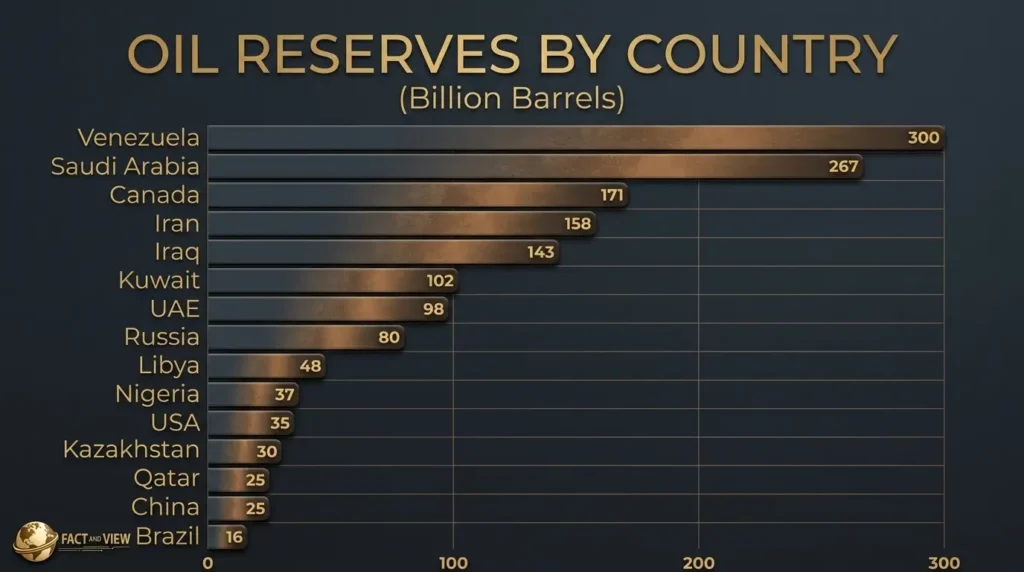
Back in January, Venezuela dominated headlines for exactly one weekend. U.S. special forces captured President Nicolás Maduro and his wife in a lightning military operation, President Trump called it a “large scale strike,” and cable news ran the footage on loop for about 72 hours. Then the story quietly disappeared from the front page — even though the country sitting underneath that operation holds the largest proven oil reserves on Earth.
That’s the problem. The dramatic, headline-friendly moment is over. What’s happening now — a slow-motion contest between Washington and Beijing for control of Venezuela’s oil, playing out through sanctions carve-outs, boardroom deals, and a devastated economy — is arguably more consequential, and almost nobody outside the energy industry is paying attention.
A quick recap: what actually happened
On January 3, 2026, U.S. forces launched a military operation in Caracas and removed Maduro and his wife, Cilia Flores, from power. Secretary of State Marco Rubio framed it as a counter-narcotics operation, not regime change for its own sake, telling reporters the goal was to stop Venezuela’s “oil industry from being used to aid parties opposed to the US.” Maduro was flown to New York to face drug and arms trafficking charges.
Here’s the part that surprised a lot of Venezuela-watchers: the rest of the government didn’t fall with him. Vice President Delcy Rodríguez stepped into the role of acting president, and Defense Secretary Vladimir Padrino López stayed in his post. Washington removed one man at the top and left the machinery of the state largely intact — a choice that’s shaped everything that’s happened since.
Why the markets barely blinked
If you were expecting an oil price spike after a U.S. military strike on the country with the world’s biggest reserves, you’d have been disappointed. Brent crude actually slipped toward $60 a barrel in the days afterward, and U.S. crude dipped below $58. That’s not because traders didn’t care — it’s because Venezuela’s actual daily output is small enough that global supply barely noticed. Decades of mismanagement, nationalization, and sanctions have crushed Venezuelan production from more than 3 million barrels a day in its heyday to roughly 1 million barrels a day now. Meanwhile, OPEC+ has been unwinding years of voluntary production cuts, and new barrels have been flooding in from Brazil, Guyana, Argentina and record U.S. shale output. The world, for once, had a cushion.
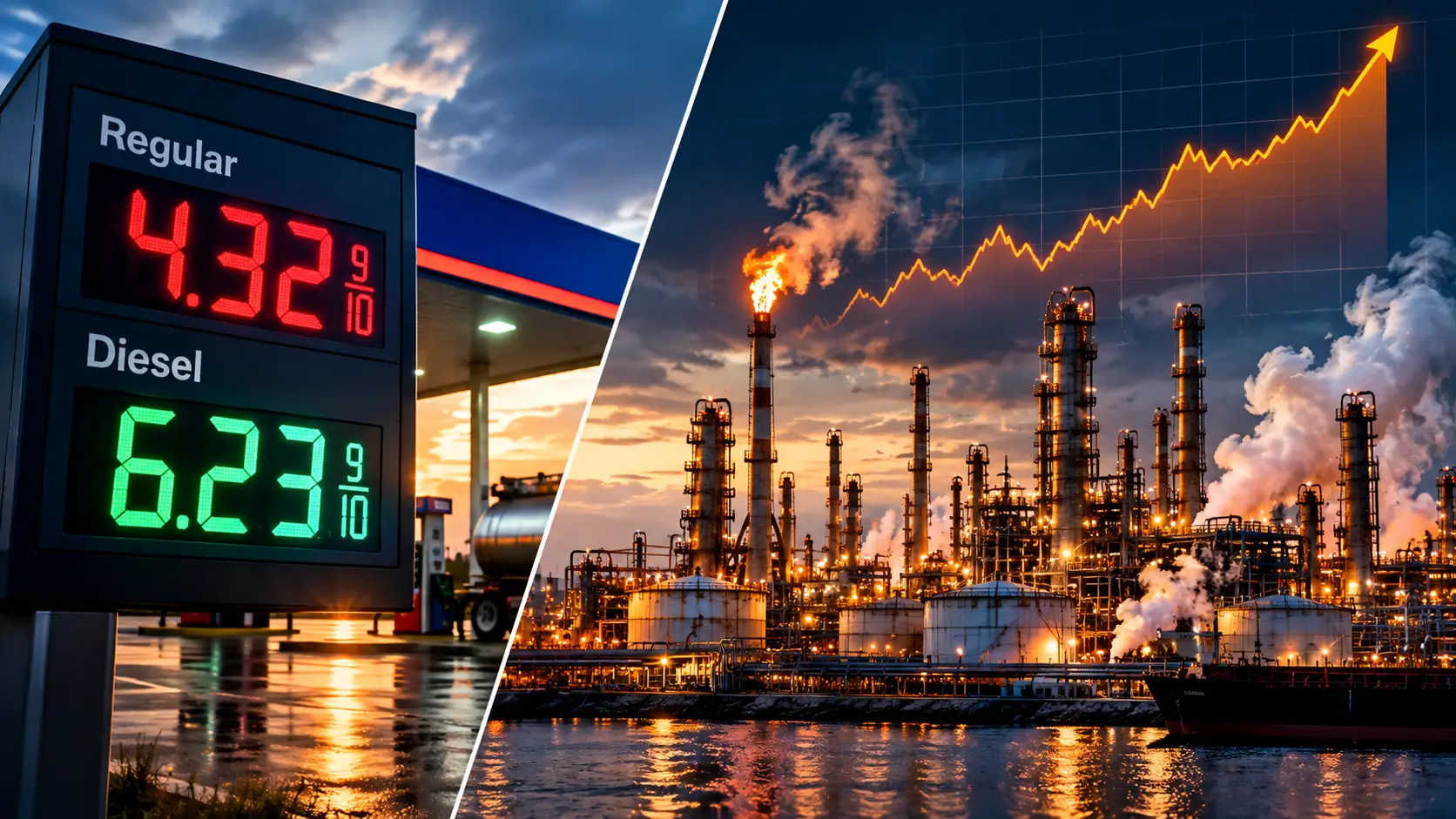
That cushion is exactly why this story is easy to ignore. There was no gas-price shock to force it into your feed — unlike the Strait of Hormuz standoff that’s been pushing pump prices higher all summer, a genuine supply disruption that Americans actually felt at the register. A slow ownership fight over untapped reserves doesn’t generate that kind of urgency, even though it can matter more over the long run. Reserves aren’t the same thing as output — and reserves are precisely what’s now up for grabs.
Washington’s careful reopening of the spigot
Rather than simply lifting sanctions overnight, the Trump administration has been reopening Venezuela’s oil sector piece by piece, and on its own terms. Days after the raid, Trump signed an executive order creating what’s called the Foreign Government Deposit Funds — a mechanism that routes the proceeds of any U.S. sale of Venezuelan oil into an account controlled by the United States, not directly to Caracas. It’s a small-scale example of the leverage that comes with the dollar’s role as the world’s reserve currency — Washington isn’t just sanctioning a government, it’s controlling the plumbing the money has to move through. Over the following months, the Treasury Department’s sanctions office issued a string of general licenses authorizing specific companies — including Chevron, BP, Shell, Eni and Repsol — to resume oil and gas operations in Venezuela, each with its own conditions attached.
The message underneath all that legal language is fairly blunt: Venezuela can sell its oil again, but Washington wants a hand on the valve and on the cash. One striking detail — PDVSA, Venezuela’s state oil company, has been explicitly barred from selling to Russia, Iran, North Korea, and certain Chinese entities under these new authorizations. That’s not a subtle move. It’s an attempt to redirect one of the world’s largest oil reserves away from America’s rivals and back toward Western buyers, after two decades in which it drifted the other way.
The China problem nobody’s solved
Here’s where it gets complicated. China didn’t wait around for Washington’s permission. For years, Chinese refiners have been the single biggest customer for Venezuelan crude, absorbing an estimated 80% of the country’s oil exports before the January operation — much of it moved through ship-to-ship transfers and rebranding schemes designed to dodge sanctions altogether. China’s state oil giant, CNPC, already runs joint ventures with PDVSA, and a private Chinese firm announced plans this year to sink more than $1 billion into a Venezuelan oil project.
Beijing’s response to the U.S. operation was pointed: it condemned the “military attack,” called for Maduro’s release, and had its ambassador publicly reassure Venezuela that oil pricing “will not be dictated by the U.S.” In other words, China has no intention of walking away from an asset it spent years and billions of dollars quietly cultivating, sanctions detour or not. It’s a familiar pattern — the same patient, decade-long strategy Beijing used to lock up the world’s rare earth mineral supply while the West wasn’t paying attention. That sets up a genuine tug-of-war over who actually gets to develop the largest oil reserves on the planet — a contest that will play out far more slowly, and far more quietly, than a military raid, but that could matter more for the next twenty years of global energy flows.
Houston, we have a deal
The clearest sign that Washington’s strategy is starting to bite came just this week. Venezuela’s oil minister and top PDVSA officials flew to Houston for an energy conference and signed the country’s first significant contracts with U.S. companies since Caracas nationalized foreign oil fields back in 2007. Dallas-based Hunt Oil signed on to help expand Venezuelan oil and gas production, and oilfield services giant SLB — the company formerly known as Schlumberger — agreed to a deal covering exploration work.
Nobody has disclosed how much money is actually on the table, and industry veterans are cautious about reading too much into it. Francisco Monaldi, who directs Rice University’s Latin America Energy Program, put it plainly: these deals “could open up a new wave of investment,” but “we have to wait and see if companies actually deploy their resources.” That hesitation is well-earned. Rebuilding a neglected oil industry — replacing corroded pipelines, idle rigs, and decades of underinvestment — is a job that takes billions of dollars and the better part of a decade, not a signing ceremony.
Why Venezuela can’t afford to wait
There’s also a grim reason Caracas is moving fast: in June 2026, a devastating earthquake killed thousands of people and left the country needing enormous sums for reconstruction. Oil accounts for more than 90% of Venezuela’s export revenue and a huge share of government income. A government that just buried thousands of its own citizens and needs to rebuild entire cities doesn’t have the luxury of a slow, cautious energy strategy — it needs cash, and it needs it now. That urgency is pushing Rodríguez’s government toward deals it might otherwise have negotiated more carefully, which is good news for foreign oil companies angling for favorable terms.
The honest uncertainty
Even people close to these negotiations admit they don’t know how this ends. The same political instability that makes Venezuela’s oil sector newly available also makes it a risky place to sink capital. Analysts told reporters that energy companies are likely to prioritize short-term contracts precisely because nobody can say what happens to U.S. policy once Trump leaves office — a new administration could just as easily reverse the sanctions relief and freeze foreign investment right back out. Rodríguez’s government, meanwhile, remains stocked with Maduro-era officials who spent two decades treating foreign oil companies as adversaries, not partners.
What to actually watch
Three things will tell you whether this becomes a real turning point or just another false dawn for Venezuelan oil: whether the Houston deals translate into actual drilling rigs and dollars on the ground rather than press releases; whether China’s parallel investments keep expanding despite Washington’s sanctions carve-outs targeting it; and whether Venezuela’s production numbers — stuck near 1 million barrels a day for years — actually start climbing. If they do, this quiet, under-the-radar contest over who controls the world’s largest oil reserves could end up mattering more to gas prices and global energy security a decade from now than almost anything happening in the Middle East today. It’s really the same US-China resource contest showing up in a new location — the kind of question we’ve also asked about what a Taiwan conflict would do to global supply chains.
Related Reading
- Why a Middle East Standoff Is Hitting Your Gas Tank
- US-Iran Deal: Will Reopening Hormuz Lower Gas Prices?
- Why Rare Earth Minerals Are the New Oil
- US Dollar: Why the World’s Reserve Currency Matters
- What Happens If China Invades Taiwan?
Frequently Asked Questions
Why did the US capture Maduro in January 2026?
U.S. officials framed the operation as a counter-narcotics action, saying Maduro was an indicted drug trafficker running an “illegitimate” government. Secretary of State Marco Rubio also said the goal was to stop Venezuela’s oil industry from being used to benefit adversaries of the United States.
Is Venezuela still under U.S. oil sanctions?
Partially. Washington hasn’t lifted sanctions wholesale — instead, the Treasury has issued a series of general licenses authorizing specific companies (Chevron, BP, Shell, Eni, Repsol, Hunt Oil, SLB) to do specific kinds of business in Venezuela, under conditions that keep U.S. oversight over the money involved.
How much oil does Venezuela actually produce right now?
Roughly 1 million barrels a day, down from more than 3 million barrels a day decades ago. Years of underinvestment, nationalization, and sanctions gutted the industry’s equipment and expertise, and rebuilding it will take years and billions of dollars even with foreign investment flowing back in.
Is China still buying Venezuelan oil?
Yes. China was absorbing an estimated 80% of Venezuela’s oil exports before the U.S. operation, and Chinese state and private firms continue investing in Venezuelan oil projects. Beijing has publicly said Venezuela’s oil pricing “will not be dictated by the U.S.”
Will these new deals lower gas prices in the US?
Not anytime soon. Venezuela’s output is too small relative to global supply to move prices meaningfully in the short term, and rebuilding its oil infrastructure is a multi-year project. Any effect on U.S. gas prices would likely take years to materialize, if it happens at all.
Who is currently in charge of Venezuela?
Delcy Rodríguez, formerly Maduro’s vice president, is serving as acting president. Much of the rest of the Maduro-era government, including Defense Secretary Vladimir Padrino López, remains in place — only Maduro himself was removed.
Disclaimer:
This article is for informational and educational purposes only and does not constitute financial, investment, or trading advice. Developments involving Venezuela’s oil sector, U.S. sanctions policy, and international investment deals are fluid and evolving, and figures such as production volumes, deal values, and sanctions status are subject to change. Readers should not make investment or business decisions based solely on this content and are encouraged to consult a licensed financial advisor and verify current data through primary sources such as the U.S. Treasury’s Office of Foreign Assets Control (OFAC), Reuters, and NPR before acting.