As artificial intelligence becomes the defining technological competition of the decade, Washington is increasingly warning that China’s rapid AI expansion may rely less on innovation — and more on theft, smuggling, and state control.
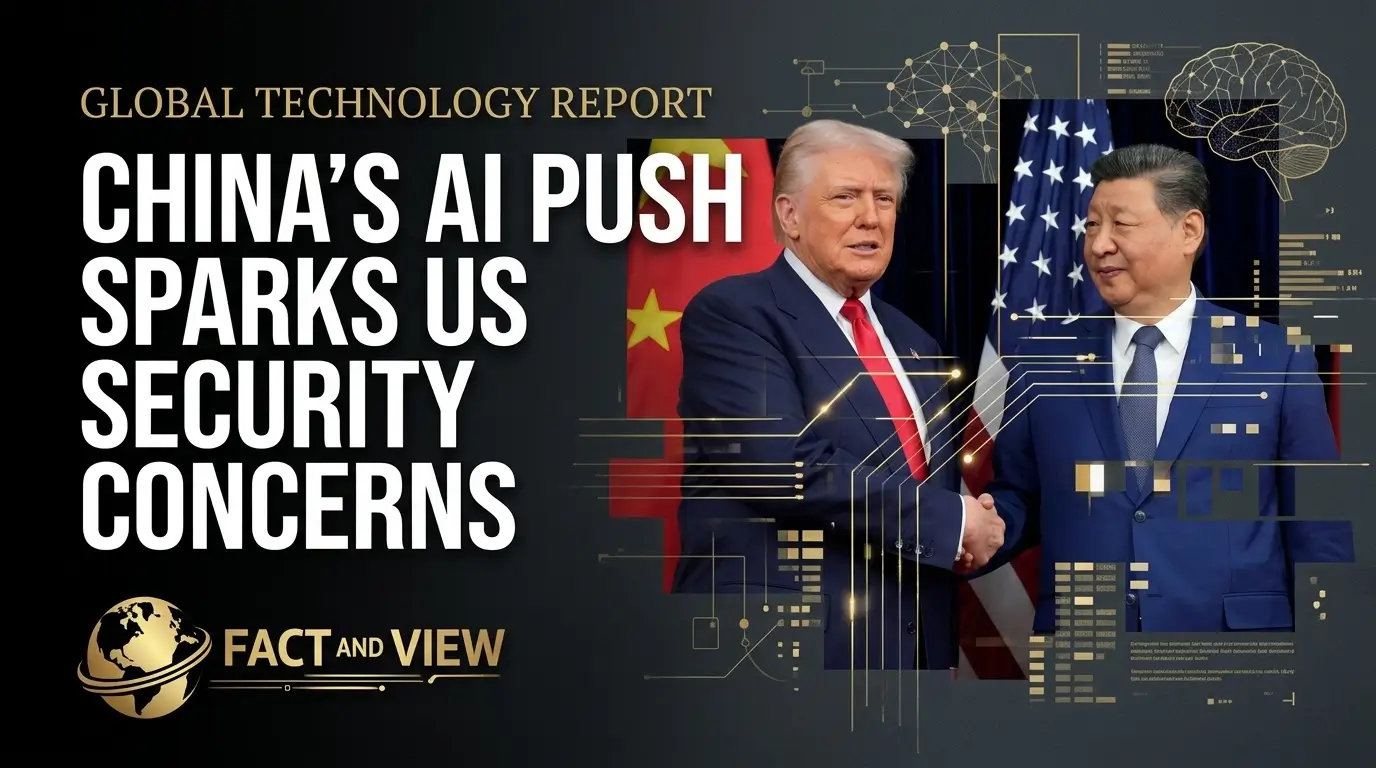
The issue is expected to dominate discussions at this week’s summit between President Donald Trump and Chinese leader Xi Jinping, where AI, trade, and national security are likely to collide once again.
According to recent statements from the White House and U.S. prosecutors, Chinese-linked entities have been involved in large-scale efforts to obtain advanced American AI technology despite ongoing export restrictions. Officials allege that sophisticated chip-smuggling networks and the controversial use of AI “distillation” techniques are helping Chinese firms narrow the technological gap with U.S. companies.
The White House Office of Science and Technology Policy recently accused foreign groups “primarily based in China” of conducting industrial-scale campaigns targeting American frontier AI systems. The claims refer to a process known as distillation — training smaller AI models using outputs generated by larger and more expensive Western systems.
AI company Anthropic reported detecting more than 24,000 fraudulent accounts connected to attempts to extract data from its Claude chatbot. The company warned that stripped-down “distilled” models may lack critical safeguards against cyberattacks, biological threats, and malicious automation.
At the same time, federal prosecutors in the United States say they uncovered a multi-billion-dollar smuggling operation involving restricted Nvidia AI chips routed through Southeast Asian shell companies before reaching mainland China.
The controversy highlights a growing concern inside Washington: the AI race is no longer just about technology. It is increasingly viewed as a strategic contest over economic dominance, military capability, and geopolitical influence.
how the growing US-China technology conflict could impact the broader American economy
China’s government, meanwhile, appears determined to ensure that domestic AI development remains firmly under Communist Party control. In recent weeks, authorities reportedly blocked Meta’s proposed acquisition of Chinese AI startup Manus and prevented the company’s founders from leaving the country.
Analysts say the move reflects Beijing’s broader strategy: allowing innovation to grow — but only under strict political supervision.
The situation also exposes the limits of efforts by Chinese companies to distance themselves from Beijing by relocating operations to places like Singapore. U.S. lawmakers and intelligence officials continue to warn that Chinese firms remain legally obligated to cooperate with state security agencies regardless of where they are headquartered.
Meanwhile, the Trump administration’s response has appeared increasingly mixed. While Congress continues pushing for aggressive export controls on advanced technologies, Trump has recently softened some restrictions on Nvidia chip exports and signaled openness to expanded Chinese investment in the United States.
Critics argue that these conflicting signals could weaken America’s long-term position in the AI race just as China accelerates efforts to challenge U.S. dominance in advanced technologies.
Despite China’s rapid progress, experts caution that the country still faces major structural weaknesses. Many Chinese AI systems remain dependent on foreign semiconductor technology, while government censorship and political oversight continue limiting the openness that historically fueled innovation in Silicon Valley.
Still, the stakes are enormous. By the end of last year, Chinese-developed AI models accounted for roughly one-third of global downloads — a sign that Beijing’s influence in the AI sector is expanding rapidly despite mounting scrutiny from the West.
For both Washington and Beijing, artificial intelligence is no longer simply about business. It has become a contest over who shapes the next global technological order.
Sources
Reuters Technology News
Financial Times Technology
Anthropic Official Website
NVIDIA Newsroom