The Deal That Could Change Everything — Or Very Little
US-Iran Deal. On April 8, 2026, after weeks of military confrontation, ultimatums, and eleventh-hour diplomacy brokered by Pakistan’s Prime Minister Shehbaz Sharif, the United States and Iran agreed to a two-week conditional ceasefire. The Strait of Hormuz reopened to commercial traffic. Benchmark Brent crude fell approximately 15.9% to $92.30 a barrel. Gasoline futures dropped more than 10% below $3 per gallon in a single session — their lowest level in nearly four weeks.
Markets reacted as if the crisis was over. It wasn’t.
As of mid-June 2026, a permanent deal remains unsigned. Trump has announced a signing as “imminent,” while Iranian officials have expressed caution on timing and rejected some reported draft terms. Prediction markets put the probability of a permanent deal by June 30 at just 28%, down from 30% in early June, following U.S. airstrikes on Iranian missile sites on May 25.
The analytical question American households care about is direct: if a deal does get signed, will it actually bring gas prices back to where they were before this conflict began? The data on that question is specific — and the answer is more complicated than either the White House or its critics are advertising.
The View from the Right: A Strategic Win That Markets Are Underpricing
The conservative and pro-administration framing centers on the ceasefire as a negotiating victory — and on energy policy as the downstream political dividend.
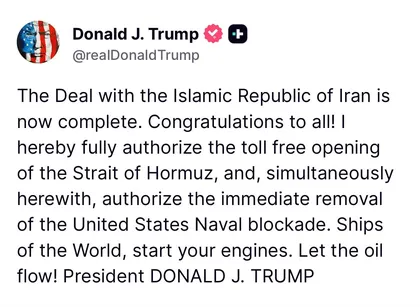
The White House’s posture has been consistent: the ceasefire and its terms were secured through force projection, not concession. Trump issued a stark deadline on April 7, warning that Iran’s power plants and bridges would be targeted if the Strait was not reopened by the following evening. Iran opened the Strait with fewer than two hours to spare. President Trump explicitly conditioned the ceasefire on Hormuz reopening — a sequencing that the Right frames as leverage executed successfully.
On economics, White House economic adviser Kevin Hassett told CBS in May that prices “will come down” once a deal is signed, citing the direct connection between Hormuz transit volumes and global supply. The early market data supports the directional claim: Brent fell from peaks above $114 on the day Iran threatened indefinite closure to the current range of $95–$100. That is a material reduction, even if it leaves oil significantly above pre-war levels.
The Right’s political argument is also energy-specific. Pump prices were a key Republican vulnerability heading into midterms — the national average near $4.25 per gallon represents roughly a $1.50-per-gallon premium above pre-war levels, a visible household cost that shows up in consumer sentiment data every week. A permanent deal that brings oil back toward $72 Brent (the pre-war benchmark) would produce a measurable political benefit before November.
The View from the Left: A Fragile Ceasefire, Not a Price Solution
Progressive critics and Democratic skeptics do not contest the goal of lower gas prices. They contest the administration’s timeline and its handling of the nuclear dimension — and cite independent expert projections that a Hormuz reopening alone does not produce rapid consumer price relief.
“Gas prices are currently falling but until we see an agreement signed and a significant amount of ships transit through the Strait, the national average price of gasoline will likely remain well above $4/gal,” said Patrick De Haan, head of petroleum analysis at GasBuddy, in a statement cited by Axios on May 25, 2026.
The logistical argument is specific. Even after Iran agreed to the ceasefire on April 8, ship traffic through the Strait remained far below pre-war levels. The reopening was conditional and managed — Iran’s Foreign Minister described passage as subject to “coordination with Iran’s Armed Forces and technical limitations.” The physical infrastructure for tanker transit — insurance, maritime security, port scheduling — does not normalize in days.
Goldman Sachs, in a Friday note before the ceasefire, suggested elevated oil prices could last through 2027 given the depth of supply chain disruption and the time required for shipping patterns to normalize even under a peace agreement.
The nuclear dimension adds a different layer of Democratic skepticism. Iran’s submitted 10-point peace plan includes retention of its uranium enrichment program. Iran explicitly rejected the U.S. 15-point plan in late March. The deal’s structure — as described by CNN’s regional source — unfolds in two phases: Hormuz reopening first, nuclear negotiations second over 30–60 days. Critics note that phase two has not yet started as of mid-June, meaning the most consequential part of any permanent agreement is still entirely unresolved.
The Left’s framing: the ceasefire created a market sentiment rally that was partly speculative. A permanent deal that fails to address nuclear terms acceptable to Israel and the U.S. Senate is unlikely to stabilize the geopolitical risk premium embedded in oil pricing for the duration.
Economic and Household Dimensions: What the Numbers Show
The price trajectory since the conflict began:
| Date | Brent Crude | Key Event |
|---|---|---|
| February 27, 2026 | ~$72/barrel | Day before conflict began |
| March 2, 2026 | $80–$82 | Conflict onset; initial 10–13% surge |
| March 19, 2026 | ~$114 | Peak — Iran threatens indefinite Hormuz closure |
| March 26, 2026 | ~$93 | Trump extends deal deadline; tankers allowed |
| April 8, 2026 | $92.30 | Ceasefire; Hormuz reopens; 16% single-day drop |
| May 25, 2026 | ~$99 | US strikes Iranian missile sites; ceasefire in doubt |
| June 15, 2026 | ~$98.76 | Negotiations ongoing; deal unsigned |
The arithmetic is stark. A complete return to the pre-war $72 Brent price would reduce gas prices by approximately $0.60–$0.80 per gallon at the pump, per the standard refinery margin model. That would bring the national average from approximately $4.10 toward $3.30–$3.50 — still above the $2.75–$2.98 range of late February, but meaningfully lower than current levels.
Why full normalization is slower than the market implied on April 8:
- Shipping insurance premiums — war-risk premiums for vessels transiting the Strait remain elevated even with the ceasefire, adding per-barrel cost to every shipment that passes through
- Gulf production recovery — Saudi Arabia, UAE, Kuwait, and Iraq production dropped by approximately 10 million barrels per day at peak disruption; ramping back requires weeks, not days
- Refinery scheduling — U.S. and Asian refineries that shifted sourcing away from Gulf crude during the closure cannot instantly reverse supply contracts
- Strategic reserve replacement — the IEA’s 400-million-barrel strategic reserve release has partially suppressed prices; as those reserves are refilled, they compete with commercial demand
The consumer price reality as of June 2026:
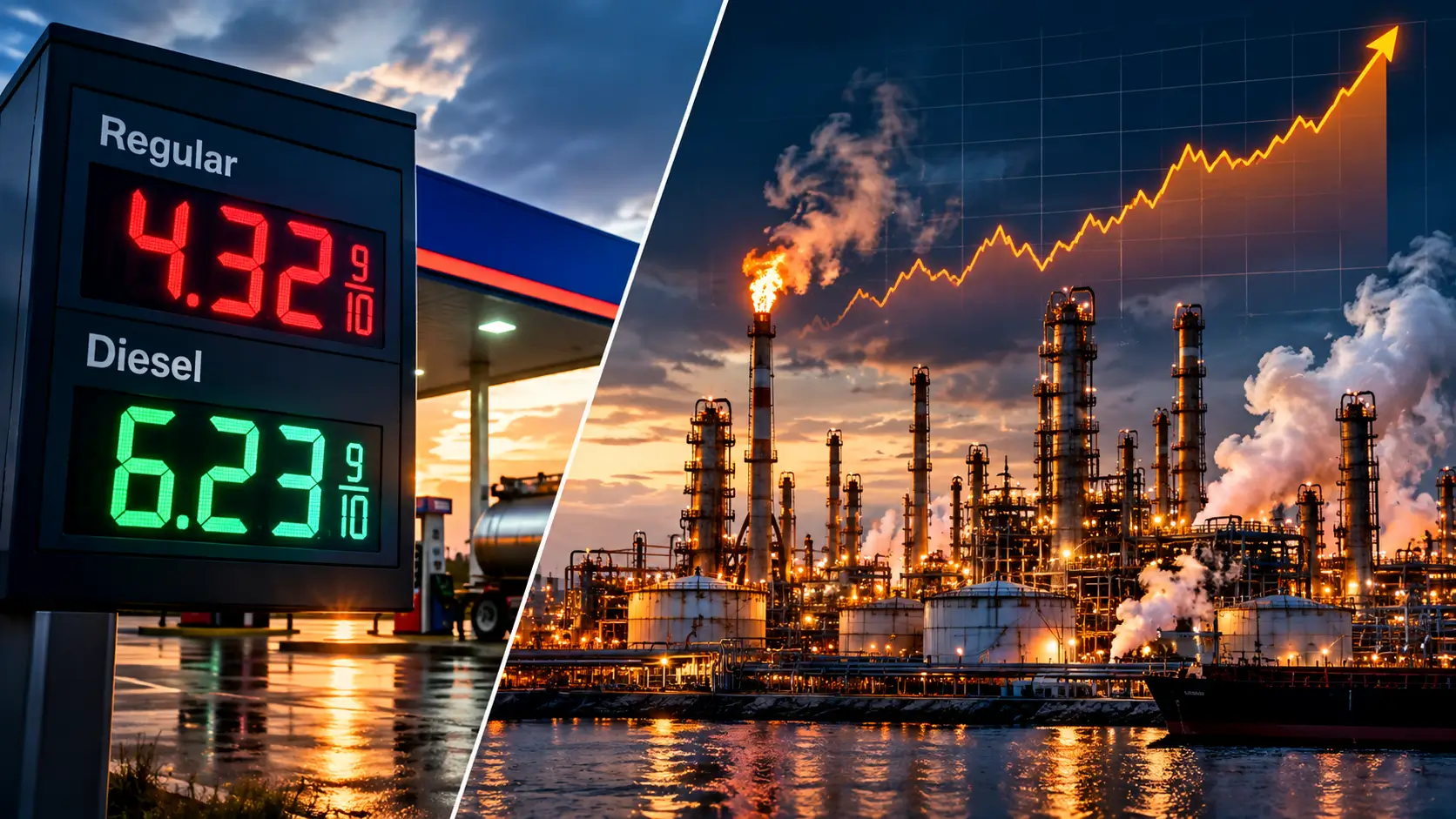
- National average gas price: approximately $4.10 per gallon — still $1.50 above pre-war levels
- Fertilizer prices: urea up approximately 60% from 2024 levels; phosphate up 50%
- CPI March 2026: 3.3% — with energy shock contributing approximately 0.5–0.7 percentage points
- Goldman Sachs forecast: elevated oil pricing possible through 2027 even under a successful deal scenario
Conclusion: A Deal Is Not a Price Reset
The US-Iran negotiations are the most consequential energy market development of 2026. A permanent agreement — if reached — would remove the Hormuz closure risk premium and allow Gulf production to normalize over a 3–6 month period. Market models suggest Brent could fall toward $80–$85 in that scenario, compared to the pre-war $72 — a near-normalization, not a full reset.
What both sides of the political debate agree on, when citing independent analysts rather than political surrogates:
- Hormuz reopening does not immediately lower gas prices — logistical normalization takes 3–6 months minimum
- A permanent deal is not yet signed — probability markets put it at 28% by June 30
- The nuclear terms remain unresolved — Iran’s 10-point plan and the U.S. 15-point plan have not converged
- U.S. consumers are paying approximately $1.50/gallon above pre-war levels as of mid-June, regardless of ceasefire optimism
For American households, the gas price question has a specific answer: a signed, permanent deal — with Hormuz fully normalized and Gulf production restored — would likely reduce the national average by $0.60–$1.00 per gallon over 3–6 months. That is meaningful relief but not a return to February 2026 prices. The fertilizer and food inflation effects would take longer to reverse — potentially into 2027 — regardless of deal timing.
The midterm calculation is electoral and economic simultaneously. A $3.30–$3.50 national gas average by October would represent a political improvement for incumbents. A $4.00+ average at election day — without a signed deal — would confirm the affordability narrative that already defines the cycle.
Whether the deal gets signed, whether its nuclear terms are politically durable, and whether Iran’s compliance holds once economic pressure is released are the three variables that no amount of optimism from either Washington or Tehran has resolved as of today.
Continue reading from Fact and View:
- Middle East Tensions Explained: What It Means for Oil Prices — the full energy market analysis: Hormuz mechanics, supply chain disruption, and five transmission channels into your finances
- Best Investments During Inflation (2026 Guide) — how to position a portfolio when energy prices remain elevated and deal uncertainty extends
- How US Elections Affect the Economy and Markets — how the gas price timeline intersects with midterm electoral dynamics
FAQ
Did the US and Iran reach a deal to reopen the Strait of Hormuz?
A conditional two-week ceasefire was agreed on April 8, 2026, brokered by Pakistan’s Prime Minister. As part of the agreement, Iran reopened the Strait of Hormuz to commercial traffic. However, passage remained subject to “coordination with Iran’s Armed Forces and technical limitations,” per Iranian Foreign Minister Abbas Araghchi. A permanent deal has not been signed as of mid-June 2026. Prediction markets on Polymarket put the probability of a permanent deal by June 30 at approximately 28%, following U.S. airstrikes on Iranian missile sites on May 25, 2026.
What happened to oil prices when the Strait of Hormuz reopened?
Brent crude fell approximately 15.9% to $92.30 a barrel on April 8, 2026 — the day the ceasefire and reopening were announced. Gasoline futures dropped more than 10% below $3 per gallon. However, by May 25, Brent had climbed back to approximately $99 after U.S. airstrikes on Iranian missile sites introduced new uncertainty. As of mid-June, Brent trades around $98.76 — still approximately 36% above the pre-war February 27 price of $72. Track current Brent crude prices at TradingEconomics — Brent Crude.
Will gas prices go down if the US-Iran deal is signed?
Directionally yes — but not immediately and not fully. Independent analysts including GasBuddy’s Patrick De Haan specify that the national average will remain “well above $4/gal” until both a deal is signed and significant tanker volume actually transits the Strait. Goldman Sachs projects elevated prices could persist through 2027. A complete supply normalization — Gulf production restored, shipping insurance normalized, refinery sourcing adjusted — would take 3–6 months after a permanent deal. The end result under a successful full-deal scenario would likely bring Brent toward $80–$85, implying a national gas average of approximately $3.30–$3.50, compared to the current $4.10.
Why did the US launch airstrikes on Iran on May 25, even during ceasefire negotiations?
U.S. forces carried out strikes on Iranian missile launch sites in the Strait of Hormuz area on May 25, 2026. The strikes were described by the administration as a response to specific Iranian military threats, and the White House maintained that negotiations could continue alongside limited military action. Iranian officials described the strikes as undermining the peace process. Prediction market odds for a permanent deal fell from 30% to 28% following the May 25 strikes. The dual track of negotiations and military pressure is consistent with the administration’s stated approach of maintaining maximum leverage throughout the talks.
What are the key sticking points preventing a permanent US-Iran deal?
Three substantive issues remain unresolved as of mid-June 2026. First, Iran’s 10-point peace plan includes retention of uranium enrichment capacity — which the U.S. and Israel have treated as non-negotiable red lines. Second, Iran’s conditions include recognized authority over the Strait of Hormuz, which the U.S. has refused. Third, sanctions relief and the unfreezing of Iranian assets are subject to sequencing disputes — Iran wants sanctions lifted before nuclear verification; the U.S. wants verification before lifting. The deal’s projected two-phase structure — Hormuz first, nuclear talks second over 30–60 days — has not yet advanced to phase two as of mid-June, per CNN’s reporting from May 24, 2026.
Where can I track US-Iran negotiations and oil price developments in real time?
Primary sources for monitoring this situation:
- Axios — US-Iran Deal and Hormuz — real-time diplomatic updates
- CNN — Middle East Live Updates — continuous news coverage of negotiations
- TradingEconomics — Brent Crude — live oil price chart with historical context
- AAA Gas Prices — daily national and state-level gasoline averages
- Polymarket — US-Iran Permanent Deal — crowd-sourced probability of deal by specific date
- EIA Petroleum Supply Weekly — official U.S. crude inventory and production data
Sources: Axios — Oil Prices Fall on Iran Deal Optimism, May 24, 2026 · CNN — May 24, 2026 Middle East Live Updates · Hargreaves Lansdown — Oil Prices Plunge on US-Iran Truce, April 8, 2026 · TradingEconomics — Oil Falls as Trump Extends Iran Deadline, March 26, 2026 · TradingEconomics — Gasoline Futures Drop 10%, April 8, 2026 · Wikipedia — 2026 Iran War Fuel Crisis · Polymarket — US-Iran Permanent Peace Deal Tracker, June 14, 2026 · AOL/CNN — Oil Prices Rise as Iran Threatens Indefinite Hormuz Closure · Newsonair — US-Iran Two-Week Ceasefire, April 8, 2026
© Fact and View, 2026. This article presents documented perspectives from multiple sources. It does not represent an editorial endorsement of any foreign policy position.