

More than three weeks after Senator Mitch McConnell was admitted to a Washington hospital, the American public still doesn’t know why. For a politician who spent nearly four decades mastering the art of controlling a narrative, the silence surrounding his own health has become the story itself. Between an unexplained emergency call for CPR at his home, a wife who reportedly stayed abroad during the crisis, and a state law that could reshape Kentucky politics overnight, the McConnell hospitalization has turned into one of the most closely watched health mysteries on Capitol Hill in years.
Here’s everything known about the 84-year-old Kentucky Republican’s condition, how the situation has unfolded, and why it matters far beyond his home state.
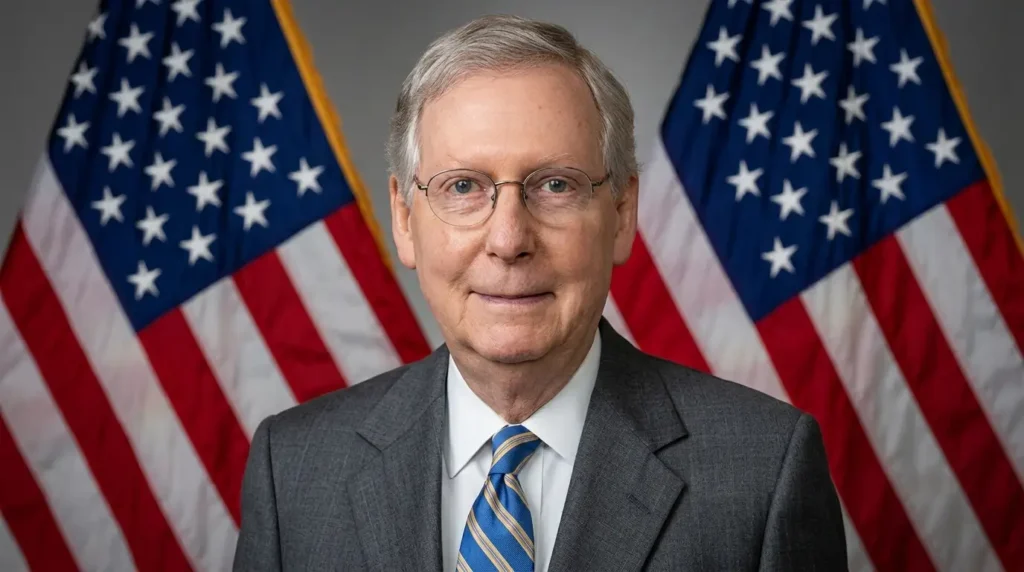
The Timeline: What Happened on June 14
The story begins early on the morning of Sunday, June 14, 2026. According to police scanner audio later obtained by multiple news organizations, emergency dispatchers logged a call for an “unconscious” individual at an address matching McConnell’s Washington, D.C., home. Within minutes, a responding medic radioed that CPR was in progress and that the case involved a reported cardiac arrest.
The recordings never mention McConnell by name, and his office has never confirmed that the call involved the senator himself. But the timing lines up precisely: that same morning, McConnell’s spokesman issued a brief statement saying the senator had been “admitted to the hospital” and was “receiving excellent care.”
Since then, the flow of information has slowed to a trickle. About a week after the hospitalization, McConnell’s office said he was continuing to work with staff on Senate and Kentucky matters. On July 2, nearly three weeks in, his office issued its most detailed update yet, saying the senator appreciated the outpouring of support and “continues to improve.” As of the first week of July, he had not been seen publicly and had not cast a vote since June 11.
Related reading: What Happens If US Debt Keeps Rising? — the fiscal context that shapes long-run Treasury market dynamics.
Why the CPR Call Matters
The detail that has generated the most speculation is the reported cardiac arrest. Cardiac arrest is a sudden loss of heart function, which is different from a heart attack, though the two are related and a heart attack can trigger cardiac arrest. It’s a medical emergency that requires immediate CPR or defibrillation, and outcomes vary widely depending on how quickly treatment begins.
Because McConnell’s office has declined every request to explain what prompted his hospitalization, journalists have had to rely on public records like dispatch audio rather than direct answers. Spokespeople have repeatedly redirected reporters to earlier, vaguer statements instead of confirming or denying the details in the recordings.
A Pattern of Health Scares
This hospitalization is not an isolated event. It’s the latest in a string of health issues that have followed McConnell for years:
- Childhood polio, which left him with a lifelong uneven gait.
- 2019: A fall at home resulted in a fractured shoulder.
- March 2023: A trip and fall at a Washington dinner caused a concussion and a fractured rib, leading to a stay at an inpatient rehabilitation facility.
- Later in 2023: McConnell froze mid-sentence during two separate press conferences, standing silently for several seconds before aides guided him away. His office attributed the episodes to lightheadedness.
- 2024–2025: Additional falls caused minor injuries to his wrist and face.
- February 2026: A week-long hospital stay for flu-like symptoms, after which his office described his prognosis as positive.
- May 2026: McConnell appeared at a Senate hearing with a bandage on his hand, and had increasingly relied on a wheelchair to move between his office and the Capitol in the months before his latest hospitalization, though he reportedly was walking unassisted just days before June 14.
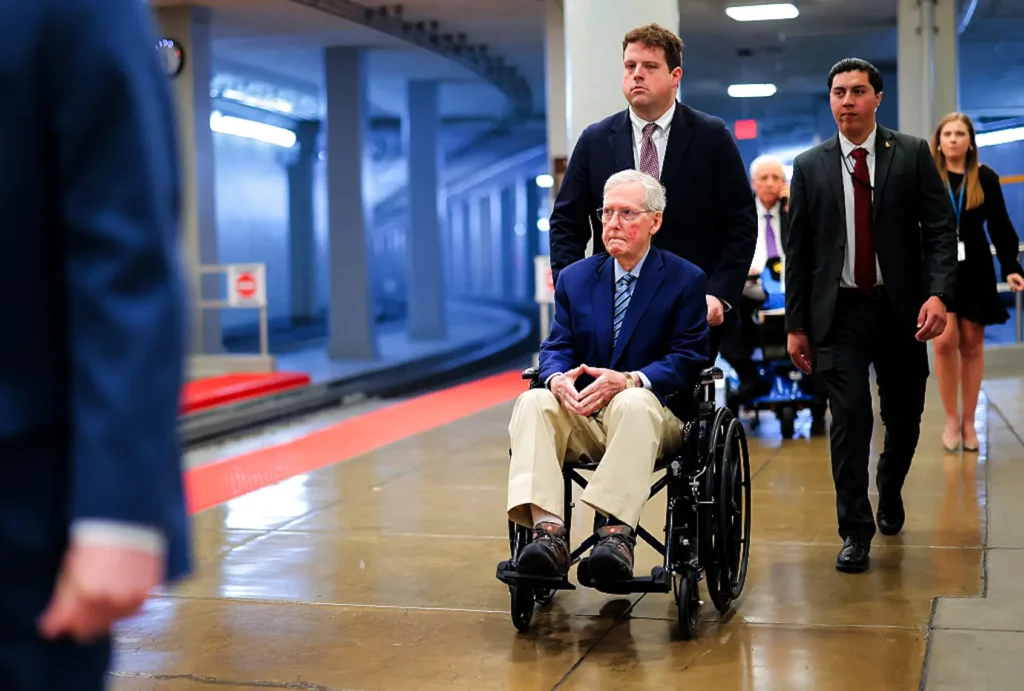
Taken together, the pattern illustrates a lawmaker who, for several years, has managed a demanding job while dealing with declining physical health largely out of public view.
Related reading: Best Investments During Inflation (2026 Guide) — for investors seeking diversification strategies that don’t depend on leverage or sector concentration.
The Political Stakes: An Empty Vote in a Divided Senate
McConnell’s absence isn’t just a personal matter. The Senate operates on razor-thin margins, and every missing vote can change outcomes. His extended absence already forced the Senate Appropriations Committee to postpone a hearing on spending legislation, since Republicans need his vote to move some bills over unified Democratic opposition.
The senator has already announced he will not seek an eighth term. Kentucky Representative Andy Barr, who once interned for McConnell and has called him a mentor, won the Republican primary in May to compete for the open seat this November against Democrat Charles Booker. McConnell is expected to formally leave the Senate in January 2027 regardless of the outcome of his current hospitalization, after 42 years in office.
What Happens If McConnell Cannot Finish His Term?
This question has taken on new urgency because of a change in Kentucky law. In 2024, Kentucky’s Republican-controlled legislature passed House Bill 622, overriding a veto from Democratic Governor Andy Beshear. The law stripped the governor’s power to appoint a replacement senator, something governors in 45 other states can still do, and instead requires that any Senate vacancy be filled through a special election.
Kentucky is now one of only five states, alongside North Dakota, Oregon, Rhode Island, and Wisconsin, where a Senate vacancy must go to voters rather than being filled by gubernatorial appointment. In practice, that means if McConnell’s seat were to become vacant before his term ends, the decision on his successor would not rest with Governor Beshear at all. Legal analysts note the statute doesn’t clearly spell out how the process would interact with the Senate race already underway for November 2026, leaving real procedural questions unanswered even as the political stakes remain low, since McConnell was not running for reelection regardless.
Adding to public curiosity, McConnell’s wife, former Transportation Secretary Elaine Chao, was reported to have been on a long-planned trip to China at the time of his hospitalization, reportedly tied to family philanthropic work. A spokesperson for Chao said the trip had been scheduled well in advance and that the senator’s condition did not require her immediate return, though the timing has drawn attention given how little the public knows about his condition.
Part of a Larger Pattern in Congress
McConnell’s guarded silence fits into a broader, uncomfortable trend in Washington: lawmakers disclosing very little about serious health issues, sometimes for months at a time.
- Representative Thomas Kean Jr. of New Jersey missed more than 100 votes over 117 days before eventually explaining he had been hospitalized for depression.
- Former Representative Kay Granger of Texas, once a powerful Appropriations Committee chair, missed months of votes and was later found to be living in an assisted care facility; her son subsequently told a local newspaper she had been dealing with dementia-related issues.
- The late Senator Dianne Feinstein of California did not disclose complications, including encephalitis, from a 2023 shingles hospitalization until it was reported by the press.
With the average age of Congress trending older and the last three presidents including the oldest ever elected, the debate over whether lawmakers owe the public more transparency about their health is likely to keep resurfacing.
The Bottom Line
As of early July 2026, Mitch McConnell remains hospitalized, his office insists he is improving, and the true cause of his hospitalization remains undisclosed more than three weeks later. What’s known publicly comes largely from police scanner audio and brief statements rather than direct confirmation from McConnell’s team. Whatever the outcome, his situation has reignited a long-running debate in American politics: how much the public is owed when the people making national decisions are also quietly managing serious health challenges of their own.
Sources
- NBC News — “Paramedics responded to a ‘cardiac arrest’ at Mitch McConnell’s home on day of hospitalization”
- NBC News — “Mitch McConnell remains hospitalized after more than three weeks”
- CBS News — “Mitch McConnell still hospitalized after EMS responded to his home for ‘unconscious’ person last month”
- CBS News — “EMS was called to Sen. Mitch McConnell’s home for ‘unconscious’ patient last month, recording suggests”
- Forbes — “Mitch McConnell Has Been Hospitalized For Weeks—What We Know About His Health”
- The Washington Post — “Here’s what we know about Sen. Mitch McConnell’s health”
- Slate — “Is Mitch McConnell in the hospital?”
- Deseret News — “Questions remain about Sen. Mitch McConnell’s health”
- Newsweek — “Mitch McConnell Health Questions Raise Kentucky Senate Succession Issues”
- Congress.gov / Congressional Research Service — “U.S. Senate Vacancies: How Are They Filled?”