
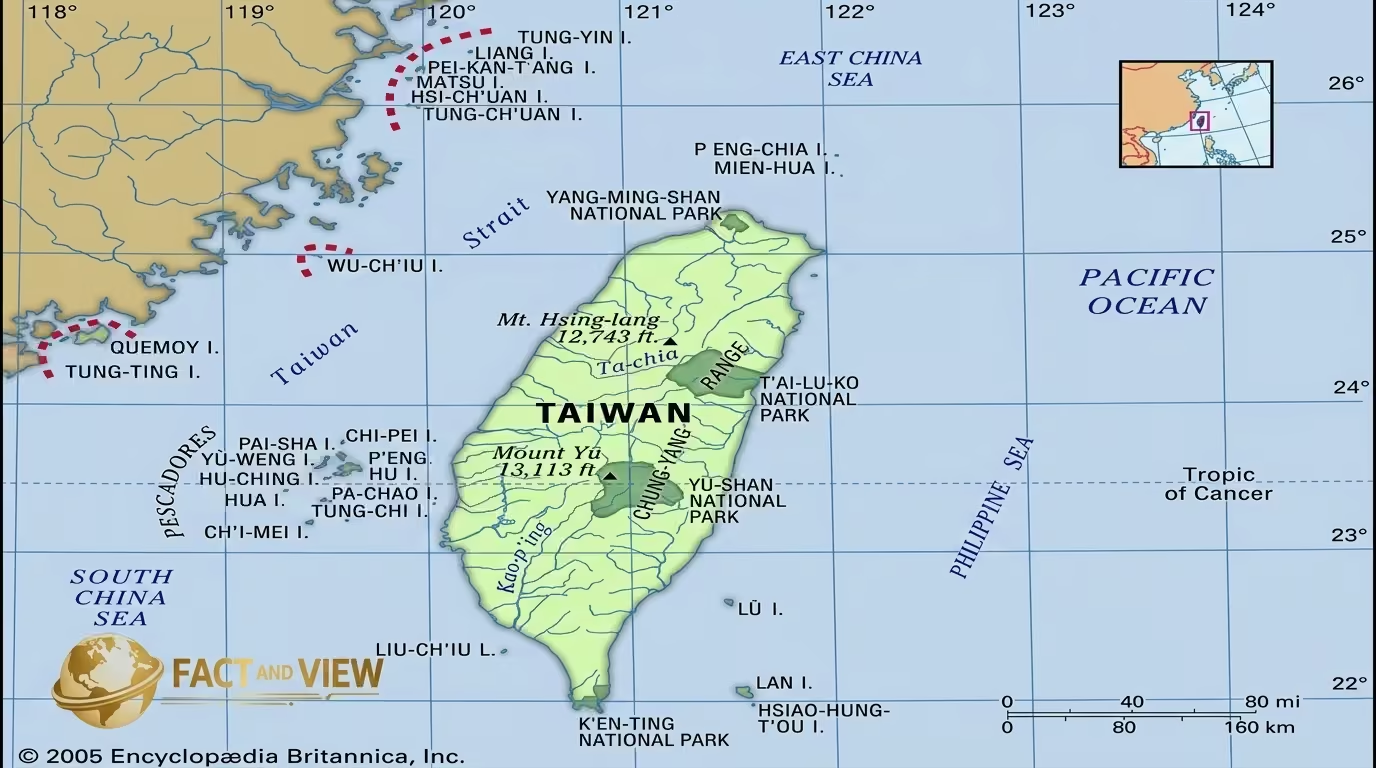
Your next iPhone is already getting more expensive, and Taiwan hasn’t even been blockaded yet. TSMC, the company that makes nearly every advanced chip Apple sells, has told customers to expect base price increases of 5% to 10%, with some large orders costing up to 25% more, driven by rising materials costs, new fab construction, and geopolitical friction around the very island where those chips are made. That’s the routine version of supply chain stress. A Taiwan blockade would be something else entirely.
This isn’t a prediction that a blockade is imminent. It’s a look at what economists and defense analysts actually model when they run the numbers, and why the honest answer to “what would it do to my iPhone bill” is less about a price tag and more about whether you could buy one at all.
Why Your iPhone Runs Through One Small Island
Apple doesn’t manufacture its own chips. It designs them, then hands production almost entirely to TSMC, Taiwan Semiconductor Manufacturing Company, which produces the A-series and M-series processors inside every iPhone, iPad, and Mac. Industry analysts describe TSMC’s Fab 18 in Tainan, Taiwan, as functionally “Apple’s fab,” since it’s where the company’s most advanced chips, from the latest A-series processors to its custom silicon, are actually made.
This isn’t a minor supplier relationship. TSMC controls roughly 92% of the world’s most advanced logic chip production, the sub-10-nanometer chips that power flagship smartphones, and produces an estimated 70% of the world’s smartphone chipsets overall, according to Rhodium Group research. Apple is TSMC’s largest single customer. When people talk about Taiwan as a geopolitical flashpoint, they’re often talking, whether they realize it or not, about the device in their pocket.
What a Taiwan Blockade Actually Means
It’s worth being precise about terminology, since “blockade” gets used loosely. Analysts generally distinguish it from a full military invasion. A blockade, or naval quarantine, would involve closing Taiwan’s ports and air corridors, restricting what moves in and out of the island without necessarily involving direct combat on Taiwanese soil. Some analysts consider this scenario more plausible than an amphibious invasion, given the military complexity of the latter, while carrying economic consequences that are, in the words of one Stanford researcher, “only marginally less catastrophic.”
The mechanical effect on chips is straightforward and brutal: a blockade would halt semiconductor exports within days. Existing chip inventories at Apple and its competitors would begin depleting within weeks, and production lines that rely on those chips as inputs would slow globally shortly after.
The Global Price Tag: What Economists Actually Model
Several independent research groups have tried to put numbers on this scenario, and while their estimates vary, they agree on the scale.
- The Institute for Economics and Peace estimates a blockade would shrink global economic output by 2.8% in the first year alone, a $2.7 trillion hit, with Taiwan’s own economy contracting by nearly 40% and China’s by roughly 7%.
- Bloomberg Economics modeling puts a blockade scenario at a 5% global GDP contraction, compared with over 10% for a full invasion scenario, for context, global GDP fell around 5% during the entire 2008 financial crisis.
- Rhodium Group calculates that a blockade would put $565 billion in Taiwan-linked value-added trade at risk, with ripple effects concentrated in the US, Japan, Germany, and South Korea, all major participants in electronics and automotive supply chains.
- Broader modeling on a full conflict scenario suggests South Korea could see GDP drop by as much as 23%, Japan by nearly 15%, and the European Union by close to 11%, reflecting how deeply integrated global manufacturing has become with Taiwanese chip supply.
A Federal Reserve Bank of St. Louis analysis summarized the underlying dynamic bluntly: a slowdown or halt of Taiwan’s semiconductor exports could disrupt global economic activity as much as, or more than, any other single geopolitical event analysts currently model.
From Macro Models to Your Pocket
Here’s where the abstraction becomes concrete. The 2020-2021 global chip shortage, triggered by pandemic disruptions rather than anything close to a blockade, gives a useful, much smaller preview of what happens when chip supply tightens: European car production fell roughly 13% on average, with some countries seeing drops above 25%, and consumers everywhere dealt with monthslong waits for everything from vehicles to appliances.
A Taiwan blockade would be a categorically larger version of that shock, concentrated specifically on the most advanced chips, the ones inside every iPhone. In a scenario where Apple’s chip inventory runs out within weeks and TSMC’s fabs stop shipping, the relevant question for consumers wouldn’t be “how much more will an iPhone cost.” It would be “when can I buy one at all.” Apple has weathered smaller cost pressures by raising prices selectively; a genuine supply halt doesn’t offer that option, because there’s no substitute inventory to draw down once existing stock runs out.
To put the current, much milder cost pressure in perspective: Apple already raised prices across its Mac and iPad lineups this year, in some cases by more than 50% on memory and storage configurations, changes CEO Tim Cook called “unavoidable” given rising component costs. Estimates for the next generation of iPhone suggest manufacturing costs could rise by roughly $300 per unit even without any Taiwan disruption at all, largely from memory pricing pressures layered on top of TSMC’s own increases. That’s the baseline stress level, well before anything resembling a blockade enters the picture.
Why Arizona Won’t Save You Anytime Soon
Apple and TSMC have spent years talking about diversifying chip production away from Taiwan, and it’s a real effort, not just messaging. TSMC’s Arizona campus, part of a commitment that has grown past $165 billion, is already producing chips for Apple and Nvidia, and Apple has committed to sourcing more than 100 million advanced chips from the site.
But the timeline matters enormously here. As of 2026, Arizona accounts for under 5% of TSMC’s leading-edge production capacity, and industry analysts don’t expect that to materially reduce Taiwan dependence until 2028 at the earliest. High-volume production of TSMC’s most advanced 2-nanometer chips in Arizona isn’t expected until closer to 2030. Building and operating US fabs also runs at least 50% more expensive than equivalent facilities in Taiwan, a cost that eventually shows up somewhere in the supply chain, typically in the price a consumer pays.
In plain terms: American chip manufacturing is a real hedge against Taiwan risk, but it’s a hedge that’s still years away from being large enough to matter in a genuine crisis. If a blockade happened this year, or next, Arizona wouldn’t come close to covering the gap.
How Likely Is This, Really?
This is the question underneath the question, and forecasters who study it professionally don’t treat it as either negligible or inevitable. A 2025 aggregation of expert forecasts by the Swift Centre put the baseline annual probability of a Taiwan blockade at around 3.7%, though individual estimates ranged widely, from under 1% to as high as 14%. Notably, the same forecasters estimated that if a blockade did occur, the odds of it escalating into a broader military conflict jumped to roughly 59%, illustrating why analysts treat a blockade not as a contained economic event but as a potential first domino.
That’s a genuinely uncertain range, reflecting real disagreement among people whose job is estimating exactly this kind of risk. It’s neither something to dismiss nor something to treat as a foregone conclusion.
What This Means for Your Wallet, Realistically
Two separate things are true at once, and it’s worth keeping them distinct. In the near term, iPhone prices are already drifting upward due to ordinary, non-catastrophic pressures: TSMC’s scheduled price increases, rising memory costs, and the expense of building new fabs outside Taiwan. That’s a real, current, and comparatively modest trend that doesn’t require any geopolitical crisis to explain.
Separately, the tail risk of an actual Taiwan blockade represents a fundamentally different kind of event, not a price increase but a supply interruption, one that modeling suggests could shave multiple percentage points off global GDP and leave consumer electronics, cars, and countless other chip-dependent products in short supply for an extended period. The low, but non-trivial, probability that forecasters assign to this scenario is exactly why Apple, TSMC, and US policymakers are spending tens of billions of dollars trying to reduce it, even knowing that money can’t buy back the years still needed to finish the job.
A Taiwan blockade would not simply mean a pricier iPhone; it would mean, for a period of months, potentially no new iPhone to buy at any price, layered on top of a global economic shock large enough that the price of your phone would likely be the least of anyone’s concerns. The more immediate, far more probable story is the one already underway: gradual, real cost increases from TSMC’s pricing power and a diversification effort that, however serious, remains years from providing genuine insurance against the risk it’s meant to hedge.
Related Reading
- Ukraine-Russia War Enters a New, Riskier Phase — another example of how a regional conflict translates into measurable global economic disruption.
- Green Energy Subsidies: What They Mean for Auto Stocks — a related look at how supply chain and policy shocks unevenly affect companies dependent on concentrated manufacturing hubs.
Sources
- Rhodium Group — “The Global Economic Disruptions from a Taiwan Conflict”
- Vision of Humanity / Institute for Economics and Peace — “The World’s Growing Reliance on Taiwan’s Semiconductor Industry”
- TradingView / Invezz — “A $10-trillion reckoning: how a Chinese invasion of Taiwan would upend markets”
- Insurance Journal — “The $10 Trillion Fight: Modeling a US-China War Over Taiwan”
- Rest of World — “Taiwan’s chips power the global economy. China holds the leverage”
- Swift Centre — “China, Taiwan, and TSMC Risks to 2027”
- MacRumors — “Apple Chipmaker TSMC Plans Price Hikes of Up to 10% in 2027”
- AppleInsider — “Expect 2027 iPhones to cost more as TSMC increases chip prices”
- AppleInsider — “Advanced Apple Silicon remains tied to Taiwan despite Arizona fab expansion”
- SemiAnalysis — “Apple-TSMC: The Partnership That Built Modern Semiconductors” (newsletter.semianalysis.com)
- Tech Insider — “TSMC’s $165B Arizona GigaFab: Reshaping US Chips” (tech-insider.org)
- WebProNews — “Apple’s Most Advanced Chips Still Can’t Escape Taiwan — And Arizona Won’t Change That Anytime Soon” (webpronews.com)
Disclaimer: This article discusses modeled economic and geopolitical scenarios for informational purposes. It is not a prediction of future events and does not constitute investment advice.