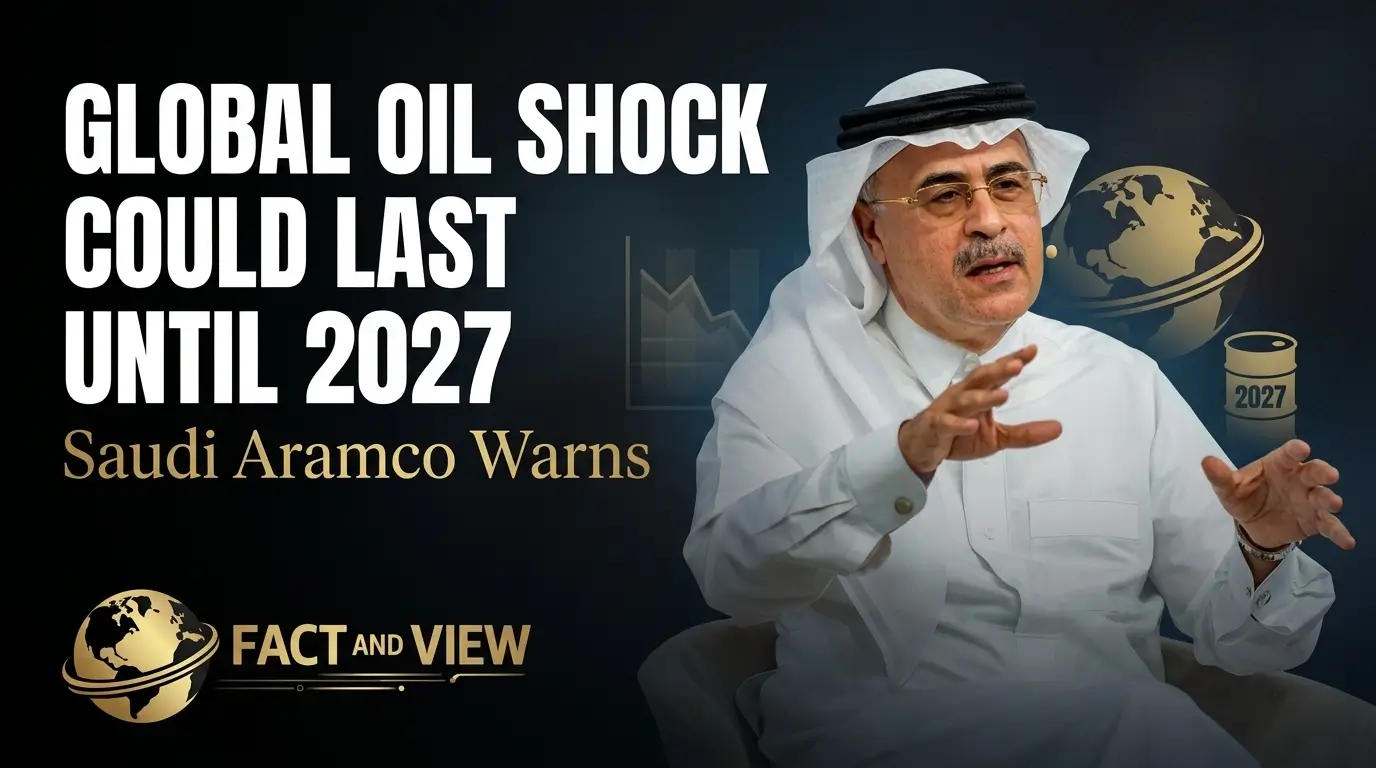
The global oil market may not fully recover until 2027 if disruptions in the Strait of Hormuz continue, according to Saudi Aramco CEO Amin Nasser — a warning that underscores how deeply the ongoing Middle East conflict is reshaping global energy markets.
Speaking during Aramco’s latest earnings call, Nasser described the current supply disruption as “the largest energy supply shock the world has ever experienced,” estimating that roughly 1 billion barrels of oil supply have effectively been removed from global markets since the start of the Iran-related crisis.
The comments come as oil traders, governments, and central banks increasingly fear that the conflict could trigger a prolonged energy-driven inflation cycle similar to the shocks seen during the 1970s oil crises.
A Strategic Chokepoint Under Pressure
The Strait of Hormuz remains one of the most critical shipping routes in the global economy. Before the conflict escalated, roughly 20% of the world’s oil supply moved through the narrow waterway separating Iran from the Arabian Peninsula.
Following escalating military tensions and threats to commercial tanker traffic, shipping activity through the region has been severely reduced. Saudi Arabia responded by cutting oil production by approximately 2 million barrels per day while redirecting exports through alternative infrastructure.
At the center of that strategy is Saudi Arabia’s East-West pipeline, which crosses the kingdom from the Persian Gulf to the Red Sea port of Yanbu.
According to Nasser, the pipeline is now operating at its maximum capacity of 7 million barrels per day, becoming what he called a “critical supply artery” for global energy markets.
Of that volume:
- around 2 million barrels per day support domestic refining operations
- roughly 5 million barrels per day remain available for exports
Even with rerouted shipments and emergency reserve releases by several countries, Aramco says the market remains structurally undersupplied.
Why Oil Markets Could Stay Volatile for Years
The warning from Aramco is not simply about temporary shipping disruptions. The larger concern is that the world entered this crisis after years of underinvestment in oil production capacity.
Since the energy transition accelerated in the early 2020s, many Western energy companies reduced long-term fossil fuel investment amid political and environmental pressure. That left global spare capacity far thinner than during previous geopolitical crises.
Nasser emphasized this point directly during the earnings call, warning that recent events demonstrate “how critical reliable oil and gas supplies remain to the global economy.”
Analysts at Goldman Sachs and JPMorgan Chase have also warned in recent months that prolonged Hormuz disruptions could push crude oil prices well above $120 per barrel if shipping constraints persist into late 2026.
Some forecasts suggest temporary spikes toward $150 oil are possible under worst-case scenarios involving further military escalation.
The Inflation Risk Returns
Higher oil prices affect far more than gasoline.
Energy costs feed directly into:
- transportation
- manufacturing
- food prices
- airline costs
- shipping expenses
This is one of the main reasons inflation remains difficult to fully control in 2026, even after several years of aggressive rate hikes by central banks. To better understand why prices across the economy are still elevated, read our full breakdown of why inflation continues to affect American households in 2026.
This creates the risk of a second inflation wave just as many central banks were beginning to stabilize prices after years of elevated inflation.
For the Federal Reserve, the timing could hardly be worse.
The Federal Reserve plays a central role in responding to inflation shocks and economic slowdowns through interest rate policy and broader financial conditions. To understand the mechanics behind those decisions, read our simple guide to how the Federal Reserve influences the U.S. economy and financial markets.
Policymakers have spent years trying to cool inflation through high interest rates. A renewed energy shock could complicate plans for future rate cuts and place additional pressure on consumers already struggling with housing and borrowing costs.
Rising energy prices combined with elevated interest rates are also fueling broader fears about the stability of the U.S. economy and whether the country could face a deeper slowdown in the coming years. Read our full analysis on whether the US economy could be heading toward a recession or economic crash in 2026.
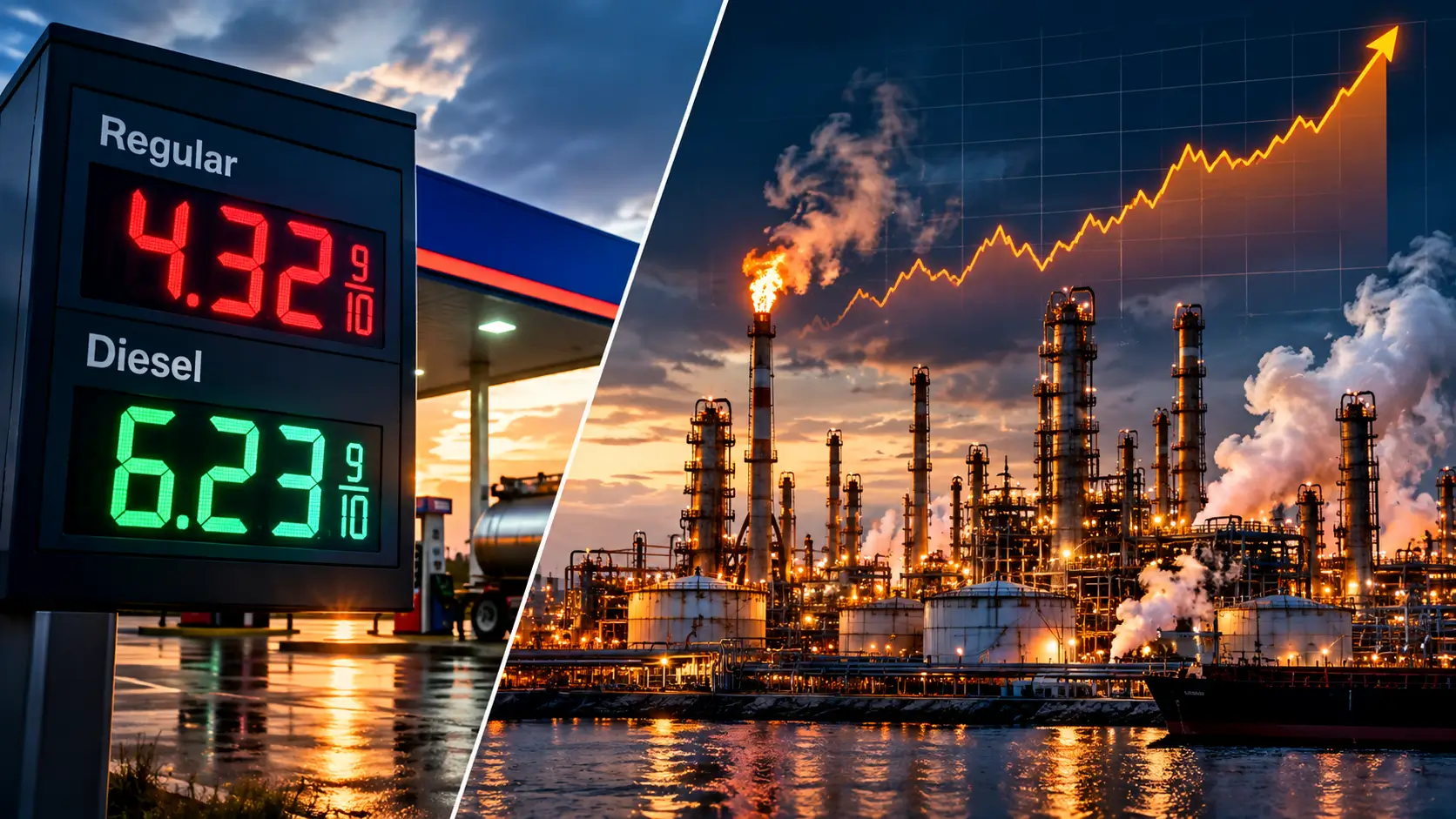
In the United States, average gasoline prices have already started climbing again in several states following the latest shipping disruptions.
A Global Economy Increasingly Dependent on Stability
One of the most striking elements of the current crisis is how quickly a regional conflict has evolved into a global economic issue.
The modern energy system depends heavily on stable shipping routes, predictable supply chains, and continuous energy flows. The Strait of Hormuz disruption highlights how vulnerable those systems remain despite years of diversification efforts.
Countries including China, India, Japan, and much of Europe remain heavily reliant on Middle Eastern energy exports. Any prolonged instability in the region risks slowing global growth while increasing financial market volatility.
Meanwhile, shipping insurance costs for tankers operating near the Gulf have surged, adding another layer of pressure to already elevated energy prices.
What Happens Next?
The future trajectory of oil markets now depends on three major variables:
1. Duration of the Hormuz Disruption
The longer shipping remains constrained, the greater the structural damage to supply chains.
2. OPEC+ Production Decisions
Additional production increases from Gulf producers could partially offset shortages.
3. Global Demand Trends
A slowing global economy could eventually reduce demand pressure, limiting price spikes.
For now, however, Aramco’s message is clear: this is not a short-term market disruption.
The company believes that even if shipping routes reopen relatively soon, rebuilding depleted inventories and restoring market balance could take years.
The Bigger Picture
The oil shock of 2026 is becoming more than a commodity story. It is increasingly a test of how resilient the global economy really is after years of geopolitical fragmentation, supply chain stress, and underinvestment in traditional energy infrastructure.
For consumers, the effects are already visible through higher fuel and transportation costs.
For policymakers, the challenge is even larger: balancing inflation control, economic growth, and energy security at the same time.
And for financial markets, the possibility that oil volatility could persist into 2027 introduces a new layer of uncertainty into an already fragile global environment.
Sources
Saudi Aramco
Reuters Energy News
Bloomberg Energy
U.S. Energy Information Administration (EIA)