Inflation at 3.3% CPI. Core PCE stuck at 3.0%. The Strait of Hormuz functionally closed. Fertilizer prices heading toward a 100% surge. The Fed frozen at 3.5%–3.75% with zero cuts priced in for the rest of the year.
This is the inflation environment you are actually investing in right now — not the textbook scenario where prices rise gradually and the central bank responds predictably. The 2026 inflation shock is supply-driven, geopolitically generated, and partially beyond the Fed’s ability to solve with rate policy. That distinction changes which investments protect you and which ones destroy your purchasing power while feeling safe.
Fidelity Strategic Investors put it plainly in a May 2026 note: “The goal is not simply preserving account balances. It is preserving purchasing power and lifestyle over decades.” That framing is exactly right. Beating inflation is not about chasing the hottest asset class. It is about building a portfolio architecture that grows faster than the purchasing power you lose to rising prices.
Here is what actually works in 2026 — and why.
The Big Picture: Why 2026 Inflation Is Different
Standard inflation models assume a demand-driven price rise that the Fed tamps down by raising rates. In 2026, that model is only partially applicable.
Fact: The Bureau of Labor Statistics reported March 2026 CPI at 3.3% year-over-year, with core CPI (excluding food and energy) at 2.6%. Core PCE — the Fed’s preferred gauge — stood at 3.0% in February, stuck above target for the 24th consecutive month.
Fact: The Middle East conflict and Hormuz closure produced a 55% surge in Brent crude from February 27 to the March peak, pushing energy prices sharply higher. Nitrogen fertilizer prices are projected to roughly double from 2024 levels; phosphate prices are expected to rise approximately 50%, per Morningstar analyst projections. These supply shocks flow into food and goods inflation with a 6–12 month lag — meaning their full CPI impact has not yet arrived.
Fact: I Bonds issued from November 2025 through April 2026 carry a composite yield of 4.03% — a fixed rate of 0.90% plus an inflation adjustment of 3.12%, per U.S. Treasury data via Motley Fool’s March 2026 analysis. TIPS are currently offering real yields of 1.25%–2.0% across 5-, 10-, and 30-year maturities.
The View: A supply-driven inflation shock — caused by energy disruption, not excess demand — behaves differently from a demand-driven one in two critical ways. First, the Fed cannot fully solve it with rate hikes: raising rates doesn’t reopen the Strait of Hormuz or rebuild fertilizer supply chains. Second, the assets that outperform are different: real assets, energy producers, and inflation-linked instruments beat both nominal bonds and most equities in this specific environment. Understanding this distinction is the most valuable positioning insight of 2026.
Related reading: Middle East Tensions Explained: What It Means for Oil Prices — the full mechanics of the energy shock driving current inflation.
Deep Dive: Eight Best Investments During Inflation in 2026
1. TIPS: The Government’s Inflation Guarantee
Treasury Inflation-Protected Securities are U.S. government bonds whose principal adjusts automatically with CPI. When inflation rises, the TIPS principal increases, which raises your interest payment. When deflation occurs, the principal falls — but never below the original face value at maturity.
Fact: TIPS currently offer real yields of 1.25%–2.0% depending on maturity, per FRED data as of May 2026. That means at current CPI of 3.3%, a 10-year TIPS delivers approximately 4.5%–5.3% nominal return with full inflation protection. Matthew Garrott, Director of Investment Research at Fairway Wealth Management, told CNN Business: “It’s a government security, so very high-quality fixed income. And then the inflation-protected piece is a cherry on top.”
How to invest: Purchase directly at TreasuryDirect.gov with no fees, or through any major brokerage. ETF options: TIP (iShares TIPS Bond ETF) for broad exposure; VTIP (Vanguard Short-Term Inflation-Protected Securities ETF) for lower duration risk.
The View: TIPS are structurally underowned by retail investors and appropriately owned by every institutional portfolio managing inflation risk seriously. At current real yields of 1.5%+, they offer the most straightforward risk-adjusted inflation hedge available — better than cash, better than nominal bonds, and with no credit risk. In a stagflationary environment where the Fed cannot cut aggressively, TIPS outperform.
2. I Bonds: The Zero-Risk Inflation Hedge for Individuals
Series I savings bonds are U.S. government instruments that pay a fixed rate plus a semi-annual inflation adjustment tied directly to CPI. They carry zero credit risk and zero default risk.
Fact: I Bonds issued through April 2026 yield 4.03% composite — 0.90% fixed plus 3.12% inflation adjustment, per U.S. Treasury. They are capped at $10,000 per person per year in electronic form (plus $5,000 in paper form via tax refund). They cannot lose nominal value. They cannot be redeemed in the first 12 months, and redemption before 5 years forfeits the last 3 months of interest.
How to invest: Purchase exclusively at TreasuryDirect.gov. No brokerage, no ETF — direct government purchase only.
The View: I Bonds are the most risk-efficient inflation hedge available to individual investors for the first $10,000–$15,000 of annual savings. They beat high-yield savings accounts on an after-tax basis in high-inflation environments, require no market exposure, and automatically track the inflation they’re designed to protect against. The purchase cap makes them a complement to, not a replacement for, a broader inflation-protection strategy.
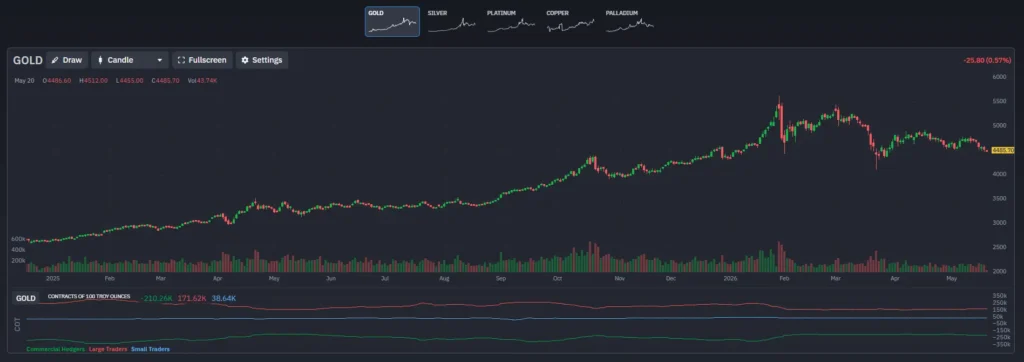
3. Gold: Central Bank Demand Is the New Floor
Gold’s inflation-hedging credentials are debated by academics and validated by markets. In 2026, the debate is largely settled — central banks have bought enough gold to create a structural demand floor that didn’t exist in previous inflationary cycles.
Fact: Gold hit an all-time high above $5,400 per ounce in January 2026 before correcting. The World Bank projects precious metals prices to rise 42% for the full year 2026. Central banks bought 244 tonnes of gold on a net basis in Q1 2026 alone — the strongest Q1 on record. In the last five years, gold prices have nearly doubled, per LendEDU’s February 2026 analysis.
Fact: State Street Investment Management notes: “Gold continues to benefit from macroeconomic uncertainty, fiscal activism, and elevated global debt levels. In this environment, gold serves as a strategic hedge against debt monetisation and currency debasement.”
How to invest: Physical gold (coins, bars) via dealers; Gold ETFs — GLD (SPDR Gold Shares) or IAU (iShares Gold Trust) — in brokerage or IRA accounts; Gold mining ETFs (GDX, GDXJ) for leveraged exposure with higher volatility.
The View: Gold works in 2026 not just because of inflation but because of what is driving the inflation: geopolitical instability, fiscal excess, and dollar debasement risk. These are precisely the conditions that have historically produced gold’s strongest long-run performance. Central bank buying at this scale is new — it creates a structural bid under the market that retail sentiment cycles cannot fully override.
Related reading: Where Smart Money Is Moving Right Now (2026 Update) — the full institutional gold buying thesis, including central bank demand data.
4. Energy Stocks and Commodities: Own What Is Rising
When oil costs 55% more than it did three months ago, owning oil producers is the most direct hedge against energy-driven inflation.
Fact: The SPDR S&P Metals & Mining ETF (XME) gained 13% during the highly inflationary 2022 environment versus a negative 18% total return for the S&P 500 — an 31-percentage-point outperformance gap. Commodities have the highest “beta to inflation” of any major asset class, meaning they move most directly with CPI, per institutional research cited by CIO Investment Club.
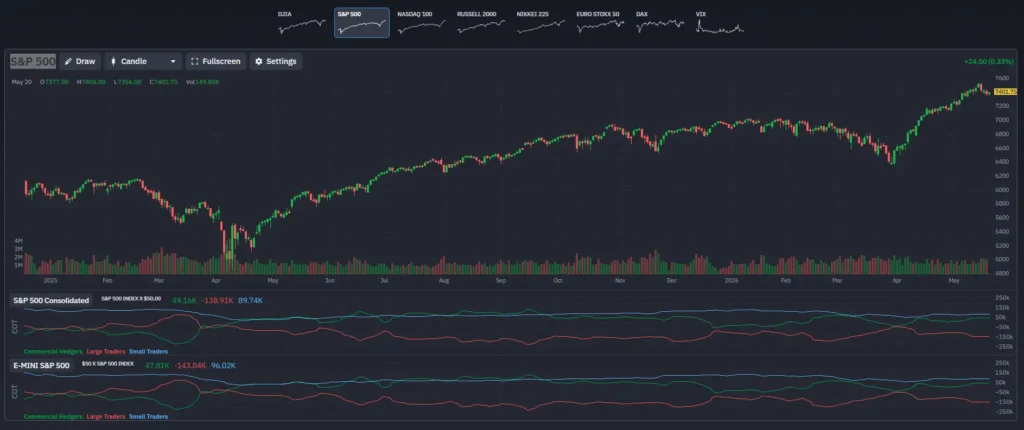
Fact: U.S. crude and petroleum product exports rose to nearly 12.9 million barrels per day on April 24, 2026 — a record. American net exporter status means domestic energy producers capture the full revenue benefit of elevated oil prices while U.S. consumers are partially cushioned relative to import-dependent economies.
How to invest: Integrated majors — XOM (ExxonMobil), CVX (Chevron), COP (ConocoPhillips) — for dividend-yielding oil exposure. Broad commodity ETFs — DBC (Invesco DB Commodity Index) or PDBC (Invesco Optimum Yield Diversified Commodity Strategy) — for diversified commodity basket exposure.
The View: Energy stocks are not just an inflation hedge — they are an inflation cause converter. The higher oil goes, the better their earnings. In an environment where energy is the primary driver of CPI acceleration, owning energy producers means you are structurally long the exact input cost your other portfolio positions are paying more for. That is one of the cleanest portfolio hedges available in 2026.
Related reading: Is the Stock Market Overvalued in 2026? Full Breakdown — why energy and commodity stocks are the valuation exception in an otherwise expensive market.
5. Real Estate and REITs: The Inflation Pass-Through Asset
Real estate has historically matched or slightly exceeded inflation over long periods — because landlords can raise rents when their own costs rise, passing inflation through to tenants while the property value itself appreciates.
Fact: Real estate investment trusts (REITs) match rental income growth with inflation rates, per Motley Fool’s March 2026 analysis. The Vanguard Real Estate ETF (VNQ) provides broad REIT exposure across retail, residential, industrial, and data center categories. Redfin projects national rents to rise 2%–3% in 2026 — roughly tracking inflation — with stronger gains in supply-constrained markets.
Fact: Lease renewals often come with built-in rent escalation clauses. Industrial REITs — warehouses, logistics centers, data centers — benefit from e-commerce demand and AI infrastructure buildout that is partially independent of the broader economic cycle. Data center REITs are capturing the AI infrastructure spending wave simultaneously with the inflation protection dynamic.
How to invest: Passive: VNQ (Vanguard Real Estate ETF) or SCHH (Schwab U.S. REIT ETF). Active: Industrial REITs like PLD (Prologis) for logistics; EQIX or DLR for data centers. Direct rental properties for investors with capital and management tolerance.
The View: REITs are the inflation hedge that also pays income. A 4–6% dividend yield that grows with rents, combined with property appreciation, delivers real returns above inflation without requiring precise timing. The caveat in 2026: mortgage rate sensitivity. Rising Treasury yields compress REIT valuations in the short term even as their underlying fundamentals strengthen. This creates a buying opportunity for long-term investors comfortable with 12–18 months of valuation pressure.
Related reading: Will Housing Prices Drop in 2026? US Market Analysis — the rental market outlook and REIT-relevant supply dynamics across key U.S. markets.
6. Short-Duration Bonds: Yield Without Interest Rate Risk
Long-duration bonds are the worst-performing asset class in inflationary environments. Short-duration bonds — maturing in 1–3 years — are a different story entirely.
Fact: As of March 2026, the one-year Treasury yield is approximately 3.55%, per Motley Fool’s rate analysis. Short-term T-bills and notes reprice rapidly when interest rates shift — so they don’t suffer the same capital loss that long-duration bonds experience when yields rise. Fidelity Strategic Investors is actively allocating to REITs, commodities, and TIPS to “help hedge against the impacts of persistent inflation,” with short-duration bonds as a liquidity anchor.
How to invest: Direct purchase at TreasuryDirect.gov; ETFs — SHY (1–3 year Treasury) or SGOV (0–3 month T-bills). Money market funds for daily liquidity with near-Treasury yields.
7. Dividend Growth Stocks: Pricing Power as the Moat
Not all equities lose to inflation. Companies with strong pricing power — the ability to raise prices without losing customers — effectively hedge inflation by growing revenue faster than their cost base.
Fact: Consumer staples companies — producers of food, beverages, household products — consistently maintain margins during inflationary periods by passing cost increases to consumers. Similarly, auto parts retailers like Advance Auto Parts benefit from deferred new-vehicle purchases (at $773/month average payments) that keep older cars on the road longer, driving parts demand.
Sectors with strongest pricing power in 2026’s inflation environment:
- Energy: Directly benefits from the commodity price rise
- Consumer staples: Pricing power backed by inelastic demand
- Healthcare: Insurance and drug pricing power partially inflation-indexed
- Utilities: Regulated rate increases track inflation in most jurisdictions
8. Private Credit: 8–11% Yields With Inflation-Responsive Structures
Private credit — direct lending to companies outside the traditional banking system — offers floating-rate structures that automatically adjust upward when interest rates rise, making returns increase precisely when inflation is highest.
Fact: Private credit currently offers yields of 8%–11% — roughly double investment-grade public credit and well above current CPI — per State Street Investment Management’s 2026 outlook. European private credit fundraising hit a record $65 billion through the first nine months of 2025, with 2026 inflows projected higher.
How to access: Business Development Companies (BDCs) on public exchanges — ARCC (Ares Capital), OBDC (Blue Owl Capital); or semi-liquid interval funds from Blackstone, Ares, and Blue Owl for accredited investors.
Related reading: Where Smart Money Is Moving Right Now (2026 Update) — the full institutional private credit thesis including yield data and default risk analysis.
Risks & Opportunities: Three Inflation Scenarios
Base Case (~45% probability): Inflation Stays at 3–3.5%, Slow Disinflation
CPI holds between 3%–3.5% through year-end. The Fed holds rates. TIPS, gold, energy stocks, and short-duration bonds all outperform nominal long-duration bonds and overvalued growth equities.
Portfolio positioning: 15% TIPS/I Bonds, 10% gold, 15% energy stocks/commodities, 20% REITs, 15% short-duration Treasuries, 15% dividend growth stocks, 10% private credit.
Upside Scenario (~25% probability): Hormuz Reopens, Inflation Falls to 2.5%
Oil drops to $70–$75. CPI falls toward 2.5%–2.8%. The Fed delivers two cuts. Long-duration bonds rally. Growth equities recover.
Portfolio adjustment: Rotate 10% from energy/commodities into long-duration Treasuries and growth technology as rate cuts materialize. Reduce gold to 5–7% from 10%.
Downside Scenario (~30% probability): Stagflationary Spiral, Inflation Above 5%
Middle East conflict escalates. Oil returns above $115. CPI spikes toward 5%+. The Fed cannot cut. Growth slows sharply.
Portfolio adjustment: Maximum real asset allocation — gold to 15%, energy to 20%, TIPS to 20%. Eliminate long-duration nominal bonds entirely. Consider adding commodity-heavy multi-asset funds. Cash in T-bills at 4%+ beats negative-real-return bonds.
Related reading: What Happens If a Global Conflict Escalates? Economic Impact — the IMF’s three formal scenarios for the energy-driven stagflationary trap.
The Bottom Line
Beating inflation in 2026 is not about finding one magical asset. It is about building a portfolio that is structurally long the forces driving price increases — energy, real assets, inflation-linked instruments — while eliminating exposure to assets that lose most in a supply-driven inflationary environment: long-duration nominal bonds and overvalued growth stocks priced on the assumption of low, stable inflation.
Your 2026 inflation-protection priority list:
- Max I Bond purchases ($10,000 per person) at TreasuryDirect.gov — immediate, zero-risk, 4.03% yield
- Add TIPS via TIP or VTIP ETF — real yield of 1.5%+ plus inflation adjustment
- Hold 5–10% in gold — GLD or IAU; central bank demand provides structural support
- Own energy producers — XOM, CVX, COP or XLE ETF; oil at $100+ is their earnings environment
- Replace long-duration bonds with short-duration — SHY, SGOV, or 1-year Treasury notes
- Add REIT exposure — VNQ or PLD for inflation-adjusted income
- Explore private credit — ARCC or OBDC for 8–11% floating-rate yield with income above CPI
The Fed cannot fix a supply-driven inflation shock by holding rates. You cannot fix it by holding cash. Owning the right inflation-sensitive assets is not speculation — it is the rational response to the verified economic environment of 2026.
FAQ
What is the best investment to beat inflation in 2026?
No single asset beats inflation across all scenarios — but TIPS and I Bonds are the most reliable core holdings because their returns are mechanically linked to CPI. I Bonds currently yield 4.03% (above CPI), require no market timing, and carry zero credit risk. TIPS offer real yields of 1.25%–2.0% plus full inflation adjustment, available in 5-, 10-, and 30-year maturities through TreasuryDirect.gov. Gold, energy stocks, and REITs offer higher return potential but with greater volatility. The complete inflation-protection portfolio uses all three categories together, sized to your risk tolerance and time horizon.
Does gold actually protect against inflation?
Historically, yes — particularly in supply-driven inflationary environments driven by geopolitical disruption, which is exactly 2026’s inflation type. Gold has nearly doubled in the past five years. The World Bank forecasts precious metal prices rising 42% for full-year 2026. Central banks bought 244 tonnes in Q1 2026 alone — the strongest Q1 on record — creating a structural demand floor that makes the “does gold work?” question largely academic at current market conditions. Gold underperforms in demand-driven inflation environments where the Fed hikes aggressively and real yields rise sharply. In a supply-driven, Fed-constrained inflation environment, gold is structurally supported. Track live gold prices at Kitco.
Are TIPS a good investment in 2026?
Yes — especially at current real yields of 1.25%–2.0%. A 10-year TIPS at 1.5% real yield delivers approximately 4.8% nominal return if CPI stays at 3.3%, and more if inflation rises further in the downside scenario. Experts from Fidelity, Fairway Wealth Management, and CNN Business all specifically identified TIPS as their top inflation hedge for the current environment. The two limitations: TIPS inflation adjustments are taxable as ordinary income even when not received as cash (a “phantom income” issue), and they offer lower returns than equities in a low-inflation environment. For investors in retirement accounts, where phantom income taxation is deferred, TIPS are especially attractive. Purchase at TreasuryDirect.gov or via TIP or VTIP ETFs.
Should I buy real estate to hedge against inflation in 2026?
Real estate is a historically effective long-run inflation hedge — but the 2026 entry point is complicated. Mortgage rates at 6.5% dramatically raise the cost of leveraged real estate acquisition. REITs offer a more accessible entry point with lower capital requirements and daily liquidity. Redfin projects rents to rise 2%–3% in 2026 — tracking inflation — which supports REIT income. The best REIT sub-sectors in the current environment: industrial (logistics/warehousing) and data centers (AI infrastructure demand), both of which have revenue drivers beyond simple inflation pass-through. For direct real estate investors, Sun Belt markets with rising inventory offer better entry valuations than supply-constrained coastal metros. Full analysis at Will Housing Prices Drop in 2026?.
What investments should I avoid during inflation?
Three categories consistently underperform in inflationary environments:
Highly leveraged growth stocks — companies valued on distant future cash flows are discounted at a higher rate when inflation keeps rates elevated; at a P/E of 27+, the S&P 500 is already priced for a benign rate environment that does not exist in 2026
Long-duration nominal bonds — a 30-year Treasury paying 4% loses real value every year that inflation runs above 4%. If yields rise further (which the fiscal trajectory suggests is likely), long bonds also lose capital value
Cash in traditional bank accounts — 0.1%–0.5% savings yields deliver a guaranteed -3% real return at current CPI; switch to high-yield online savings (4–5%) or T-bills immediately
How do I bond work and how do I buy them?
I Bonds are U.S. savings bonds that pay a fixed rate plus a semi-annual inflation adjustment based on CPI. They are currently yielding 4.03% composite. Key rules: maximum $10,000 purchase per person per calendar year electronically (plus $5,000 in paper bonds via tax refunds); cannot be redeemed for the first 12 months; redeeming before 5 years forfeits 3 months of interest; they are state and local tax-exempt and federal tax can be deferred until redemption. Purchase exclusively at TreasuryDirect.gov — no brokerage account needed. The current rate resets every May and November based on CPI data.
Where can I track inflation data and adjust my portfolio in real time?
Primary sources for monitoring the inflation environment:
Kitco — Gold Price — live precious metals prices
BLS CPI Monthly Release — official monthly CPI data, released mid-month
FRED — Core PCE — the Fed’s preferred inflation gauge
FRED — TIPS Real Yields — 10-year real yield updated daily
TreasuryDirect.gov — I Bond Rates — current and historical I Bond composite rates
CME FedWatch Tool — live market probability of Fed rate changes
Sources: CNN Business — How to Inflation-Proof Your Investments, May 18, 2026 · Motley Fool — 10 Best Inflation-Proof Investments 2026 · LendEDU — 8 Inflation-Proof Investments 2026 · CIO Investment Club — Best Investment Strategies 2026 · OilPrice.com — IEA Revised Forecast, May 2026 · World Bank Commodity Markets Outlook, April 2026 · BLS CPI March 2026 · Federal Reserve FOMC Statement April 29, 2026 · TreasuryDirect.gov — I Bond Rates · FRED — TIPS Real Yield
© Fact and View, 2026. For informational purposes only. Not investment advice.