When Trump, AOC, and Bernie Sanders Agree on Something
On January 9, 2026, President Trump posted on Truth Social that he was calling for a one-year cap on credit card interest rates at 10%, declaring that “we will no longer let the American Public be ‘ripped off’ by Credit Card Companies.” The proposal drew immediate support from an unlikely combination of allies: Senator Bernie Sanders and Senator Josh Hawley had already introduced bipartisan legislation to cap rates at 10% for five years. Representative Alexandria Ocasio-Cortez and Representative Anna Paulina Luna had introduced a parallel House bill.
Four months later, that legislation remains stalled in committee, unable to advance to a floor vote despite support spanning the entire ideological spectrum from Vermont’s democratic socialist senator to Missouri’s populist Republican.
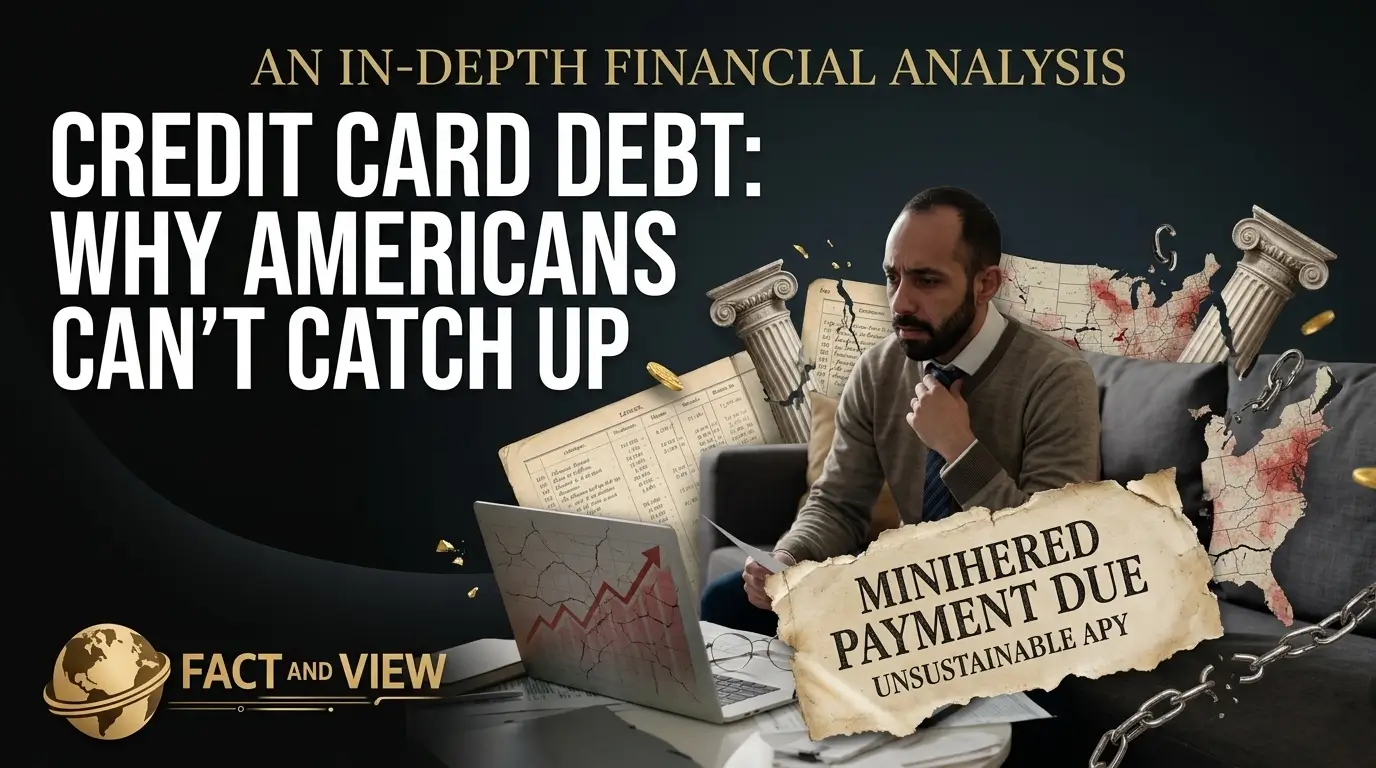
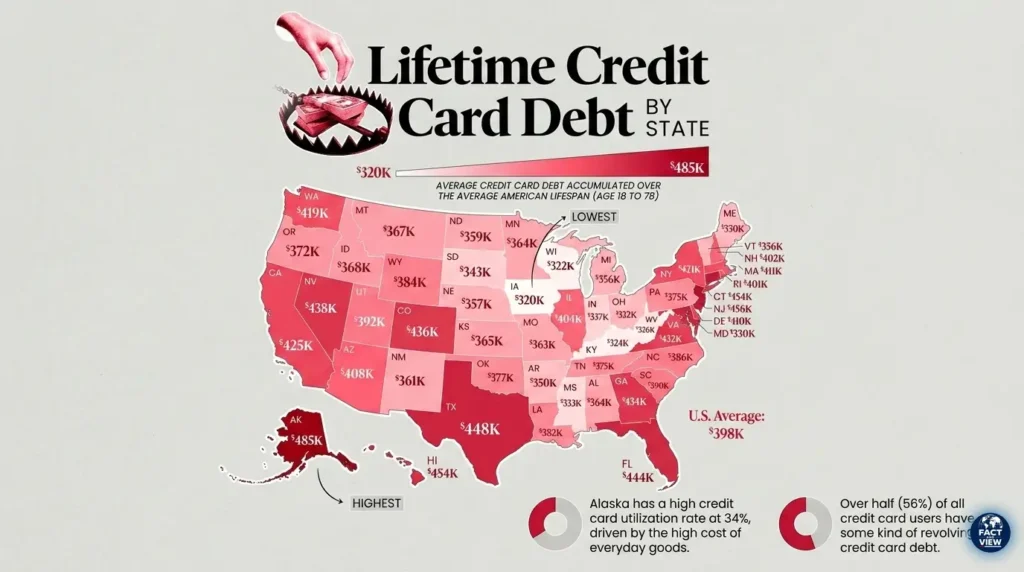
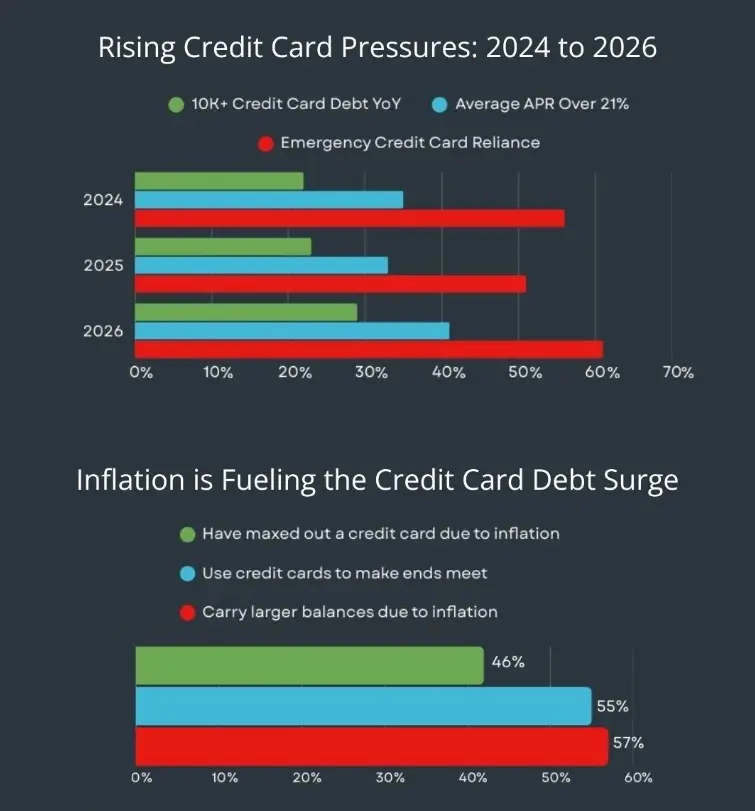
The credit card debt crisis driving this rare alignment is not abstract. Total U.S. credit card balances reached $1.252 trillion in early 2026. Average APRs range between 21% and 24%, with cards for lower-credit-score consumers charging well above 25%. The question this raises is not whether Americans are struggling to pay down credit card debt — every data source confirms they are. The question is why a policy idea with support from the president, the Senate’s most prominent progressive, and a populist Republican still cannot pass Congress.
The View from the Right: Market Discipline, With a Populist Exception
The conservative position on credit card debt in 2026 is genuinely split — between a traditional free-market wing skeptical of price controls and a populist-nationalist wing, led by Trump himself, willing to intervene directly in credit markets.
On the traditional free-market view: House Speaker Mike Johnson indicated on January 13, 2026, that Trump’s proposed cap could have “negative secondary effects,” signaling limited Republican appetite in Congress for the legislation despite the president’s public endorsement. This reflects the institutional Republican position that rate caps function as price controls, with banks restricting credit access for the riskiest borrowers as the predictable response.
On the regulatory rollback record: The Trump administration’s broader 2025 actions on consumer credit cut against the rate-cap framing. The administration moved to scrap a Biden-era rule capping credit card late fees at $8, joining banks in a lawsuit to block the regulation’s enactment — a rule the CFPB had estimated would save families more than $10 billion annually by reducing late fees from an average of $32. The administration has also worked to dismantle the Consumer Financial Protection Bureau itself, an agency Republicans have long accused of regulatory overreach.
On Trump’s populist framing: Despite this deregulatory record, Trump’s January 2026 rate-cap proposal represents a genuine departure — directly blaming “Credit Card Companies” for “ripping off” the American public, and tying the issue explicitly to affordability concerns ahead of the midterms. Trump specifically connected high credit card debt to the housing crisis, stating that “one of the biggest barriers to saving for a down payment has been surging credit card debt” — linking two of the administration’s most politically sensitive affordability issues into a single narrative.
On bipartisan populist legislation: Senator Josh Hawley’s co-sponsorship of the Sanders rate-cap bill represents a broader populist-conservative current that prioritizes direct market intervention over traditional deregulation when it serves working-class economic interests — a tension within the conservative coalition that the credit card debate has exposed more clearly than most other 2026 policy fights.
The View from the Left: A Decades-Old Fight Finally Has Momentum
Progressive lawmakers and consumer advocates view 2026 as a rare moment of leverage on an issue they have pursued without success for years — tempered by skepticism that Trump’s involvement will translate into actual legislative results.
On the substance of the proposal: Senator Elizabeth Warren’s response to Trump’s announcement captured the central progressive critique: “Begging credit card companies to play nice is a joke. I said a year ago if Trump was serious, I’d work to pass a bill to cap rates. Since then, he’s done nothing but try to shut down the CFPB.” Warren’s position reflects the broader Democratic argument that a presidential social media post carries no legal force, and that genuine consumer protection requires both legislation and a functioning regulatory agency to enforce it.
On the coalition built around the bill: A coalition of more than 55 national and state organizations — including the AFT, the United Food and Commercial Workers International Union, the NAACP, the Hispanic Federation, Minority Veterans of America, and the Consumer Federation of America — sent a joint letter in February 2026 urging Congress to advance the Sanders-Hawley-Ocasio-Cortez-Luna legislation, S.381/H.R. 1944. The coalition’s economic estimate: the bill would save working families approximately $100 billion annually, or roughly $899 per person in average yearly interest savings.
On CFPB dismantlement as the deeper issue: Progressive critics frame the administration’s two actions — proposing a rate cap while simultaneously gutting the CFPB’s enforcement capacity — as fundamentally contradictory. The CFPB, created by the Dodd-Frank Act in 2010, holds broad authority to prohibit unfair, deceptive, or abusive financial practices. Under the Trump administration, the bureau has faced dramatic staffing cuts currently being litigated in federal court, alongside the rollback of the $8 late-fee cap that had been projected to save consumers over $10 billion annually on its own.
On legislative realism: Despite the cross-aisle coalition, Democratic strategists remain skeptical that Republican congressional leadership will allow the bill to reach a floor vote, given Speaker Johnson’s public reservations and the banking industry’s intensive opposition campaign.
Economic and Household Dimensions: The Numbers Behind the Stalemate
The scale of the debt:
Total U.S. credit card balances reached $1.252 trillion in Q1 2026, up 63% over five years and $325 billion above the pre-pandemic record. The average individual balance among cardholders carrying debt is approximately $6,580. At a 21.52% average APR for cards accruing interest, that balance generates approximately $1,416 in annual interest for a typical carrying cardholder — money that builds no equity and purchases nothing.
What the rate cap would actually change:
| Scenario | Annual Interest on $6,580 Balance |
|---|---|
| Current average APR (21.52%) | ~$1,416 |
| Under a 10% cap | ~$658 |
| Annual savings per cardholder | ~$758 |
The coalition’s $899 average savings estimate accounts for the broader population of all cardholders carrying varying balance sizes, not just the average balance figure — but the directional magnitude is consistent: a 10% cap would roughly halve the interest burden for a typical revolving balance.
The banking industry’s counter-argument, with data:
JPMorgan CFO Jeremy Barnum warned that a hard rate cap would cause “people to lose access to credit, like on a very, very extensive and broad basis, especially the people who need it the most, ironically.” This argument has historical precedent: jurisdictions that have implemented strict usury caps have documented reduced credit availability for subprime borrowers, who are then pushed toward less regulated, potentially more expensive alternatives such as payday lending or installment loans outside the credit card system.
The legal question mark:
Trump’s claim that credit card companies would be “in violation of the law” if they didn’t voluntarily comply with his proposed cap has no legal basis — no such law currently exists, and the proposal requires congressional action or a banking industry voluntary agreement to take effect, neither of which has materialized as of mid-2026.
The delinquency context that frames the urgency:
The Federal Reserve Bank of New York’s Q1 2026 Household Debt and Credit Report found that credit card delinquency reached levels not seen since the 2008 financial crisis, with the 90-day-plus delinquency rate at 3.2%. Adults aged 18–29 are transitioning into delinquency at roughly three times the rate of borrowers aged 60–69 — meaning the affordability pressure driving the bipartisan rate-cap interest is concentrated disproportionately among younger Americans already navigating student debt and a historically difficult housing market.
The midterm calculation:
With affordability established as the dominant 2026 midterm issue across multiple polling sources, both parties face political incentive to be seen addressing credit card costs. Bank stocks dropped on the Monday following Trump’s announcement — a market signal that investors view the rate-cap proposal as a credible, if currently low-probability, legislative threat rather than pure political theater.
Conclusion: Bipartisan Support, Institutional Gridlock
The credit card debt debate of 2026 presents an unusual political configuration: genuine ideological agreement on the problem’s severity and a specific, numbered legislative solution with sponsors spanning from Bernie Sanders to Josh Hawley to the president himself — combined with near-total institutional gridlock preventing that consensus from becoming law.
What the data confirms with bipartisan agreement:
- Credit card balances have reached $1.252 trillion, a record exceeding the pre-pandemic peak by $325 billion
- Average APRs of 21–24% represent the highest sustained level since the Federal Reserve began tracking the metric
- A 10% rate cap would save the average cardholder carrying a balance approximately $758–$899 annually, per independent and coalition estimates
- Credit card delinquency has reached 2008-crisis-comparable levels, with younger borrowers disproportionately affected
What remains genuinely contested:
- Whether a hard rate cap would reduce credit access for the riskiest borrowers, as the banking industry and House Speaker Johnson warn, or whether that risk is overstated relative to the benefit to the much larger population of moderate-risk cardholders
- Whether the Trump administration’s simultaneous rate-cap advocacy and CFPB dismantlement represents a coherent affordability strategy or a contradiction that undermines enforcement of whatever cap might eventually pass
- Whether House Republican leadership will allow S.381/H.R. 1944 to advance to a floor vote before the November midterms, given the coalition pressure building against continued committee inaction
For American cardholders, the practical reality as of mid-2026 is that no rate relief has arrived through legislation, regulation, or voluntary industry action. The same forces that created the $1.3 trillion balance — three years of above-target inflation, stagnant real wage growth for many households, and a federal funds rate held at 3.5%–3.75% with the Fed’s June 2026 signal pointing toward possible hikes rather than cuts — remain fully in place, regardless of which political coalition eventually prevails in the legislative fight.
Continue reading from Fact and View:
- Why Credit Card Debt Is Exploding in America — the full data-driven breakdown of the $1.3 trillion balance, delinquency trends, and the avalanche payoff strategy
- Fed Rate Hikes: Fighting Inflation or Slowing Growth? — why credit card APRs are unlikely to fall in 2026, and could rise further
- New US Laws in 2026: What They Mean for Americans — the OBBBA provisions that did and did not address consumer credit costs
FAQ
Did Congress pass a credit card interest rate cap in 2026?
No. As of mid-2026, the 10 Percent Credit Card Interest Rate Cap Act (S.381/H.R. 1944) — sponsored by Senators Bernie Sanders and Josh Hawley and Representatives Alexandria Ocasio-Cortez and Anna Paulina Luna — remains stalled in committee in both chambers and has not advanced to a floor vote. President Trump’s January 2026 call for a one-year 10% cap was a public statement, not enforceable law, and requires congressional action or voluntary industry agreement to take effect. House Speaker Mike Johnson has signaled limited Republican appetite for the legislation, citing potential reductions in credit availability for higher-risk borrowers.
Why do Trump, Bernie Sanders, and AOC all support a credit card rate cap?
Each arrives at the position from a different ideological foundation but converges on the same affordability concern. Trump has framed it as protecting consumers from being “ripped off” and connected it explicitly to housing affordability, telling audiences that credit card debt is “one of the biggest barriers to saving for a down payment.” Sanders and Ocasio-Cortez represent the traditional progressive consumer-protection position, citing the bill’s estimated $100 billion in annual savings for working families. Hawley and Luna represent a populist-conservative current willing to support direct market intervention when it benefits working-class constituents, breaking from traditional free-market Republican orthodoxy on this specific issue.
How much would a 10% interest rate cap actually save consumers?
Independent and coalition estimates converge in the same range. The coalition letter sent to Congress in February 2026 estimated average savings of $899 per person annually. A separate calculation based on the average cardholder balance of $6,580 carrying a balance at the current 21.52% average APR shows annual interest of approximately $1,416 falling to approximately $658 under a 10% cap — a savings of roughly $758 per year for that specific balance level. Nationally, the legislation is projected to save working families approximately $100 billion annually in aggregate.
What does the banking industry say about credit card rate caps?
Banks argue that hard interest rate caps function as price controls that reduce credit availability, particularly for higher-risk borrowers. JPMorgan CFO Jeremy Barnum stated that a cap would cause “people to lose access to credit, like on a very, very extensive and broad basis, especially the people who need it the most, ironically.” The argument rests on the premise that issuers price risk through interest rates, and that capping rates below the level needed to cover expected losses on subprime accounts would lead banks to reduce credit lines or decline applications for those borrowers rather than lend at an unprofitable rate.
How does the CFPB relate to the credit card debt debate?
The Consumer Financial Protection Bureau, created by the 2010 Dodd-Frank Act, holds broad authority to prohibit unfair, deceptive, or abusive financial practices, including in the credit card industry. Under the Trump administration, the CFPB has faced significant staffing cuts currently being litigated in federal court, and the administration separately moved to roll back a Biden-era rule capping credit card late fees at $8 — a regulation the CFPB had projected would save consumers more than $10 billion annually. Critics argue this regulatory rollback, occurring simultaneously with the rate-cap proposal, represents an inconsistent approach to consumer protection.
What is the current average credit card interest rate in 2026?
As of early 2026, average credit card interest rates range between 22% and 24% overall, with the Federal Reserve’s G.19 release showing 21.00% as the average APR across all cards and 21.52% specifically for cards accruing interest. Cards marketed to consumers with lower credit scores frequently charge rates well above 25%. These rates have remained near historic highs throughout 2026, with the Federal Reserve holding its benchmark rate at 3.5%–3.75% and signaling in June 2026 that its next move could be an increase rather than a cut — meaning credit card APRs are unlikely to fall meaningfully before 2027 at the earliest.
Where can I track the credit card rate cap legislation and credit market data in real time?
Primary sources for monitoring this issue:
- Congress.gov — S.381 Bill Tracker — official legislative status of the 10 Percent Credit Card Interest Rate Cap Act
- Federal Reserve G.19 Consumer Credit Release — monthly official APR data across all consumer credit products
- CFPB — Consumer Credit Card Market Report — annual industry-wide analysis (subject to availability given agency restructuring)
- New York Fed Household Debt and Credit Report — quarterly balance and delinquency data
- Protect Borrowers — Credit Card Cap Coalition — advocacy coalition tracking and policy analysis
Sources: Consumer Finance Monitor — Trump Credit Card Cap Legislation, January 21, 2026 · Congress.gov — S.381, 119th Congress · CNBC — Trump 10% Cap Call, January 10, 2026 · NPR — Trump 10% Cap, January 12, 2026 · Protect Borrowers — Coalition Letter, February 6, 2026 · CNN Business — Trump Cap Affordability Appeal, January 9, 2026 · NBC News — Trump, AOC, Bernie Unite, January 16, 2026 · Nolo — Can Trump Legally Cap Rates, February 2, 2026 · Federal Reserve Bank of New York — Q1 2026 Household Debt Report, May 12, 2026 · Federal Reserve G.19 Consumer Credit Release, Q1 2026
© Fact and View, 2026. This article presents documented perspectives from multiple sources. It does not represent an editorial endorsement of any legislative or regulatory position.