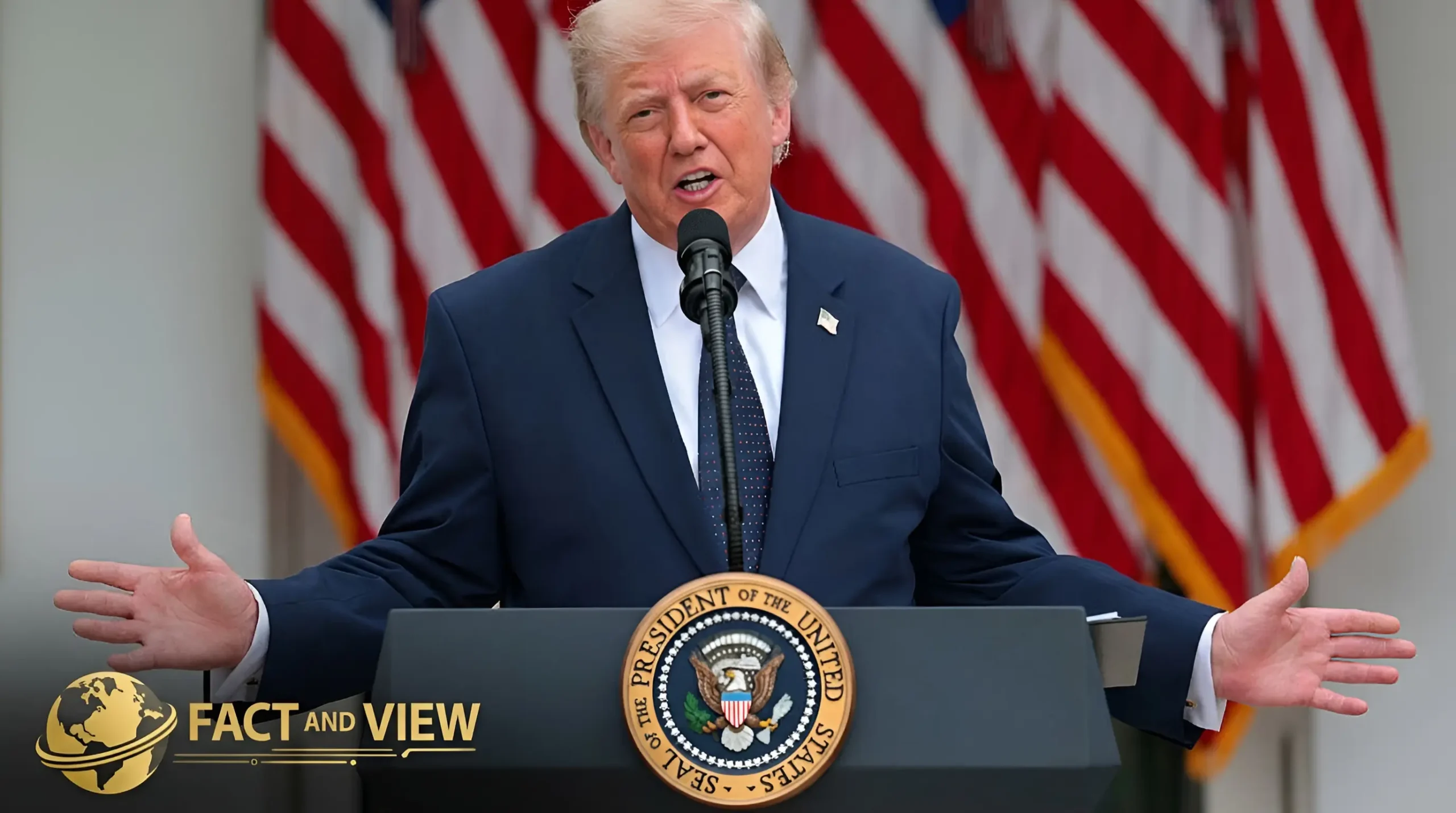
On July 4, 2025, President Trump signed the most sweeping piece of domestic legislation in a generation. The One Big Beautiful Bill Act (OBBBA) — Public Law 119-21 — simultaneously cut taxes for millions, reduced food and healthcare benefits for millions more, added $2.8 trillion to the projected national debt, and restructured the federal tax code in ways that will compound through 2034 and beyond.
Most Americans know it happened. Almost none have read it. At over 900 pages, it is deliberately impenetrable — a legislative monument to the Washington tradition of burying consequential policy inside procedural complexity.
This article cuts through that complexity. Here is exactly what the new laws of 2026 change, who gains, who loses, and what specific actions you should take before the next set of provisions activate.
The Big Picture: Why 2026 Is a Legislative Turning Point
The OBBBA is not an isolated event. It is the culmination of a decade of political pressure to make the 2017 Tax Cuts and Jobs Act permanent — combined with the fiscal constraint of a $39 trillion national debt that required finding corresponding spending reductions elsewhere.
Fact: The CBO estimates the OBBBA will increase the federal budget deficit by $2.8 trillion by 2034. The CBO also estimates the top 10% of earners will see incomes rise by 2.7% by 2034, primarily through tax cuts, while the lowest 10% will see incomes fall by 3.1%, primarily through cuts to Medicaid and food assistance programs. This is the “barbell effect” described by RBC Economics in their April 2026 analysis.
Fact: The law represents $5 trillion in tax provisions over 10 years. CBO projects it will add 0.9 percentage points to real GDP in 2026 as the legislation takes full effect. Alongside the OBBBA, two landmark financial laws are reshaping digital assets: the GENIUS Act (signed July 18, 2025) and the CLARITY Act (pending Senate vote as of May 2026), which together constitute the most significant restructuring of U.S. financial regulation since Dodd-Frank.
The View: The OBBBA is a fiscal bet. Its architects believe permanent tax cuts generate enough economic growth to partially offset their revenue cost — a version of supply-side economics last tested at this scale in 2017. The CBO disagrees: its distributional analysis shows the fiscal burden shifting downward over time, with lower-income households absorbing both spending cuts and inflationary pressure simultaneously. In a year already defined by 3.3% inflation and a Middle East energy shock, the timing of that shift matters for every household in America.
Related reading: US National Debt Explained: Should You Be Worried? — how the OBBBA’s $2.8 trillion additional deficit compounds an already record debt trajectory.
Deep Dive: Five Major Law Changes Taking Effect in 2026
1. The One Big Beautiful Bill Act: Tax Changes That Affect You Now
The OBBBA’s tax provisions are the most immediately impactful for most households. Several went into effect January 1, 2026. Others activate throughout the year.
What changed for your 2026 tax return:
- Standard deduction: Permanently extended at higher TCJA levels — $15,750 for single filers, $31,500 for married filing jointly in 2026. No itemizing required to capture this benefit.
- SALT deduction cap raised: The State and Local Tax deduction cap increased to $40,400 for 2026, rising 1% annually through 2029 before reverting to $10,000 in 2030. This disproportionately benefits middle-to-upper-income households in high-tax states like California, New York, and New Jersey.
- No tax on tips: Tips are now excluded from federal income tax for workers in eligible service industries. For a restaurant server averaging $25,000 annually in tips, this represents approximately $2,750–$3,750 in annual tax savings depending on their bracket.
- No tax on overtime: Overtime pay is excluded from federal income tax — significant for hourly workers in manufacturing, healthcare, and logistics who regularly work above 40 hours.
- Estate tax exemption: Increased to $15 million per individual beginning in 2026, up from the 2017 level that was set to expire.
- Trump Accounts: Children born between 2025 and 2028 who are U.S. citizens receive $1,000 in seed money from the U.S. Treasury, deposited into investment accounts that can hold S&P 500-tracking mutual funds or ETFs. Parents and employers can contribute up to $2,500 per year per child, tax-free. Eligible accounts opened July 4, 2026 onwards.
- Tax refunds: Treasury Secretary Scott Bessent projected $100–$150 billion in higher-than-normal refunds in Q1 2026 — translating to $1,000–$2,000 per household — because the IRS delayed adjusting withholding tables until after the OBBBA passed.
Fact: The IRS official guidance on all OBBBA individual provisions is published at irs.gov/newsroom/one-big-beautiful-bill-provisions-individuals-and-workers.
The View: The tip and overtime tax exclusions are the most politically popular provisions — and the most economically complex. They benefit workers who have historically paid the same tax rates as salaried employees on every dollar earned. But they also create a tax system where compensation structure, not just income level, determines tax burden — which adds compliance complexity and creates incentives for employers to reclassify wages as tips.
2. Healthcare: Medicaid Contraction and ACA Disruption
The OBBBA’s healthcare provisions represent the largest structural reduction in U.S. public health coverage in the program’s 60-year history.
Fact: Medicaid provides health coverage to approximately 71.1 million Americans. The OBBBA’s changes include:
- Work requirements for able-bodied adults of working age — effective across Medicaid and SNAP simultaneously
- Elimination of the 5-percentage-point enhanced federal Medicaid contribution for expansion states, which ended January 1, 2026 — raising state costs immediately and potentially causing some states to reduce coverage
- ACA marketplace subsidies eliminated for lawfully present immigrants with incomes under 100% of the federal poverty level
- CBO estimate: The law is projected to cause 10.9 million Americans to lose health insurance coverage by 2034
Fact: House Republicans released a plan to cut Medicaid spending by $880 billion over ten years, per earlier reporting. Mehmet Oz, administrator of CMS, identified approximately $14 billion in duplicate enrollments. Even if recovered in full, this represents under 1% of projected 10-year Medicaid spending.
The View: The Medicaid contraction is arriving at the worst possible moment for household finances. Healthcare premium costs were already doubling for millions of Americans following ACA subsidy expiration. Adding work requirement compliance complexity and coverage loss for millions of current enrollees compounds the affordability crisis that is already the dominant political issue heading into the November midterms.
Related reading: How US Elections Affect the Economy and Markets — how the OBBBA’s healthcare cuts are directly driving the midterm electoral environment.
3. SNAP: Food Assistance Cuts Take Effect October 1, 2026
The Supplemental Nutrition Assistance Program — the federal food stamp program — undergoes its most significant structural change since the 1996 welfare reform.
Fact: SNAP cuts are effective October 1, 2026. Key provisions:
- Work requirements for able-bodied adults without dependents — expanded age range and stricter enforcement
- State cost-matching requirements tied to payment error rates — states with higher error rates face increased fiscal burden, incentivizing coverage reduction
- Thrifty Food Plan adjustments — the benefit calculation formula is adjusted, limiting real benefit growth
- Citizenship/residency restriction — benefits limited to U.S. citizens and lawful permanent residents; refugees and asylum seekers are effectively excluded
- CBO estimate: Approximately 2.4 million people will lose SNAP benefits under these provisions annually
Fact: CBO also projects the OBBBA will reduce direct SNAP spending by nearly $106 billion over ten years.
The View: The SNAP cuts activate just 30 days before the November midterm elections — an unusual legislative calendar that will maximize their political visibility. 2.4 million people losing food assistance in October 2026, combined with 10.9 million Americans losing health insurance over the next decade, represents a material reduction in social safety net coverage at a moment when grocery prices are already elevated from the fertilizer cost shock driven by the Middle East energy crisis.
Related reading: Middle East Tensions Explained: What It Means for Oil Prices — how energy shock fertilizer costs are pushing food prices higher simultaneously with SNAP benefit cuts.
4. The GENIUS Act: America’s First Stablecoin Law
Signed July 18, 2025, and now in active implementation, the GENIUS Act is the first major federal crypto legislation ever passed by Congress.
Fact: The GENIUS Act creates a federal regulatory framework for dollar-backed payment stablecoin issuers. Key provisions:
- 1:1 reserve requirement: Stablecoins must be backed by cash or short-term Treasuries
- Monthly reserve disclosure: Issuers must publicly disclose reserve composition monthly
- Consumer protection on insolvency: Stablecoin holders receive legal priority in bankruptcy proceedings
- Anti-money laundering compliance: Stablecoin issuers treated as financial institutions under the Bank Secrecy Act
- Stablecoin yield: Subject to ongoing rulemaking — the White House supports allowing yield payments; banking groups are actively resisting; the OCC’s 376-page draft rules are under comment
Fact: The $317 billion global stablecoin market saw transaction volumes surpass Visa and Mastercard combined in 2024. The GENIUS Act’s implementation is projected to accelerate institutional adoption — banks including JPMorgan, Bank of America, and others are expected to launch compliant stablecoin products within 18 months of final rulemaking.
The View: The GENIUS Act is less about consumer protection and more about institutional capture. The 1:1 Treasury reserve requirement means that a $1 trillion stablecoin market would absorb $1 trillion in short-term Treasuries — a structural demand source that would meaningfully help the government finance its record deficit. This is not coincidental. The fiscal architecture of the GENIUS Act makes stablecoin growth simultaneously good for crypto adoption and for the U.S. government’s borrowing program.
5. The CLARITY Act: Crypto Market Structure (Pending)
The CLARITY Act — the Digital Asset Market Structure Act — remains pending Senate vote as of May 2026. A Senate hearing is scheduled for May 14, 2026. The White House has publicly targeted July 4 for passage.
Fact: The CLARITY Act:
- Classifies Bitcoin as a digital commodity under CFTC jurisdiction — permanently resolving the SEC-CFTC turf war
- Establishes which regulator oversees which crypto asset type — critical for the $98.6 billion Bitcoin ETF market and the broader $2 trillion digital asset ecosystem
- Requires crypto exchanges to register with the CFTC within 90 days of enactment
- Creates a de minimis tax exemption for stablecoin transactions under $200
The View: The CLARITY Act’s practical impact on everyday Americans is modest — but its institutional impact is enormous. Major pension funds, insurance companies, and bank desks cannot allocate to crypto assets without regulatory certainty over jurisdiction. Passage unlocks the next layer of institutional capital flow. The odds of passage are better than they’ve ever been — bipartisan support is rare for crypto legislation, and both Treasury Secretary Bessent and the White House are publicly pushing for Senate action.
Risks & Opportunities: Three Scenarios
Base Case (~50% probability): Partial Implementation, Mixed Impact
The OBBBA tax provisions fully activate. Medicaid and SNAP cuts proceed but face state-level resistance and legal challenges that delay full implementation. The CLARITY Act passes in Q3 2026. Healthcare and food coverage losses are real but smaller than CBO’s 10.9 million projection due to state opt-outs and legal delays.
What this means for you: Tax savings arrive through larger refunds and tip/overtime exclusions. Healthcare premiums rise for affected populations. SNAP cuts bite in Q4 2026 for 2.4 million households. Crypto market benefits structurally from regulatory clarity.
Upside Scenario (~25% probability): Economic Growth Offsets Fiscal Drag
The OBBBA’s 0.9 percentage point GDP boost materializes. Higher growth produces revenue that partially offsets deficit expansion. Tip and overtime tax exclusions drive consumer spending in service sectors. Wage growth exceeds inflation. The CLARITY Act passage triggers institutional crypto investment that strengthens financial markets.
What this means for you: Larger paychecks, lower effective tax rates, and potential raises as employers compete for workers in sectors benefiting from disposable income growth. Investment accounts benefit from a market rally on CLARITY Act passage.
Downside Scenario (~25% probability): Fiscal Deterioration Accelerates
The $2.8 trillion deficit expansion raises Treasury yields further — pushing mortgage rates back toward 7.5%. SNAP and Medicaid cuts increase emergency room utilization (the most expensive healthcare delivery method), partially offsetting program savings. Stablecoin yield disputes stall GENIUS Act implementation. Consumer spending weakens as safety net reductions hit lower-income household budgets.
What this means for you: Mortgage rates spike again. Medical debt rises for households losing Medicaid. The fiscal arithmetic that makes the downside scenario most likely is already in place — deficit expansion into a high-interest-rate environment compounds both problems simultaneously.
Related reading: Government Spending Explained: Where Your Tax Dollars Go — the full federal budget context for every spending cut and tax provision in the OBBBA.
The Bottom Line
The laws of 2026 are not abstract policy documents. They are active changes to the financial conditions of your daily life — your tax bill, your health insurance, your food assistance eligibility, your investment environment.
What you need to do now, by category:
If you receive tips or overtime pay:
- Your employer may not have updated payroll systems to reflect tax-free tip and overtime provisions — verify with HR immediately
- File a new W-4 with your employer to adjust withholding for 2026 and avoid overpaying
If you or a family member is on Medicaid:
- Contact your state Medicaid office to understand how OBBBA work requirements and the end of enhanced federal matching affect your specific coverage
- Explore ACA marketplace plans as a fallback — premium calculator at healthcare.gov
If you receive SNAP benefits:
- SNAP cuts take effect October 1, 2026 — work requirement compliance, citizenship documentation, and state eligibility rules are all changing
- Check your eligibility and required documentation proactively at your state’s SNAP office
For investors and business owners:
- Model your 2027–2028 tax liability now — SALT cap changes, depreciation provisions, and international business income rules all have multi-year implications
- The CLARITY Act’s passage will benefit crypto allocations — track Senate progress at Congress.gov
- Trump Accounts offer a tax-efficient way to build investment positions for children born between 2025–2028 — open eligible accounts July 4, 2026
The OBBBA’s barbell effect is the defining fiscal reality of the decade: significant gains for upper-income households, significant losses for lower-income households, and a $2.8 trillion bill that lands on everyone’s children. Understanding which end of the barbell your household sits on is the starting point for every financial decision you make in 2026.
Continue reading from Fact and View:
- How Beginners Should Invest in 2026 — building wealth in the specific tax and rate environment created by these laws
- Best Investments During Inflation (2026 Guide) — how to position against the inflationary pressure the OBBBA compounds
- Is the Stock Market Overvalued in 2026? — the investment market context shaped by $2.8 trillion in new deficit spending
FAQ
What is the One Big Beautiful Bill Act and when did it take effect?
The One Big Beautiful Bill Act (OBBBA), officially Public Law 119-21, was signed into law by President Trump on July 4, 2025. It is a sweeping reconciliation bill that makes the 2017 Tax Cuts and Jobs Act permanent, adds dozens of new tax provisions, and cuts spending in Medicaid, SNAP, student loans, and clean energy programs. Most individual tax provisions took effect January 1, 2026. SNAP changes activate October 1, 2026. Read the official IRS guidance at irs.gov/newsroom/one-big-beautiful-bill-provisions.
Do tips get taxed in 2026 under the new law?
No — tips are now excluded from federal income tax for eligible service industry workers under the OBBBA. This applies to tips received after January 1, 2026. To capture the benefit, workers must file a revised W-4 with their employer to adjust withholding, or claim the deduction on their 2026 tax return. Overtime pay received in 2026 is also excluded from federal income tax. These provisions are currently temporary — they expire at the end of the OBBBA’s initial 10-year window without reauthorization.
How do the OBBBA’s Medicaid changes affect me?
If you are currently enrolled in Medicaid, the OBBBA introduces several changes that could affect your coverage. Work requirements for able-bodied adults are now part of eligibility in states that implement them. The enhanced 5-percentage-point federal Medicaid contribution that incentivized states to expand coverage ended January 1, 2026 — some states may reduce enrollment in response to higher costs. CBO projects 10.9 million Americans will lose health insurance coverage by 2034 as a cumulative result of all OBBBA healthcare provisions. Contact your state Medicaid office directly to understand your specific situation, or use healthcare.gov to explore alternative coverage.
What is the GENIUS Act and how does it affect my crypto holdings?
The GENIUS Act, signed July 18, 2025, is the first major federal crypto legislation in U.S. history. It creates a regulatory framework specifically for dollar-backed payment stablecoins — cryptocurrencies like USDC and USDT. Under the law, stablecoin issuers must back tokens with 1:1 reserves of cash or short-term Treasuries and disclose those reserves monthly. Stablecoin holders receive legal protection in bankruptcy proceedings. For everyday crypto users, the practical effect is greater safety for funds held in stablecoins and the beginning of bank-issued stablecoin products from major institutions. Follow GENIUS Act rulemaking at paulhastings.com/insights/crypto-policy-tracker.
What is the CLARITY Act and has it passed yet?
The Digital Asset Market Clarity Act (CLARITY Act) has not yet been enacted as of May 2026. A Senate Banking Committee hearing was scheduled for May 14, 2026; the White House has publicly targeted July 4 for passage. The bill would permanently classify Bitcoin as a digital commodity under CFTC jurisdiction, resolve the decade-long regulatory ambiguity between the SEC and CFTC over crypto assets, and create registration requirements for crypto exchanges. Its passage would be the second major crypto legislation of 2025–2026 and would unlock institutional capital flows from pension funds and insurance companies that currently cannot allocate to digital assets without clear regulatory frameworks. Track its progress at Congress.gov.
What are “Trump Accounts” and should I open one for my child?
Trump Accounts are investment accounts for children born between January 1, 2025, and December 31, 2028, who are U.S. citizens. Children receive $1,000 in seed money from the U.S. Treasury. Parents, guardians, and employers can contribute up to $2,500 per year per child, tax-free. Funds must be invested in mutual funds or ETFs that track a U.S. stock index such as the S&P 500. Accounts can be opened from July 4, 2026. At $1,000 seed money plus $2,500/year for 18 years, compounding at 10%, the account could grow to approximately $150,000 by the child’s 18th birthday — entirely in index-tracking equities.
Will the OBBBA make my taxes lower in 2026?
For most middle-income Americans, yes — marginally. The permanent standard deduction expansion means most households pay less tax without itemizing. Tip and overtime exclusions benefit service industry and hourly workers. The SALT cap increase to $40,400 benefits homeowners in high-tax states. However, Treasury Secretary Bessent’s projected $1,000–$2,000 in above-normal refunds in early 2026 reflects a one-time adjustment, not a permanent annual increase. Use the official IRS withholding estimator at irs.gov/individuals/tax-withholding-estimator to see your specific situation.
Where can I track all new US laws and their implementation in 2026?
Primary sources, all free and authoritative:
- IRS.gov — OBBBA Provisions — official tax guidance, updated as rules finalize
- CBO — OBBBA Analysis — distributional and deficit impact estimates
- Congress.gov — live legislative status for CLARITY Act and all pending bills
- Healthcare.gov — ACA marketplace plans and Medicaid eligibility
- USDA SNAP Updates — official SNAP rule changes and effective dates
- Paul Hastings Crypto Policy Tracker — GENIUS Act and CLARITY Act rulemaking updates
Sources: RBC Economics — OBBBA Analysis, April 22, 2026 · IRS — OBBBA Individuals, April 15, 2026 · Axios — 2026 Laws Impact, December 31, 2025 · H&R Block — OBBBA Tax Guide · Wikipedia — One Big Beautiful Bill Act · NAACPLDF — OBBBA Explained, April 17, 2026 · Center for American Progress — OBBBA Implementation Timeline · Tax Foundation — OBBBA Pros and Cons · SSGA — GENIUS Act Explained · WEF — GENIUS Act Impact · Nexo — Crypto Regulation 2026 · Paul Hastings — Crypto Policy Tracker, April 21, 2026
© Fact and View, 2026. For informational purposes only. Not legal or tax advice. Consult a qualified professional for advice specific to your situation.