
No weapon has defined the Ukraine-Russia war quite like the drone. What began as improvised battlefield surveillance has evolved into a sophisticated, industrial-scale campaign that is rewriting the rules of modern warfare. As both sides now deploy unmanned systems in the millions, a critical question has emerged for military analysts and policymakers alike: Is Ukraine’s expanding drone strategy fundamentally changing the balance of air power — and is Russia now losing control of its own skies?
Why Ukraine Is Going All-In on Drones
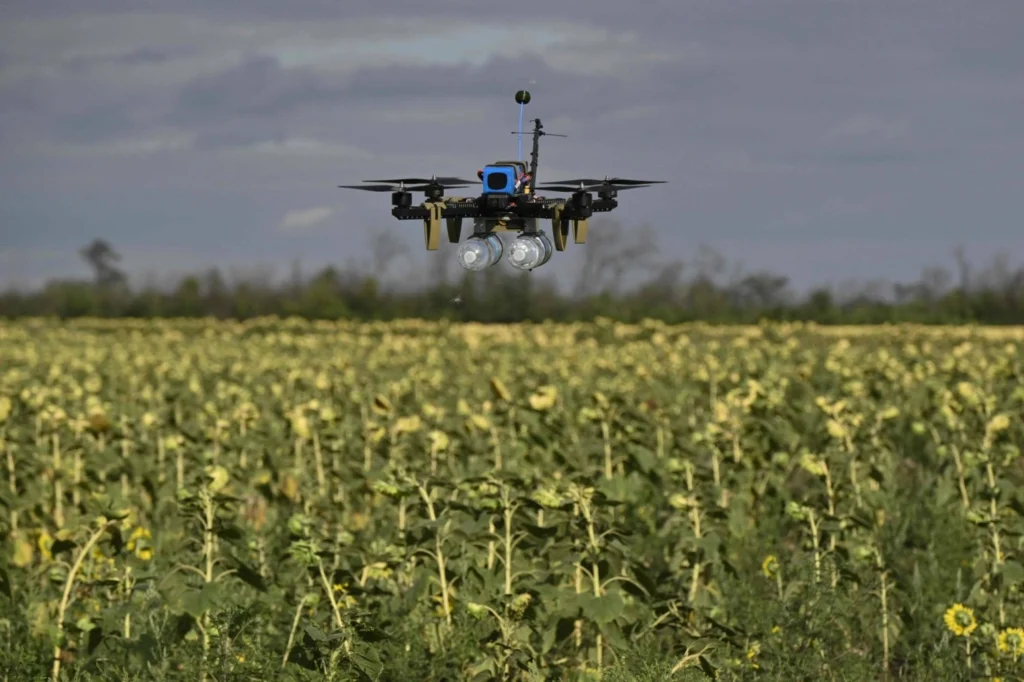
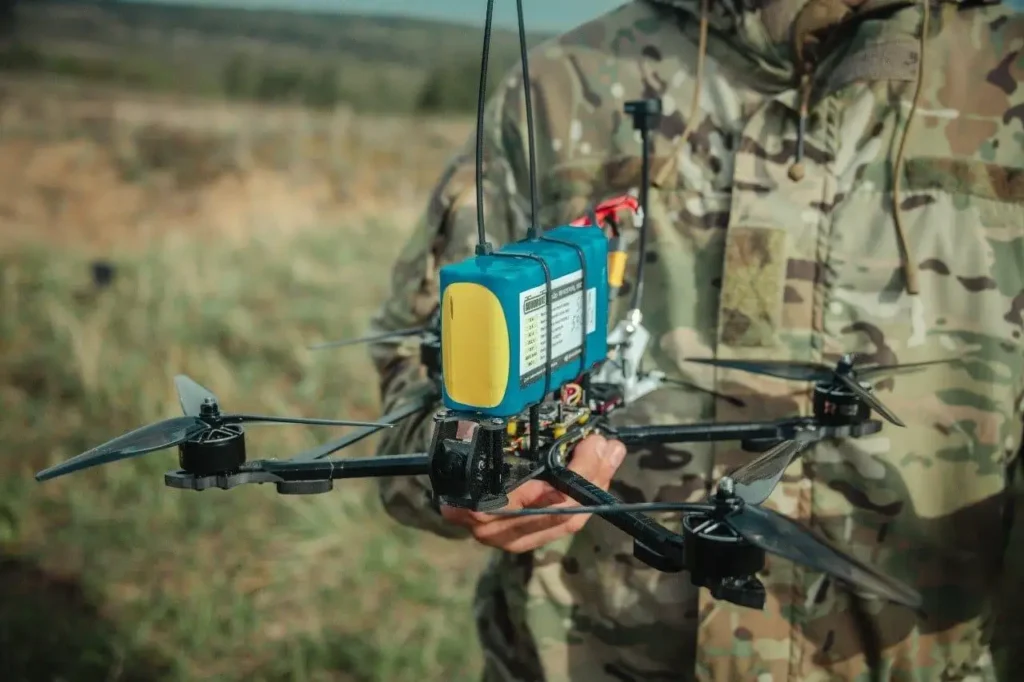
The arithmetic is compelling. A first-person-view (FPV) attack drone costs roughly $5,000. A Russian tank costs millions. A Patriot missile interceptor costs more than $3 million per shot. For a country that cannot match Russia in conventional manpower or heavy armor, drones offer Ukraine a rare asymmetric edge — one it has pursued with remarkable urgency.
Ukraine’s drone production has scaled at a pace that would have seemed implausible early in the war. According to data presented at a CSIS event in May 2025, Ukraine produced around 800,000 drones in 2023, rising to 2 million in 2024, with a target of up to 5 million for 2025. By spring 2026, Ukraine had reached approximately 100,000 FPV drones per month in attack variants alone, with total monthly output exceeding 150,000 units across all categories.
This industrial ramp-up has been paired with a deliberate shift in strategy. Since early 2025, Ukraine’s military has moved beyond short-range tactical strikes and high-profile long-distance attacks on symbolic targets. A mounting mid-range strike campaign has emerged, designed to hit targets in the 20 to 300 kilometer range — including military warehouses, command points, transport hubs, missile complexes, radar systems, and air defenses. The objective is not merely to destroy individual assets but to systematically erode the logistics and defensive architecture that sustains Russia’s invasion.
Critically, Ukraine has also worked to reduce dependence on foreign components. Whereas in the first years of the war nearly all of Ukraine’s drones relied on Chinese components, by 2025 that share had fallen to around 38 percent, with domestic manufacturers filling the gap.
Putting Pressure on Russian Air Defenses
The numbers tell a story of sustained, deliberate attrition. Analysis of video footage released by Ukrainian military units indicates that during the twelve-month period beginning in March 2025, Ukraine conducted at least 365 mid-range strikes — effectively one per day. Almost half of these strikes focused on Russian air defenses, missile complexes, and radar systems.
The logic is straightforward: by degrading Russia’s defensive infrastructure, Ukraine sets the stage for bolder and deeper strikes. Ukrainian drones are now able to strike at longer ranges, including 30 to 100 kilometers behind the front lines, expanding the kill zone and forcing Russia to divert resources to protect its supply lines and infrastructure.
Some of the most strategically significant strikes have gone further still. In 2025, Ukraine executed Operation Spider, a covert mission that placed shipping containers within FPV range of Russia’s heavy bomber airfields in Siberia, destroying several irreplaceable bombers and damaging others. Meanwhile, Ukraine’s Magura unmanned surface vessels — originally used for naval harassment — have been upgraded to intercept aircraft. Ukraine’s Magura V7, which debuted in spring 2025, used AIM-9X Sidewinder missiles to shoot down Russian SU-30 fighter aircraft.
The cumulative effect on Russian air-defense resources is becoming harder to ignore. Russia must now protect an enormous geographic area — including its energy infrastructure, military logistics, naval assets, and increasingly even Siberian airbases — against a drone threat that arrives from multiple vectors and at varying ranges simultaneously.
The Russian Perspective: Adaptation, Not Collapse
It would be a mistake to conclude that Russia is simply being overwhelmed. Moscow has demonstrated a consistent ability to absorb tactical setbacks and adapt. Its response to Ukraine’s drone campaign has been both technological and doctrinal.
On the production side, Russia has dramatically scaled up its own drone manufacturing. In the second half of 2025, Russia launched over five thousand Shahed-type drones per month at Ukrainian population centers and critical infrastructure — double its 2024 operational tempo. By April 2026, Russia launched the highest number of Shahed-type UAVs recorded to date, sustaining unprecedented daily operational tempo with continuous 24 to 32-hour attack cycles.
Russia has also significantly upgraded its drone technology. The Geran drones have incorporated jet engines, 16-element CRPA antennas to resist electronic warfare, and live cameras with modems to allow for evasive maneuvers — increasing the average successful hit rate from 3.42 percent in January 2025 to 18.67 percent by October 2025, with some strike waves reaching 50 to 60 percent success.
To counter Ukraine’s radio-jamming advantage, Russia pioneered the use of fiber-optic drones, attaching a cable from the drone to the operating controls, making it impervious to disruption. Russia has also established the Rubicon Center — a dedicated military formation focused on drone warfare doctrine, training, and AI integration. Rubicon’s mission is to standardize drone operations, test new systems, refine operational concepts, and research artificial intelligence in robotic warfare across the Russian Armed Forces.
Defensively, Russia has pushed critical assets deeper behind the front lines and hardened them. As defense analyst Justin Bronk of the Royal United Services Institute has noted, after years of intensive combat, Russian forces now field layered electronic warfare, short-range air defenses, infantry counter-drone training, and physical hardening measures that significantly reduce the effectiveness of massed drone strikes.
Continue reading from Fact and View:
- What Happens If US Debt Keeps Rising? — how dollar reserve erosion directly affects the financing of the $39 trillion national debt
- Fed Rate Hikes: Fighting Inflation or Slowing Growth? — the Fed independence questions intersecting with dollar policy debates
- Where Smart Money Is Moving Right Now (2026 Update) — the institutional gold-buying trend directly connected to dollar diversification
What Military Analysts Are Debating
The central debate among military analysts is not whether drones have changed the battlefield — they clearly have — but whether they are enough to confer lasting air superiority or whether they simply force both sides into a costly technological arms race.
On one side, analysts point to Ukraine’s measurable battlefield gains. In large part due to the scaling up of drone operations, Ukraine was able to retake 78 square miles over five days in February 2026, reversing a trend of Russian gains throughout 2025 that had many analysts worried about Ukraine’s capacity to continue fighting.
On the other side, skeptics caution that drones have not replaced conventional military power. While drones remain Ukraine’s primary source of battlefield attrition, only a small fraction reach their targets, and an even smaller share achieves decisive effects against hardened or mobile systems. Ukraine continues to face acute manpower constraints and cannot always exploit territory that drones have softened.
The cost exchange also cuts both ways. Russia’s strategy of deploying cheap Shahed drones — each costing $20,000 to $50,000 — forces Ukraine to either expend million-dollar interceptors or accept infrastructure damage, creating a mathematically unfavorable exchange ratio for Ukrainian air defenses. Despite record Russian launch volumes, Ukrainian air defense adaptation — including interceptor drones, mobile fire groups, and layered electronic warfare — continues to impose significant attrition on attacking formations. But sustaining that adaptation indefinitely is an enormous industrial and financial challenge.
Why This Matters Beyond Ukraine
The drone war in Ukraine is not merely a regional conflict — it is a live laboratory that is reshaping military doctrine globally. NATO allies have already drawn early lessons. In February 2026, the European Commission introduced a new drone action plan focused on detection, protection against incoming units, and the safeguarding of critical infrastructure, while France, Germany, Italy, Poland, and the UK announced the Low-Cost Effectors and Autonomous Platforms initiative to jointly manufacture low-cost air defense systems and autonomous drones using Ukrainian expertise.
For the United States military, the implications are equally significant. The Ukraine conflict has demonstrated that expensive legacy platforms — whether fighter jets, radar installations, or logistical hubs — are vulnerable to cheap, mass-produced drones when fielded at scale. The response requires not just better air defense systems, but rethinking industrial production, counter-drone doctrine, and the role of autonomous systems in future conflict.
For the United States, the coming contest in drone and autonomous systems is not just a Ukrainian problem — it is a preview of challenges in future conflict. Nations that can manufacture drones rapidly, adapt software quickly, and integrate AI-enabled targeting at scale will hold a structural advantage in any future peer-level confrontation.
Conclusion
The evidence from the battlefield is clear in one respect: Ukraine’s drone campaign has meaningfully changed the trajectory of the war. Mid-range strikes are degrading Russian logistics and air defenses. Long-range operations have struck deep into Russian territory. Innovative systems like fiber-optic FPV drones and armed naval drones have given Ukraine asymmetric capabilities it could not have fielded conventionally.
Yet it remains genuinely uncertain whether these gains are sufficient to deliver lasting air superiority. Russia is adapting — scaling up production, hardening defenses, developing new countermeasures, and sustaining a punishing attritional campaign of its own. The front lines remain fluid, and neither side has achieved the kind of decisive air dominance that would determine the war’s outcome.
What is not in doubt is that drone warfare has permanently altered the nature of military conflict. Ukraine has not won the air war. But it has demonstrated, at considerable cost and ingenuity, that a smaller military with the right technology and the will to innovate can meaningfully contest the skies against a much larger adversary — and that is a lesson the world’s militaries will be studying for decades to come.
Sources: Council on Foreign Relations, Atlantic Council, CSIS, Hudson Institute, National Interest, Modern War Institute, GIS Reports, ISIS Reports