Every time the federal government spends more than it collects in taxes, the money has to come from somewhere. That gap is why you constantly hear about the national debt, Treasury bonds, and the Federal Reserve “printing money.” But most Americans have never seen a clear, simple explanation of how this actually works, or why the phrase “printing money” is often used incorrectly. Understanding it matters because it touches your mortgage rate, your savings account, your retirement, and the taxes you’ll pay for years to come.
What Is It?
At its core, this topic covers two separate things that people often mix up: how the government borrows money, and how new money gets created.
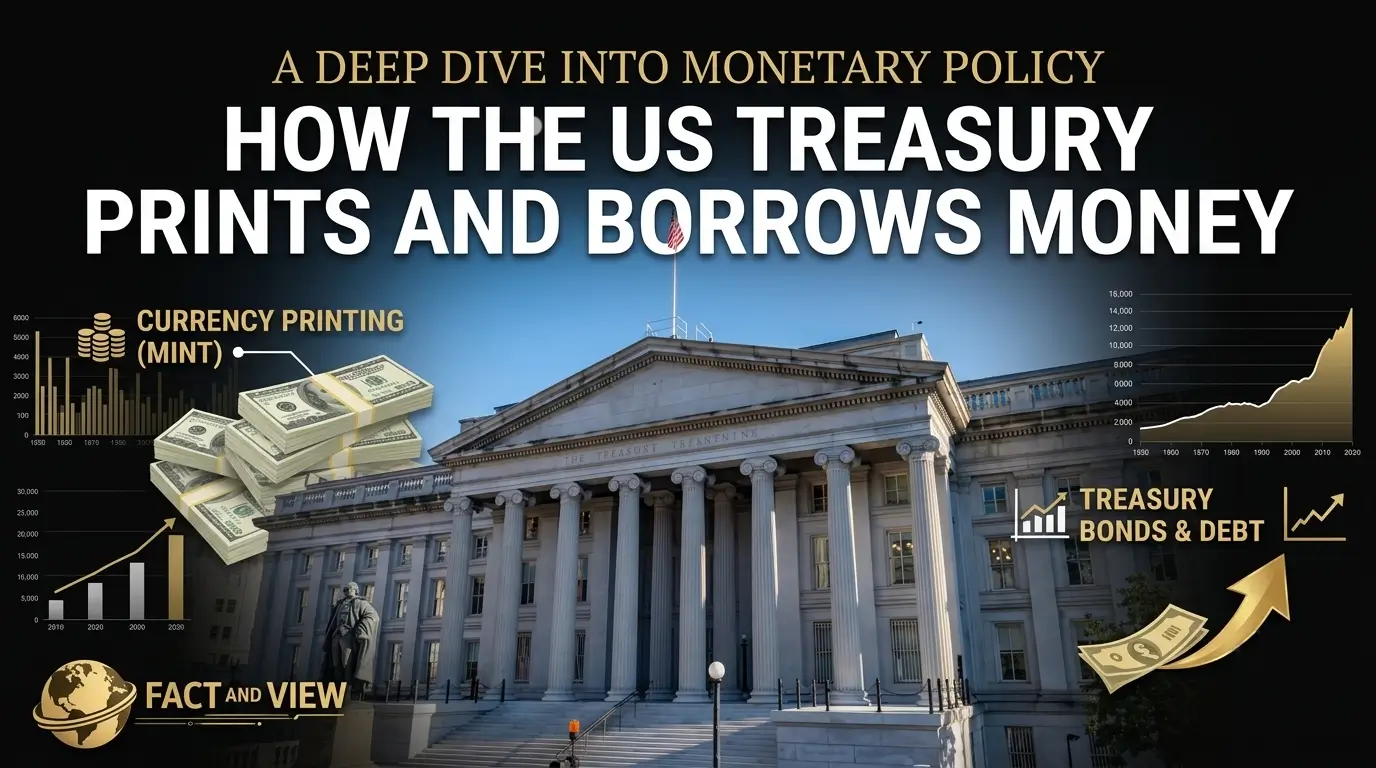
Borrowing is handled by the U.S. Department of the Treasury. When the government spends more than it brings in through taxes, a difference called a budget deficit, the Treasury covers that gap by selling debt, similar to how a company might issue bonds to raise cash. Investors, from large pension funds to everyday Americans, lend the government money and receive interest in return.
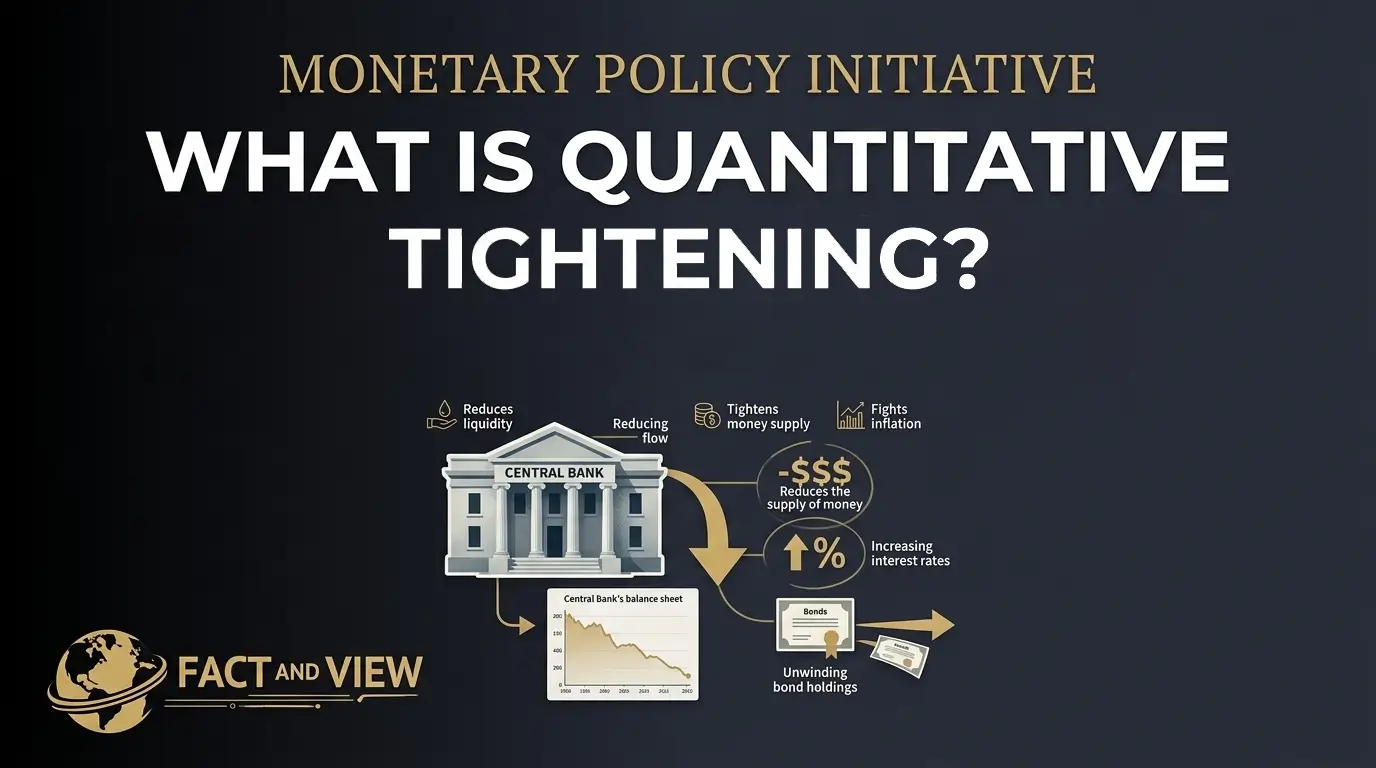
Creating money is a different function, split between two agencies. The Bureau of Engraving and Printing physically prints paper currency, but this is a tiny, mostly symbolic part of the money supply. The much larger process is controlled by the Federal Reserve (the Fed), the nation’s central bank, which can add or remove money from the banking system electronically through its monetary policy tools.
Real-world example: When you hear “the U.S. national debt just hit a record high,” that number, roughly $39 trillion as of mid-2026, according to the Treasury’s own daily reporting, reflects money the Treasury has borrowed by selling bonds, not money that was physically printed.
Related reading: What Is Stagflation? Why Economists Fear It Again
How Does It Work?
Step 1: Congress decides how much to spend
Each year, Congress and the president agree on a federal budget. If planned spending exceeds expected tax revenue, the result is a budget deficit that must be financed.
Step 2: The Treasury borrows through auctions
To cover the deficit, the Treasury sells different types of debt securities at regular public auctions:
- Treasury bills, which mature in a few weeks to a year
- Treasury notes, which mature in two to ten years
- Treasury bonds, which mature in 20 to 30 years
Investors bid on these securities, and the interest rate the government pays is largely set by market demand. As of mid-2026, the average interest rate across all outstanding Treasury debt was around 3.4%, according to congressional data trackers.
Step 3: Investors buy the debt
Buyers include U.S. banks, mutual funds, foreign governments, the Federal Reserve itself, Social Security trust funds, and individual investors. This is an important detail: most U.S. debt is actually owned domestically, not by foreign countries, contrary to a common assumption.
Step 4: The government uses the proceeds
The cash raised from these bond sales funds everything from Social Security payments to military spending to infrastructure projects, wherever tax revenue falls short.
Step 5: The government repays investors, with interest
Treasury securities eventually mature, meaning the government repays the amount borrowed. In the meantime, it pays interest, which has become a major and fast-growing expense. Interest payments now account for roughly 14% of federal spending, according to the Congressional Budget Office.
Where does “printing money” actually fit in?
The Federal Reserve doesn’t literally run printing presses to pay government bills. Instead, it can influence how much money circulates in the economy by buying and selling government bonds itself, adjusting interest rates, and changing how much money banks are required to hold in reserve. When people say the government is “printing money,” they’re usually referring loosely to the Fed expanding the money supply through these tools, a process that’s electronic, not physical.
Related reading: What Happens If US Debt Keeps Rising? — the fiscal context that shapes long-run Treasury market dynamics.
Why Does It Matter to Everyday Americans?
- Families and consumers feel the effects through interest rates. When the government borrows heavily, it can push up interest rates across the economy, affecting mortgages, car loans, and credit cards.
- Workers may see slower wage growth if rising government borrowing costs make businesses less willing to invest and hire, an effect that economists broadly agree on, though they disagree on its exact size.
- Investors and retirees often hold Treasury bonds directly or through retirement accounts, since they’re considered one of the safest investments in the world.
- Taxpayers ultimately help cover interest payments on the debt, which totaled close to $1 trillion over the past year alone.
- Businesses rely on a stable Treasury market to plan long-term investments, since Treasury yields act as a benchmark for borrowing costs throughout the economy.
Benefits
- Flexibility during emergencies. Government borrowing allows for rapid response to recessions, natural disasters, or pandemics without immediately raising taxes.
- A safe investment option. Treasury securities are widely considered one of the safest assets available, useful for retirees and conservative investors seeking predictable income.
- Economic stability tools. The Federal Reserve’s ability to adjust the money supply helps manage inflation and employment, tools used deliberately during periods like the 2008 financial crisis and the COVID-19 pandemic.
- Global financial benchmark. U.S. Treasury yields serve as a reference point for interest rates worldwide, reflecting continued global confidence in U.S. debt.
Risks and Criticism
- Rising interest costs. As the national debt grows and interest rates fluctuate, more of the federal budget goes toward interest payments rather than public services, a trend the Government Accountability Office has flagged as a long-term fiscal risk.
- Inflation concerns. If the Federal Reserve expands the money supply too quickly, some economists warn it can contribute to inflation, though economists disagree on exactly how directly the two are linked, especially outside periods of extreme monetary expansion.
- Debt ceiling standoffs. Congress must periodically vote to raise the legal borrowing limit, which has led to political standoffs and, at times, concerns about the government’s ability to pay its bills on time.
- Long-term sustainability debates. Some economists argue that current borrowing levels are unsustainable relative to the size of the economy, projecting debt could grow significantly faster than GDP over the coming decades if left unaddressed. Others, including proponents of Modern Monetary Theory, argue that a country borrowing in its own currency faces fewer constraints than commonly assumed. This remains a genuinely contested debate among economists.
Common Misunderstandings
Myth: The Treasury just prints money whenever it needs cash. Reality: The Treasury borrows money by selling bonds to investors. Physical currency printing is a separate, much smaller function, and expanding the broader money supply is handled by the Federal Reserve, not the Treasury.
Myth: Raising the debt ceiling approves new spending. Reality: The debt ceiling allows the Treasury to borrow money to pay for spending Congress has already approved. It does not authorize any new spending on its own.
Myth: Foreign countries own most of the U.S. national debt. Reality: The majority of U.S. debt is held domestically, by American investors, banks, mutual funds, and government trust funds like Social Security.
Myth: The Federal Reserve is part of the Treasury Department. Reality: The Federal Reserve is an independent central bank. It coordinates with the Treasury but operates separately, with its own decision-making structure.
FAQ
Is government borrowing good or bad?
It depends on context. Moderate borrowing can support economic growth and provide flexibility during crises, but persistently high borrowing relative to the size of the economy raises long-term concerns among many economists.
Does the national debt affect me personally?
Yes, indirectly. It can influence interest rates, the pace of wage growth, and future tax policy, even if you never buy a Treasury bond yourself.
Who actually buys U.S. government debt?
A mix of domestic banks, mutual funds, pension funds, foreign governments, the Federal Reserve, and individual investors through savings bonds or Treasury accounts.
Can the U.S. simply print its way out of debt?
Not without serious consequences. Attempting to finance debt purely through rapid money creation is widely associated with high inflation, which is why the Federal Reserve operates independently from short-term political pressure.
Is the national debt permanent?
The debt itself isn’t fixed. It grows or shrinks based on annual deficits or surpluses, though the U.S. hasn’t run a full-year budget surplus since the late 1990s.
Why does the government borrow instead of just raising taxes?
Borrowing allows the government to fund immediate priorities without abrupt tax increases, spreading the cost over time. Whether this is the right approach compared to raising revenue is a matter of ongoing political and economic debate.
How is this different from state governments?
Most U.S. states are legally required to balance their budgets and cannot borrow the way the federal government does. The federal government’s ability to issue its own currency and control monetary policy makes its situation fundamentally different.
The Bottom Line
The Treasury borrows money by selling bonds to investors to cover budget deficits, while a separate institution, the Federal Reserve, manages the broader money supply through monetary policy. These are related but distinct processes, and conflating them is one of the most common misunderstandings in American economic conversations. What’s clear is that federal borrowing directly shapes interest rates, investment returns, and long-term fiscal policy. What remains debated is how much borrowing is sustainable and what tradeoffs future policymakers will need to make. As the national debt continues to draw headlines, understanding these mechanics helps readers evaluate the news with clearer eyes rather than relying on oversimplified slogans.
Sources used in researching this article:
- U.S. Treasury Fiscal Data — “Debt to the Penny” dataset
- IndexBox — “U.S. National Debt Reaches New All-Time High of $39.39 Trillion on July 6, 2026”
- U.S. Congress Joint Economic Committee — “Debt Dashboard” and “National Debt Hits $38.43 Trillion…”
- U.S. Congress Joint Economic Committee — “Monthly Debt Update,” June 2026
- U.S. Government Accountability Office — “The Federal Government’s Debt Is Growing Faster Than the Economy. What Does That Mean for You?” (gao.gov)
- Wikipedia — “National Debt of the United States” (en.wikipedia.org)
- FRED (Federal Reserve Bank of St. Louis) — “Federal Debt: Total Public Debt (GFDEBTN)” (fred.stlouisfed.org)
- General, well-established background on Treasury auction mechanics, the Federal Reserve’s monetary policy tools, and the debt ceiling process — standard, non-contested public finance principles not tied to a single source
© Fact and View, 2026. For informational purposes only. Not investment advice.